Starfruit Ginger Salmon
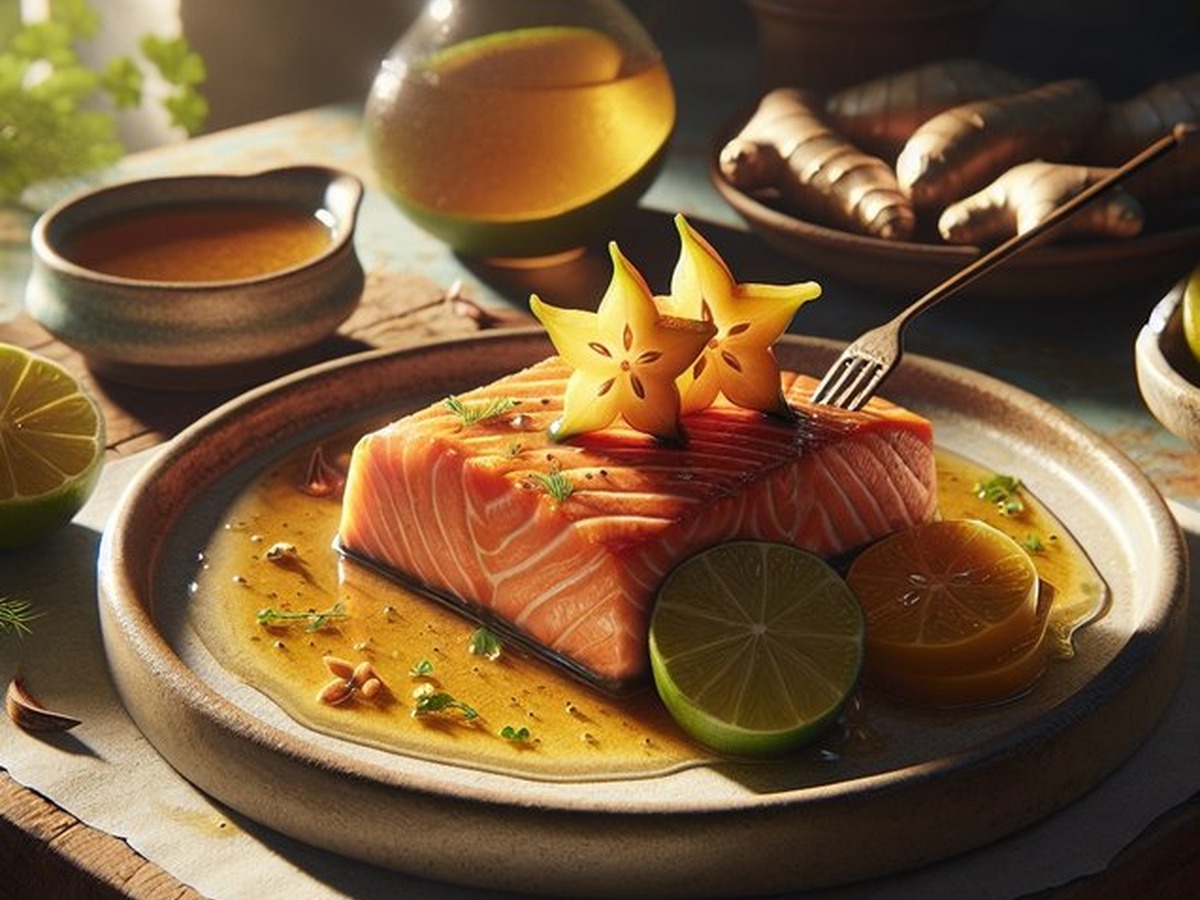
Pan-Seared Salmon with Starfruit, Ginger, and Lime
Pan-seared salmon and warm starfruit are finished with a glossy ginger, garlic, soy, honey, and lime glaze for a bright Japanese-inspired dinner.
About This Recipe
Starfruit Ginger Salmon is a bright, quick skillet dinner built around a fruit that is as pretty as it is distinctive. The starfruit brings a crisp, lightly floral tartness, while ginger, garlic, soy sauce, honey, lime, and a pinch of red pepper turn its juice into a glossy glaze. Pan-seared salmon gives the dish a rich center, and the warm fruit softens just enough to sit comfortably beside the fish.
Starfruit is often enjoyed fresh in tropical cooking, where its clean acidity and five-pointed slices make it useful for salads, drinks, relishes, and garnishes. Here it takes a modern Japanese-inspired path with soy, ginger, and a restrained amount of sweetness rather than trying to imitate a traditional Japanese classic. The pairing works because the fruit keeps the savory glaze lifted and the salmon gives its bright flavor a satisfying, buttery counterpoint.
The glaze comes together in one bowl, but reserving a clean spoonful before the salmon enters is an important detail. The larger portion flavors the fish and warms the starfruit in the pan, while the reserved portion stays fresh and glossy for the plate. Press the sliced fruit gently as you whisk so it releases juice without losing all of its crisp texture.
Salmon needs a hot, uncrowded skillet to develop a golden underside before the glaze goes in. Pat the fillets dry, season them evenly, and leave them undisturbed for the first three to four minutes so the surface can release naturally. After flipping, the sauce needs only a short bubble to thicken; use 145°F (63°C) at the thickest part and a just-opaque center as the doneness cue.
Serve the salmon with jasmine rice, quinoa, charred greens, or sautéed bok choy so the grain or vegetables can catch the sweet-tart sauce. A cabbage and cucumber slaw adds cool crunch, while extra starfruit wheels make the plate feel celebratory without requiring elaborate decoration. Lime at the table sharpens the fruit and keeps the honey from lingering too heavily.
Most of the preparation can happen while the skillet heats, which makes this a practical weeknight recipe even though the finished plate looks dramatic. Mix the glaze and slice the fruit earlier in the day, but keep the salmon chilled until cooking. Refrigerate leftovers within two hours, use them within three to four days, and reheat gently in a covered skillet with a splash of water or stock so the fish and glaze stay tender.
Ingredients
- 1 pound (454 g) salmon fillets, skin removed
- 1/2 cup (118 mL) starfruit juice
- 1 starfruit, thinly sliced (about 180 g)
- 1 tablespoon (15 mL) grated fresh ginger
- 2 garlic cloves, minced (6 g)
- 3 tablespoons (45 mL) low-sodium soy sauce
- 2 tablespoons (42 g) honey
- 1 tablespoon (15 mL) lime juice
- 1 tablespoon (15 mL) olive oil
- 1/2 teaspoon (2.8 g) kosher salt
- 1/4 teaspoon (0.5 g) ground black pepper
- 1/4 teaspoon (1 g) crushed red pepper flakes
This post contains Amazon affiliate links. We may earn a commission if you purchase through them, at no additional cost to you.
Step by Step Instructions
- Make the starfruit glaze In a medium bowl, whisk together the starfruit juice, soy sauce, honey, lime juice, and crushed red pepper flakes. Add the grated ginger, minced garlic, and sliced starfruit, gently pressing the fruit to release its juice; reserve about 2 tablespoons of the mixture for finishing.
- Sear the salmon Heat the olive oil in a large skillet over medium-high heat until shimmering. Pat the salmon dry, season with the kosher salt and black pepper, and lay the fillets into the pan so they sizzle; the fish should release easily after 3 to 4 minutes when the underside is golden.
- Glaze and finish cooking Flip the fillets, brush the tops with the remaining glaze, and let the mixture bubble and thicken while the salmon cooks another 1 to 2 minutes until the center is just opaque. Toss in the sliced starfruit so it warms without overcooking.
- Plate and serve Transfer the salmon to a plate, spoon the reserved glaze over the fillets, and finish with fresh starfruit slices for brightness. Serve alongside jasmine rice or charred greens.
Utensils
- Large skillet
- Ovenproof skillet
- Cutting board
- Chef's knife
- Small bowl
- Whisk
- Pastry brush
- Measuring cups
- Measuring spoons
- Spatula
- Tongs
- Spoon
- Serving plate
This post contains Amazon affiliate links. We may earn a commission if you purchase through them, at no additional cost to you.
Nutrition Per Serving
| Nutrient | Amount | % Daily Value* |
|---|---|---|
| Calories | 330 kcal | 16.5% |
| Protein | 25 g | 50% |
| Fat | 22 g | 28% |
| Fiber | 1.7 g | 6% |
| Sodium | 630 mg | 27% |
Nutrition is an estimate based on the listed ingredients and four servings.
Variations & Serving Suggestions
- Replace starfruit with pineapple juice and thin mango or pineapple slices when needed.
- Serve with jasmine rice, quinoa, charred greens, bok choy, or a crisp cabbage slaw.
- Add lime zest, orange, or yuzu for another layer of citrus brightness.
- Use tamari or coconut aminos if you need a gluten-free alternative to soy sauce.
Storage & Reheating
Cool leftover salmon within two hours, transfer it to a shallow airtight container, and refrigerate it at 40°F (4°C) or below for three to four days. Keep the starfruit and glaze with the fish so they protect the surface while it chills.
Reheat gently in a covered skillet over low heat with a splash of water or stock, stopping as soon as the fish is hot. Avoid a long microwave cycle, which can make the salmon rubbery and the fruit soft.
Practical Cooking Notes
Spoon out the finishing glaze before the salmon goes into the bowl. It keeps the final plate bright and avoids reusing liquid that touched raw fish.
A hot skillet and a dry surface help the salmon brown. If it resists when you try to turn it, give it another moment instead of forcing the crust.
Starfruit should soften slightly while keeping some snap. Add it during the final glaze step so it does not collapse into the sauce.
Troubleshooting
The salmon sticks to the skillet.
Likely cause: The pan was not hot enough or the fish was moved too soon.
Fix: Heat the oil until shimmering, pat the salmon dry, and wait until the underside releases naturally before turning.
The glaze is too thick.
Likely cause: It reduced too far while the fish finished cooking.
Fix: Lower the heat and loosen it with a splash of water or starfruit juice before serving.
The starfruit is mushy.
Likely cause: The slices cooked for too long in the hot sauce.
Fix: Add the fruit during the last minute so it warms through while keeping its crisp edge.
Frequently Asked Questions
Can I prepare the starfruit ginger glaze ahead of time?
Yes. Whisk the glaze and slice the starfruit up to one day ahead, then store them covered in the refrigerator. Bring the mixture close to room temperature before cooking so it warms evenly, and reserve a clean portion for the final spooning.
What is the best way to keep the salmon tender?
Pat the fillets dry, sear them in a hot uncrowded skillet, and avoid cooking them longer than needed after the flip. Begin checking early and remove the salmon at 145°F (63°C), when the center is just opaque and flakes easily.
What can I use if starfruit is unavailable?
Use an equal amount of pineapple juice with thin slices of ripe mango or pineapple. Add a little extra lime to recreate the tart edge that fresh starfruit brings to the glaze.
How can I add heat without overpowering the glaze?
Keep the listed 1/4 teaspoon red pepper flakes for gentle warmth, or add a small pinch of chili paste to the glaze. Taste before adding more because the fruit and honey should remain noticeable alongside the heat.