About This Recipe
Citrus-sesame sear with orange, lime, ginger on sea bass.
Omega-3 rich, quick dinner: sea bass recipe with garlic and sesame oil.
Cosmic Citrus Sesame Seared Sea Bass Serenade is organized around one pound sea bass fillets, skin-on (454 g), three tablespoons fresh orange juice (45 mL), one tablespoon fresh lime juice (15 mL), one tablespoon low-sodium soy sauce (15 mL), prepared as one clear dish.
The recipe uses a Mediterranean, Japanese approach while keeping the ingredient list and method practical for a home kitchen.
The method begins with Whisk together three tablespoons fresh orange juice, one tablespoon fresh lime juice, one tablespoon low-sodium soy sauce, one tablespoon honey, one teaspoon grated fresh ginger, one teaspoon minced garlic, one teaspoon toasted sesame oil, one teaspoon orange zest, a quarter teaspoon kosher salt, and a quarter teaspoon black pepper to make a glaze
The next stage is Pat the skin-on sea bass fillets dry with paper towels and pat them lightly with more salt and pepper
The finished dish brings together one tablespoon honey (21 g), one teaspoon grated fresh ginger (5 mL), one teaspoon minced garlic (5 mL), one teaspoon toasted sesame oil (5 mL) without adding unnecessary complexity.
Use the listed quantities and timing as the baseline, then taste and adjust only where the recipe gives room to do so.
Citrus Sesame Seared Sea Bass
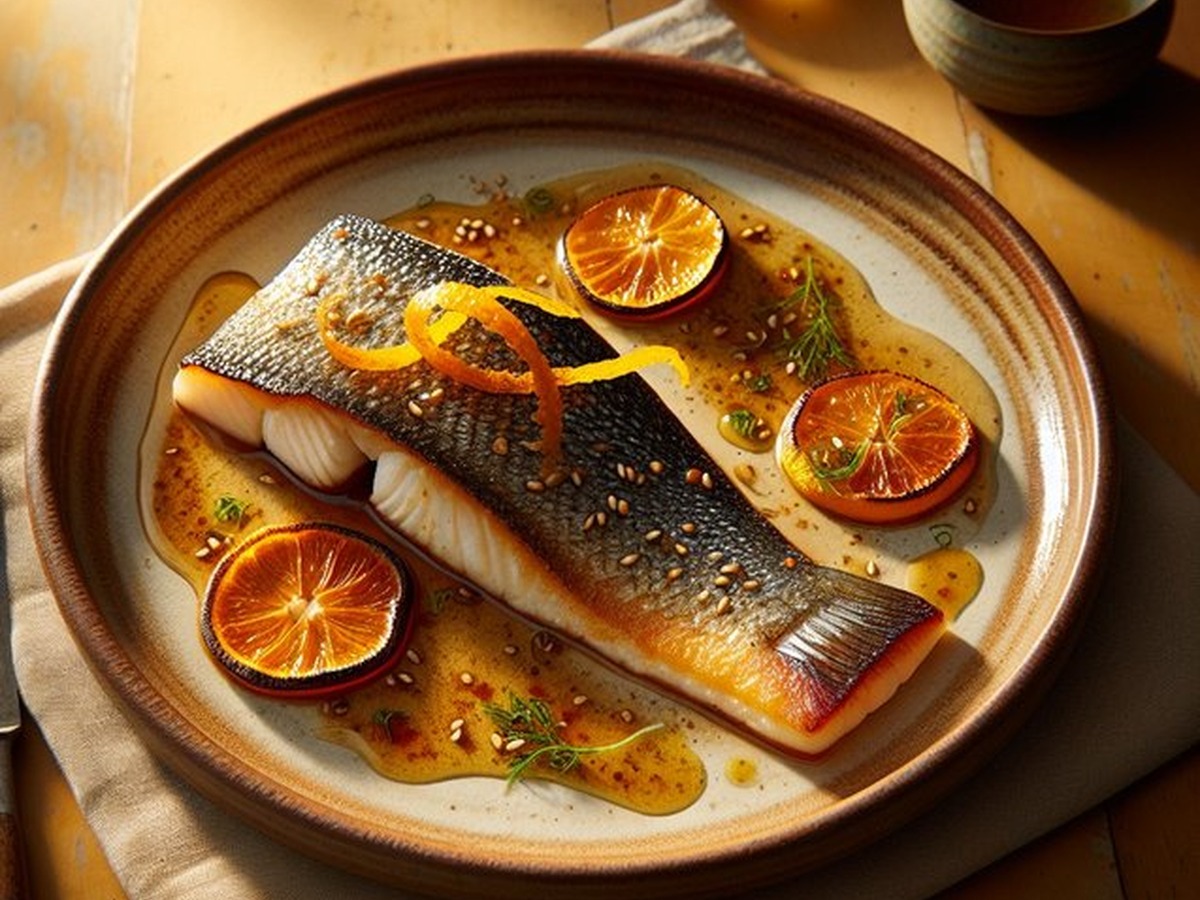
Orange-Lime Sea Bass with Ginger and Sesame
Crisp-skinned sea bass meets a glossy orange-lime sesame glaze with ginger, garlic, and green onion for a quick, bright dinner.
About This Recipe
Citrus Sesame Seared Sea Bass is a quick skillet dinner with a satisfying contrast of textures. The fish develops a crisp skin in the pan while an orange-lime glaze brings honeyed brightness, ginger warmth, garlic, and toasted sesame. Green onions and sesame seeds finish the plate with a little freshness and crunch.
Citrus, sesame, and soy appear together in many modern home kitchens because their flavors balance so naturally. This recipe is a contemporary cross-cultural interpretation rather than a claim to one traditional regional preparation, pairing Mediterranean-style fish cookery with a bright sesame glaze. The result is light enough for a weeknight but polished enough to serve when you want dinner to feel deliberate.
The most important step is drying the fish thoroughly before it reaches the skillet. Moisture on the skin creates steam, while a dry surface can make direct contact with the hot oil and turn crisp. Pressing the fillets briefly when they first go in also helps the skin stay flat instead of curling away from the pan.
Whisk the glaze before cooking so it is ready when the fish is done. Orange juice supplies rounded sweetness, lime keeps it lively, soy adds savory depth, and honey helps the mixture coat the fillets; ginger, garlic, zest, and sesame oil fill in the aroma. Boil the clean glaze only after the fish has been transferred, which keeps the sauce separate from raw fish juices and gives it a clearer finish.
Sea bass is excellent with a simple side that lets the glaze do the work. Steamed rice, soba noodles, wilted greens, cucumber salad, or roasted asparagus all provide a quiet backdrop, while a few extra lime wedges make the plate feel even brighter. Serve the fish as soon as it is glazed so the skin stays crisp against the glossy sauce.
Because the skillet method is short, this is best cooked close to serving, but the glaze can be made a day ahead. Refrigerate leftovers within two hours in a shallow airtight container and use them within three to four days. Reheat gently in a covered skillet with a splash of water or broth and stop as soon as the center reaches 165°F (74°C) to protect the fish from drying out.
Ingredients
- 4 skin-on sea bass fillets, about 5 oz each (560g total)
- 1/2 teaspoon kosher salt (3g)
- 1/4 teaspoon black pepper (0.5g)
- 1 tablespoon neutral oil (15mL)
- 3 tablespoons fresh orange juice (45mL)
- 1 tablespoon fresh lime juice (15mL)
- 1 tablespoon low-sodium soy sauce (15mL)
- 1 tablespoon honey (21g)
- 1 teaspoon grated fresh ginger (5g)
- 1 garlic clove, minced (3g)
- 1 teaspoon toasted sesame oil (5mL)
- 1 teaspoon finely grated orange zest (2g)
- 2 tablespoons toasted sesame seeds (18g)
- 2 green onions, thinly sliced
This post contains Amazon affiliate links. We may earn a commission if you purchase through them, at no additional cost to you.
Step by Step Instructions
- Whisk the glaze Whisk the orange juice, lime juice, soy sauce, honey, ginger, garlic, toasted sesame oil, and orange zest in a small bowl until smooth.
- Dry and season the fish Pat the sea bass fillets very dry, especially on the skin side, and season both sides with the kosher salt and black pepper.
- Heat the skillet Heat the neutral oil in a heavy skillet over medium-high heat until it shimmers but does not smoke.
- Sear the skin Add the sea bass skin-side down, press each fillet gently for 20 seconds to prevent curling, and cook without moving for 4 to 5 minutes, until the skin is crisp.
- Finish the fish Turn the fillets and cook for 1 to 2 minutes more, until the thickest portion reaches 145°F (63°C); transfer them to a clean plate.
- Reduce the glaze Pour the clean citrus-sesame glaze into the skillet and boil for 1 to 2 minutes, until lightly thickened.
- Garnish and serve Spoon the hot glaze over the Citrus Sesame Seared Sea Bass and finish with the toasted sesame seeds and sliced green onions.
Utensils
- Heavy skillet
- Fish spatula
- Mixing bowl
- Whisk
- Measuring spoons
- Citrus juicer
- Microplane grater
- Chef's knife
- Cutting board
- Instant-read thermometer
This post contains Amazon affiliate links. We may earn a commission if you purchase through them, at no additional cost to you.
Nutrition Per Serving
| Nutrient | Amount | % Daily Value* |
|---|---|---|
| Calories | 320 kcal | 16% |
| Protein | 36 g | 72% |
| Fat | 14 g | 18% |
| Carbohydrates | 10 g | 4% |
| Fiber | 1 g | 4% |
| Sodium | 450 mg | 20% |
Nutrition is an estimate based on the listed ingredients and four servings.
Variations & Serving Suggestions
- Replace sea bass with similar-thickness salmon or cod and cook to the same safe internal temperature.
- Omit sesame oil and increase toasted sesame seeds to 2 1/2 tablespoons.
- Replace orange juice with equal-volume mandarin juice for a softer citrus note.
Storage & Reheating
Within two hours of cooking, divide leftover sea bass into shallow portions and refrigerate it in an airtight container at 40°F (4°C) or below. Use refrigerated leftovers within three to four days, or freeze them sooner if they will not be used in that window.
Reheat gently in a covered skillet over low heat with a small splash of water, broth, or sauce. Stop as soon as the center reaches 165°F (74°C) to limit overcooking.
Practical Cooking Notes
A dry surface and a hot skillet are the keys to crisp, intact skin.
Reduce the citrus-sesame glaze only after the fish leaves the pan.
Sea bass is ready at 145°F (63°C); reheat leftovers to 165°F (74°C).
Frequently Asked Questions
How do I keep sea bass skin from sticking to the skillet?
Dry the skin thoroughly, preheat the skillet and oil, press each fillet briefly when it goes in, and leave it undisturbed until the skin has crisped and releases naturally.
Can I make the citrus-sesame glaze ahead?
Yes. Whisk the orange juice, lime juice, soy sauce, honey, ginger, garlic, sesame oil, and zest up to one day ahead and refrigerate the mixture covered. Boil the clean glaze only after the fish leaves the skillet.
What can replace toasted sesame oil?
Omit the teaspoon of sesame oil and increase the toasted sesame seeds to 2 1/2 tablespoons. The extra seeds preserve nuttiness without making the glaze greasy.
Can I use another fish in this recipe?
Yes. Use four similar-thickness salmon or cod fillets and adjust the skillet time as needed. Cook the thickest part to 145°F (63°C) for immediate serving, or 165°F (74°C) when reheating leftovers.