Ginger Mango Sesame Salmon
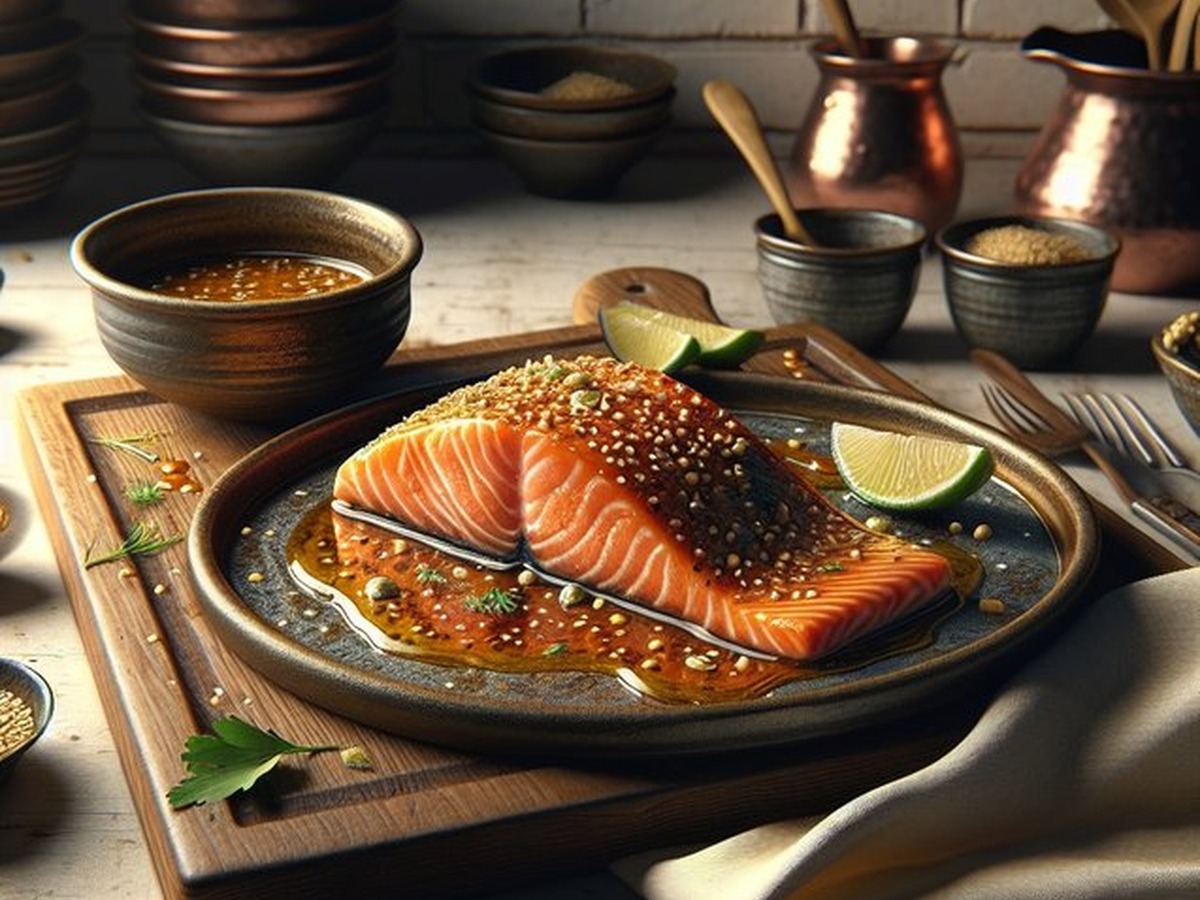
Pan-Seared Salmon with Mango, Ginger, and Sesame
Pan-seared salmon with a glossy ginger, sesame, and mango glaze, finished with lime, toasted sesame seeds, and green onions for a bright Japanese-inspired dinner.
About This Recipe
Ginger Mango Sesame Salmon is the kind of skillet dinner that feels special without asking for a long ingredient list. The fish is quickly marinated in soy, honey, lime, ginger, garlic, and sesame oil, then seared until the edges take on a little color. A handful of ripe mango goes into the same pan at the end, where it softens into a bright, glossy glaze.
The flavor profile starts with a pantry combination familiar in Japanese-inspired cooking: soy sauce for savory depth, ginger and garlic for fragrance, and sesame for a warm, nutty finish. Mango and lime bring a tropical, modern turn to that foundation, adding sweetness and acidity without making the dish heavy. It is a contemporary home-cooking idea rather than a traditional regional classic, which is precisely what makes it so easy to adapt to the fruit and herbs you have on hand.
Salmon benefits from a short marinade rather than an overnight soak. Fifteen minutes is enough time for the soy, citrus, and aromatics to season the surface, while a longer stay in the acidic mixture can make the outside of the fish soft. Pat the portions dry before they hit the skillet so they sear instead of steaming, and leave them alone until the first side has developed a golden crust.
The reserved glaze is kept separate from the raw-fish marinade, then added to the pan with the mango once the salmon is resting. Medium-low heat lets the honey caramelize gently while the fruit becomes tender and the sauce thickens around it. Return the fish only long enough to coat it, and use the thickest portion reaching 145°F (63°C) as the reliable doneness check.
Serve the salmon with the warm mango glaze, toasted sesame seeds, and green onions so every bite has a mix of richness, brightness, and crunch. Jasmine rice, coconut rice, or simply dressed greens make easy companions if you want to stretch the meal, while cucumber or radish adds a cool contrast. A final squeeze of lime at the table brings the flavors back into focus.
This recipe is especially useful on a weeknight because the sauce and garnish can be prepared while the fish marinates. Refrigerate leftovers in a shallow airtight container within two hours and use them within three to four days. Reheat gently in a covered skillet with a spoonful of water or extra glaze, stopping as soon as the salmon is hot so the flesh stays tender.
Ingredients
- 1 pound (454 g) salmon fillets, skin removed, cut into four portions
- 1 cup (165 g) diced ripe mango
- 2 tablespoons (30 mL) soy sauce
- 1 tablespoon (15 mL) honey
- 1 tablespoon (15 mL) fresh lime juice
- 1 teaspoon (5 mL) grated fresh ginger
- 2 garlic cloves, minced (6 g)
- 1 tablespoon (15 mL) sesame oil
- 1 tablespoon (15 mL) olive oil
- 1/2 teaspoon (2.5 g) kosher salt
- 1/4 teaspoon (1 g) black pepper
- 1 tablespoon (9 g) toasted sesame seeds
- 2 green onions, sliced (40 g)
This post contains Amazon affiliate links. We may earn a commission if you purchase through them, at no additional cost to you.
Step by Step Instructions
- Prepare the salmon Pat the salmon fillets dry and cut them into four portions.
- Season the fish Season the salmon evenly with the kosher salt and black pepper.
- Whisk the glaze In a small bowl, whisk together the soy sauce, honey, lime juice, grated ginger, minced garlic, and sesame oil.
- Reserve a clean portion Set aside about 2 tablespoons of the mixture for the finishing glaze, then pour the rest into a shallow dish.
- Marinate briefly Add the salmon portions to the remaining marinade, turn to coat, and let them stand for about 15 minutes, turning once.
- Heat the skillet Heat the olive oil in a large skillet over medium heat until it shimmers but does not smoke.
- Sear the salmon Lift the salmon from the marinade and let excess drip off. Sear for 3 to 4 minutes per side, until the thickest portion reaches 145°F (63°C) and flakes easily.
- Rest the fish Transfer the salmon to a clean plate and keep it warm while the glaze finishes.
- Build the mango glaze Reduce the heat to medium-low, add the diced mango and the clean reserved glaze, and cook just until the mango softens slightly and the sauce thickens.
- Coat the salmon Return the salmon to the skillet and turn the pieces gently through the glaze until warmed and glossy.
- Add the finishing garnish Sprinkle the toasted sesame seeds over the salmon and scatter the sliced green onions on top.
- Serve Serve the salmon immediately with the mango glaze spooned over each portion.
Utensils
- Cutting board
- Chef's knife
- Grater
- Small mixing bowl
- Whisk
- Shallow dish
- Measuring spoons
- Measuring cup
- Tongs
- Spatula
- Large skillet
- Serving plate
This post contains Amazon affiliate links. We may earn a commission if you purchase through them, at no additional cost to you.
Nutrition Per Serving
| Nutrient | Amount | % Daily Value* |
|---|---|---|
| Calories | 361 kcal | 18% |
| Protein | 25 g | 50% |
| Fat | 23.5 g | 36% |
| Carbohydrates | 13.0 g | 4% |
| Fiber | 1.1 g | 3% |
| Sugars | 10.0 g | 20% |
| Sodium | 766 mg | 33% |
Nutrition is an estimate based on the listed ingredients and four servings.
Variations & Serving Suggestions
- Swap mango for ripe peach, pineapple, or papaya when the season or market calls for it.
- Serve the salmon over jasmine or coconut rice, quinoa, or lightly dressed greens.
- Add red pepper flakes or a drizzle of sriracha when you want a little heat.
- Finish with cucumber ribbons, lime wedges, extra sesame seeds, or sliced green onion.
Storage & Reheating
Cool leftover salmon within two hours, transfer it to a shallow airtight container, and refrigerate it at 40°F (4°C) or below for three to four days. Keep the glaze with the fish so it protects the surface while it chills.
Reheat the salmon gently in a covered skillet over low heat with a spoonful of water or extra glaze. Stop as soon as it reaches 165°F (74°C), then finish with fresh green onion or lime to brighten the leftovers.
Practical Cooking Notes
Pat the portions dry immediately before seasoning so the skillet can create a browned surface instead of steam.
Measure out the finishing glaze before the salmon goes into the marinade; never reuse liquid that has touched raw fish without cooking it.
Mango only needs a short time in the skillet. Remove the pan from the heat when the glaze coats the spoon and the fruit is just tender.
Troubleshooting
The salmon is pale.
Likely cause: The surface was wet or the skillet was not hot enough.
Fix: Pat the fish dry, preheat the skillet until the oil shimmers, and avoid crowding the portions.
The glaze tastes too salty.
Likely cause: The soy sauce and marinade reduced too far.
Fix: Keep the heat at medium-low and remove the pan once the glaze lightly coats the mango and salmon.
The fish is dry.
Likely cause: The portions stayed in the skillet after reaching doneness.
Fix: Use 145°F (63°C) as the doneness cue and return the salmon to the glaze only for a brief coating.
Frequently Asked Questions
Can I use frozen salmon for this recipe?
Yes. Thaw the salmon overnight in the refrigerator, then drain it and pat it very dry before seasoning. Removing surface moisture helps the portions brown instead of steaming in the skillet.
How long should I marinate the salmon?
About 15 minutes is enough for this soy, lime, ginger, and garlic marinade. Keep the marinating time short because the lime juice can soften the outside of the fish if it sits much longer.
What can I use instead of mango?
Use an equal amount of ripe peach, pineapple, or papaya. Choose fruit that is sweet and firm enough to hold its shape briefly in the skillet, then taste the glaze and add a little extra lime if it needs more brightness.
How do I keep the mango glaze from burning?
Lower the heat to medium-low before adding the clean reserved glaze and mango. Stir just until the fruit softens and the sauce thickens, then return the cooked salmon for only a brief coating so the honey does not scorch and the fish does not overcook.