How to Pan-Sear Salmon: Timing, Temperature, and Doneness
Sear fresh or thawed salmon until golden, then check the thickest part with a thermometer. FDA recommends 145°F for fin fish.
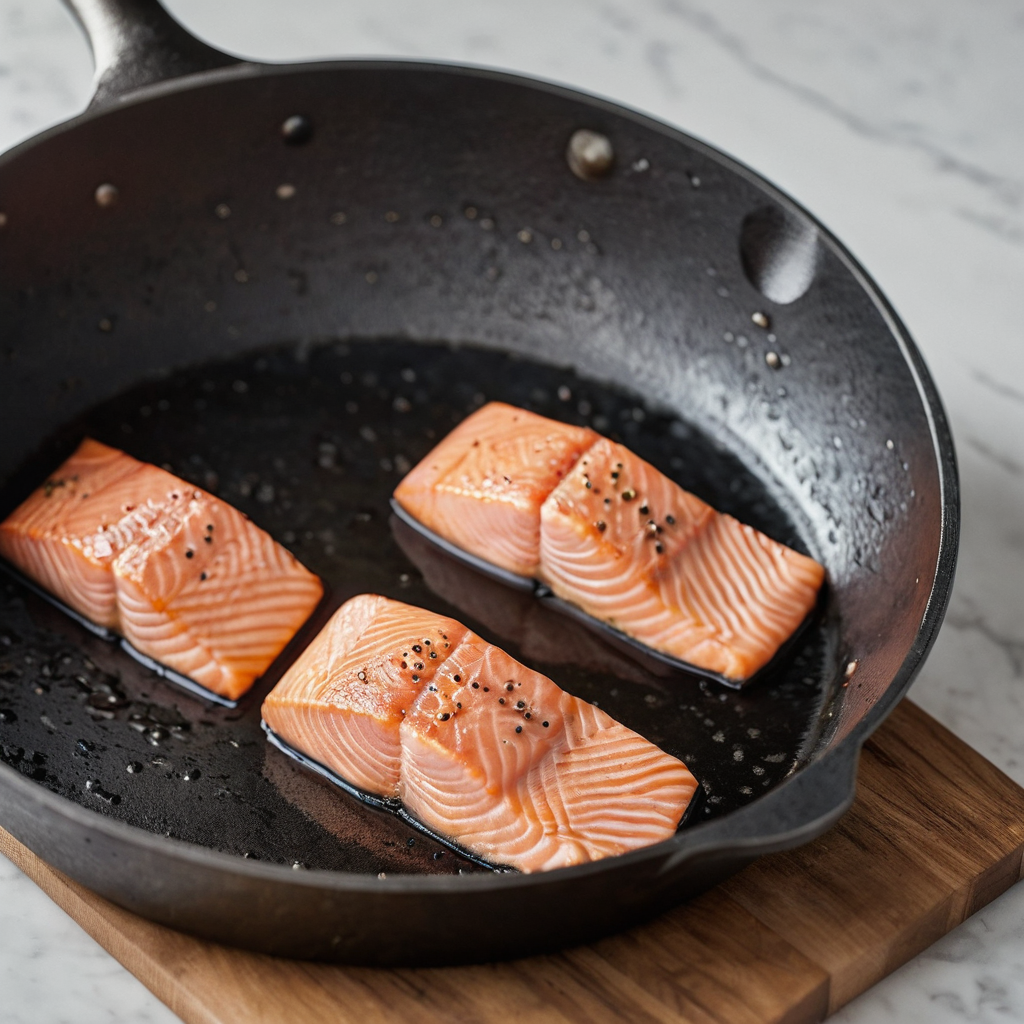
Purpose
A hot skillet helps brown the surface while you watch the center for doneness. The timing below follows the Alaska Seafood Marketing Institute’s example; FDA guidance provides the safety check.
When To Use It
Use this approach with fresh or thawed salmon. ASMI’s 3 to 4 minutes per side is an example for standard-thickness portions; thicker cuts may take longer. For two HC variations, see Ginger Mango Sesame Salmon and Starfruit Ginger Salmon.
Equipment
Set out a heavy skillet, cooking oil, a food thermometer, and a clean plate. Keep raw salmon separate from ready-to-eat food, and wash utensils and surfaces before reuse.
Procedure
- Heat oil in a heavy skillet over medium-high heat, then add fresh or thawed salmon portions.
- ASMI’s example cooks standard-thickness portions for 3 to 4 minutes per side. The Starfruit Ginger Salmon recipe uses a golden underside and easy release from the pan as its cue to turn.
- Continue cooking as needed, then check the thickest portion with a food thermometer. FDA recommends 145°F for fin fish.
- For the 2-pound, skin-on fish in our Tangelo Saffron Salmon recipe, sear skin-side down for 3 minutes, then finish in a 400°F oven for 6 to 8 minutes. Check the thickest part for 145°F.
Visual Cues
Look for a golden underside and easy release from the skillet. Cooked flesh should be opaque and separate easily with a fork. Use those cues to judge texture; check 145°F at the thickest part with a thermometer to confirm safe doneness.
Common Fixes
- If the salmon sticks, give it more time to brown before turning; the Starfruit Ginger Salmon recipe uses an easy-release underside as its cue.
- Thicker portions may need more time. Check the thickest part with a thermometer, since the clock and appearance alone cannot confirm safety.
- The timing above is for fresh or thawed salmon. Choose a method with frozen-fish instructions when cooking from frozen.
- Keep raw salmon separate from ready-to-eat food. After handling it, wash utensils and surfaces, and use a clean plate for the cooked fish.