Moonflower Miso Glaze Salmon
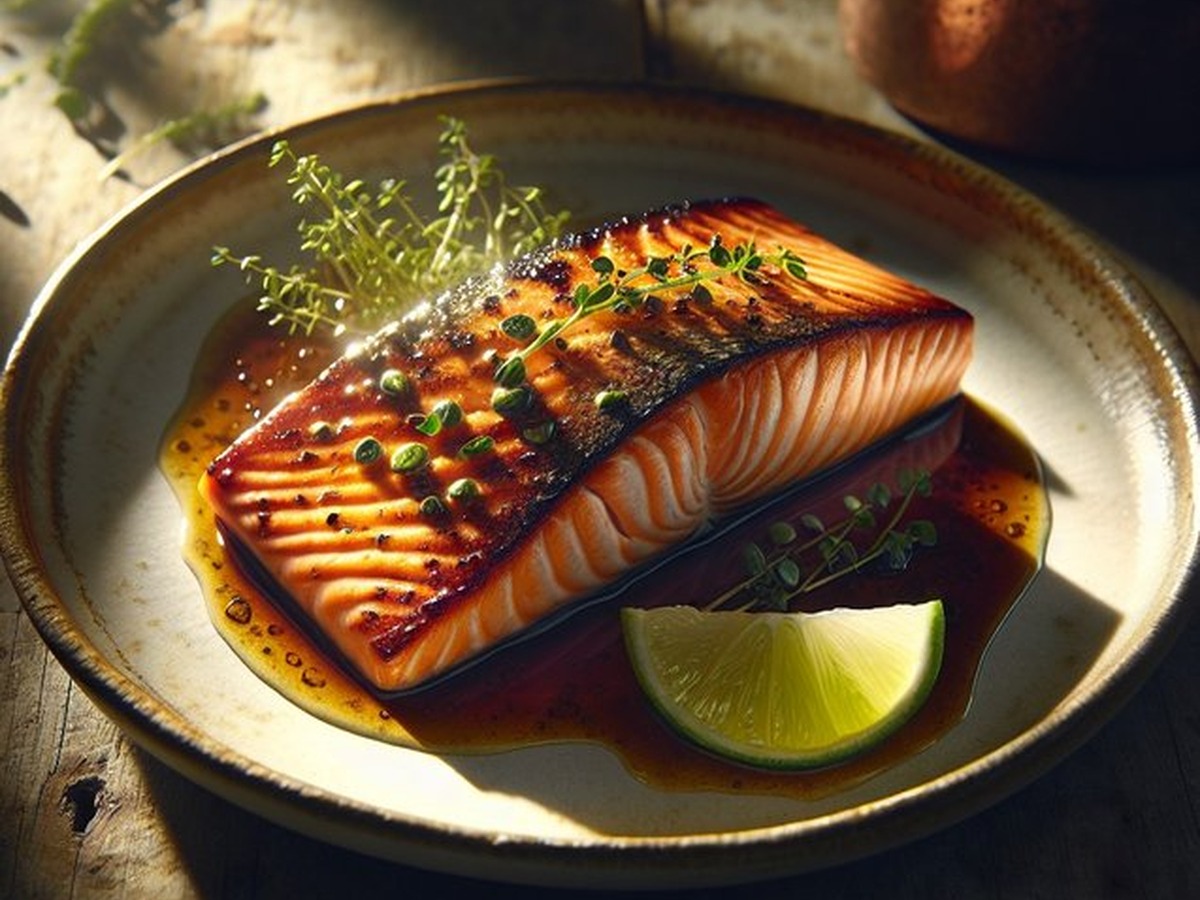
Roasted Salmon with White Miso, Mirin, and Lime
Oven-roasted salmon is brushed with a glossy white miso, mirin, honey, ginger, and lime glaze, then finished under the broiler with black sesame for a bright Japanese-inspired dinner.
About This Recipe
Moonflower Miso Glaze Salmon turns a short list of pantry ingredients into a dinner with a luminous finish. White miso, mirin, honey, soy sauce, rice vinegar, sesame oil, ginger, and lime form a glaze that is savory, sweet, bright, and gently aromatic. The salmon roasts until tender, then takes a quick turn under the broiler so the surface catches the light and the edges caramelize.
Miso is a fermented soybean paste central to many Japanese soups, marinades, and sauces, prized for the depth it adds without needing a long list of seasonings. Mirin brings soft sweetness and sake-like aroma, while rice vinegar and lime keep the glaze from feeling heavy. The name Moonflower is a creative cue for the pale, glossy coating and dark sesame finish rather than a claim of traditional regional history; the cooking itself is a modern Japanese-inspired weeknight approach.
Drying the salmon before glazing is a small step with a noticeable payoff. Paper towels remove surface moisture so the glaze clings instead of sliding into steam, and the fish can develop a lightly lacquered edge in the oven. Because salmon fillets vary in thickness, begin checking near the lower end of the cooking window and use 145°F (63°C) at the thickest point as the final doneness guide.
The broiler is what gives this recipe its dramatic finish, but it deserves attention. Miso and honey contain sugars that brown quickly, so one to two minutes is usually enough to create a caramelized surface without turning the glaze bitter. Stay close to the oven, pull the salmon as soon as the top is glossy and bronzed, and scatter the black sesame seeds while the fish is still warm.
Serve the salmon over steamed jasmine rice, barley, quinoa, or roasted vegetables so the grains and greens can catch the extra glaze. Bok choy, snap peas, cucumber, and quick-pickled daikon bring a crisp counterpoint, while lime wedges add a final spark at the table. A few scallion ribbons or edible flowers make the moonlit presentation playful without taking attention away from the fish.
The glaze can be whisked a day ahead and chilled in a covered container, which makes this an easy recipe for a busy evening or a small dinner gathering. Keep the salmon refrigerated until you are ready to cook it, and do not reuse glaze that has touched raw fish without boiling it thoroughly. Refrigerate leftovers within two hours, use them within three to four days, and reheat gently so the salmon stays moist.
Ingredients
- 1 pound (454 g) salmon fillets, skin removed
- 1/4 cup (60 mL) white miso paste
- 3 tablespoons (45 mL) mirin
- 2 tablespoons (30 mL) honey
- 1 tablespoon (15 mL) soy sauce
- 1 tablespoon (15 mL) rice vinegar
- 1 tablespoon (15 mL) sesame oil
- 1 teaspoon (5 mL) grated fresh ginger
- 1 tablespoon (15 mL) fresh lime juice
- 1 teaspoon (5 mL) black sesame seeds
This post contains Amazon affiliate links. We may earn a commission if you purchase through them, at no additional cost to you.
Step by Step Instructions
- Prepare the oven Preheat the oven to 400°F (200°C) and line a baking sheet with parchment.
- Dry the salmon Pat the salmon dry with paper towels and place the fillets on the lined sheet.
- Whisk the glaze Whisk together the white miso paste, mirin, honey, soy sauce, rice vinegar, sesame oil, grated ginger, and lime juice until smooth.
- Brush the fillets Brush the salmon generously with the glaze, turning to coat evenly.
- Bake the salmon Bake in the preheated oven for 10 to 12 minutes, or until the salmon is just cooked through and flakes easily.
- Broil for caramelization If you like a more caramelized glaze, switch to the broiler for 1 to 2 minutes, watching closely.
- Finish and serve Remove the salmon from the oven, brush with any remaining glaze, and sprinkle with the black sesame seeds.
Utensils
- Oven
- Rimmed baking sheet
- Parchment paper
- Mixing bowl
- Whisk
- Pastry brush
- Measuring cups
- Measuring spoons
- Tongs
- Serving plate
This post contains Amazon affiliate links. We may earn a commission if you purchase through them, at no additional cost to you.
Nutrition Per Serving
| Nutrient | Amount | % Daily Value* |
|---|---|---|
| Calories | 369 kcal | 18% |
| Protein | 25 g | 50% |
| Fat | 19 g | 29% |
| Fiber | 0 g | 0% |
| Sodium | 646 mg | 28% |
Nutrition is an estimate based on the listed ingredients and four servings.
Variations & Serving Suggestions
- Swap white miso for yellow miso or chickpea miso for a different savory profile.
- Replace honey with maple syrup or agave when you want a plant-based glaze.
- Use tamari instead of soy sauce for a gluten-free version, checking labels as needed.
- Serve with sesame-scented rice, roasted broccolini, cucumber, daikon, or snap peas.
Storage & Reheating
Cool leftover salmon within two hours, transfer it to a shallow airtight container, and refrigerate it at 40°F (4°C) or below for three to four days. Keep any glaze with the fish so it protects the surface while it chills.
Reheat gently in a covered skillet over low heat with a spoonful of water or sauce, stopping as soon as the fish is hot. Avoid a second broil, which can dry the salmon and darken the glaze.
Practical Cooking Notes
Surface moisture makes fish steam. Pat the salmon dry immediately before brushing it with glaze so the coating can turn glossy in the oven.
If you want to brush the fish after baking, reserve a small amount before the glaze touches the raw salmon. Never reuse the raw-fish portion without cooking it.
The miso and honey can brown in seconds. Watch the final minute closely and pull the tray when the glaze is bronzed rather than dark.
Troubleshooting
The glaze is pale.
Likely cause: The broiler was not used or the fish was too far from the heat.
Fix: Finish for 1 to 2 minutes under the broiler, watching closely so the sugars caramelize without burning.
The salmon is dry.
Likely cause: The fillets were thin or stayed in the oven past doneness.
Fix: Start checking early and remove the fish at 145°F (63°C), allowing carryover heat to finish the center.
The glaze is too sweet.
Likely cause: The honey and mirin reduced without enough acidity.
Fix: Add the measured rice vinegar and lime, then serve with crisp greens or pickles to balance the finish.
Frequently Asked Questions
Can I make the miso glaze ahead of time?
Yes. Whisk the glaze up to one day ahead, cover it, and refrigerate it, then let it stand briefly so it spreads easily over the salmon. Stir it before brushing because the miso can settle.
How do I keep the salmon from drying out under the broiler?
Bake the fillets only until they are nearly cooked through, begin checking the center early, and broil for just 1 to 2 minutes. Remove the salmon when the thickest part reaches 145°F (63°C), since the glaze can brown after the fish is already done.
Do I need to marinate the salmon before glazing?
No. The glaze is concentrated enough to season the fish during baking, so a long marinade is unnecessary. Pat the fillets dry, brush them generously before cooking, and use a second light brush after the oven if you have clean glaze remaining.
What sides pair well with Moonflower Miso Glaze Salmon?
Steamed jasmine rice, roasted broccolini, bok choy, snap peas, cucumber salad, or quick-pickled daikon all work well. Choose one warm starch and one crisp or green side to balance the sweet-savory glaze.