Blenders vs Food Processors for Sauces
Choose the machine by the texture you want: silky, rustic, chopped, emulsified, or blended directly in the pot.
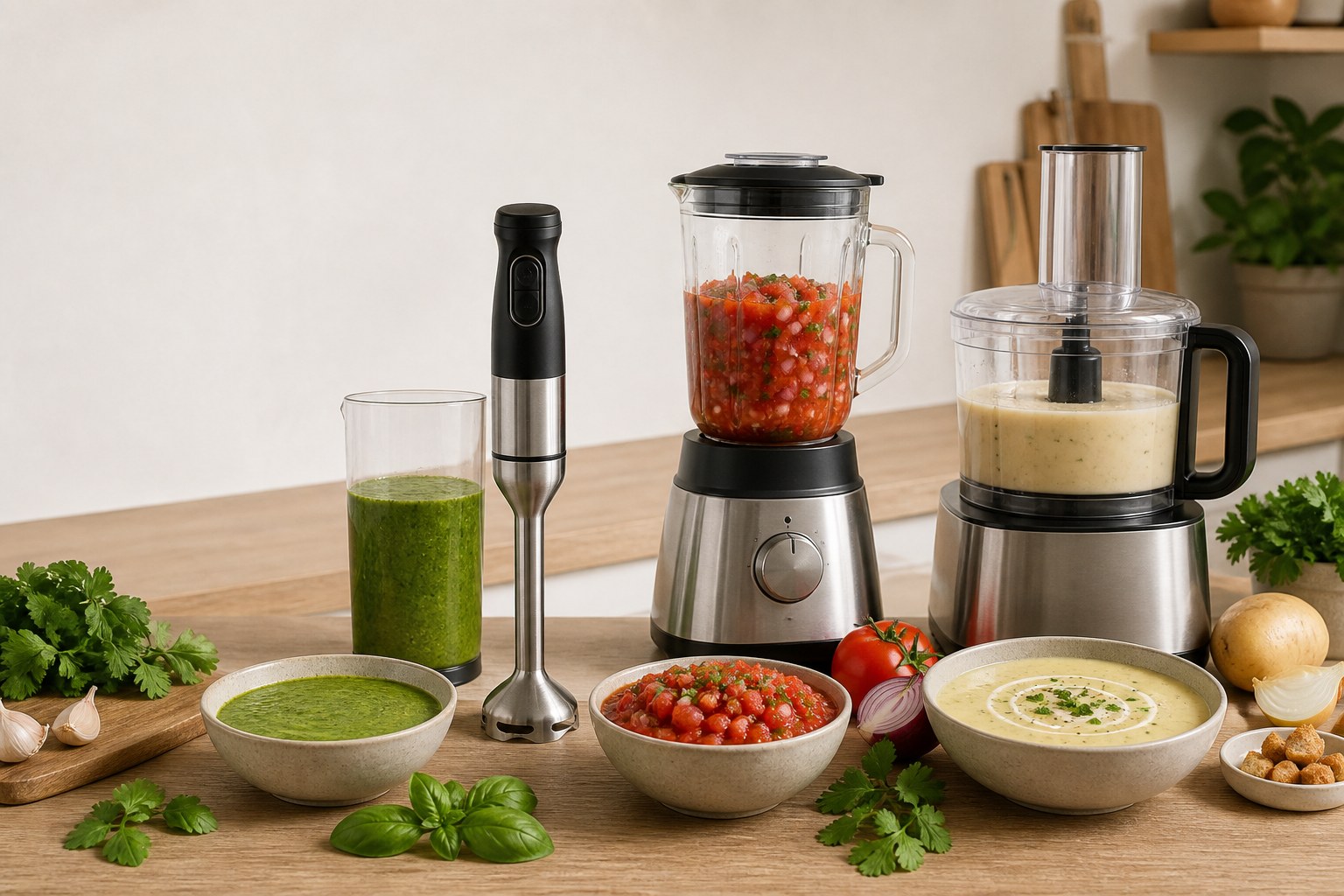
Countertop blender: smooth and fluid
A blender's tall jar pulls liquid toward fast-moving blades, making it the strongest choice for smooth soups, pourable sauces, dressings, and purées. It needs enough liquid to circulate. When blending hot food, follow the appliance instructions, work in smaller batches if required, and allow steam to escape only in the manner the manufacturer specifies.
Food processor: controlled texture
The wide bowl and pulsing action suit pesto, salsa, chopped aromatics, dough-like mixtures, and thicker spreads. It can leave intentional texture rather than forcing everything through a narrow vortex. Stop and scrape the bowl so ingredients process evenly instead of running the motor continuously.
Immersion blender: speed in the pot
An immersion blender reduces transfers and cleanup for soups and loose sauces. Keep the blade guard fully submerged before switching it on, use a deep container, and stop the motor before lifting the head. It is convenient, but many models will not make fibrous ingredients as silky as a high-powered countertop blender.
Build an emulsion deliberately
For mayonnaise-style sauces and dressings, introduce oil gradually while the water-based ingredients are moving. A narrow vessel helps an immersion blender establish a stable flow; a processor's feed tube can meter oil steadily. If a sauce breaks, a spoonful of water or a fresh base can sometimes start a new emulsion into which the broken sauce is slowly worked.
Buying without overbuying
Consider the textures you make every week, the storage space you actually have, and whether the parts are easy to clean. A secure lid, stable base, replacement parts, and straightforward controls matter more than a long preset list. One well-chosen tool may cover most needs; the guide is a decision framework, not a recommendation to own all three.