Sichuan-Style Mapo Tofu With Crispy Garlic And Chili
Sichuan-Style Mapo Tofu with Fermented Chili-Bean Sauce
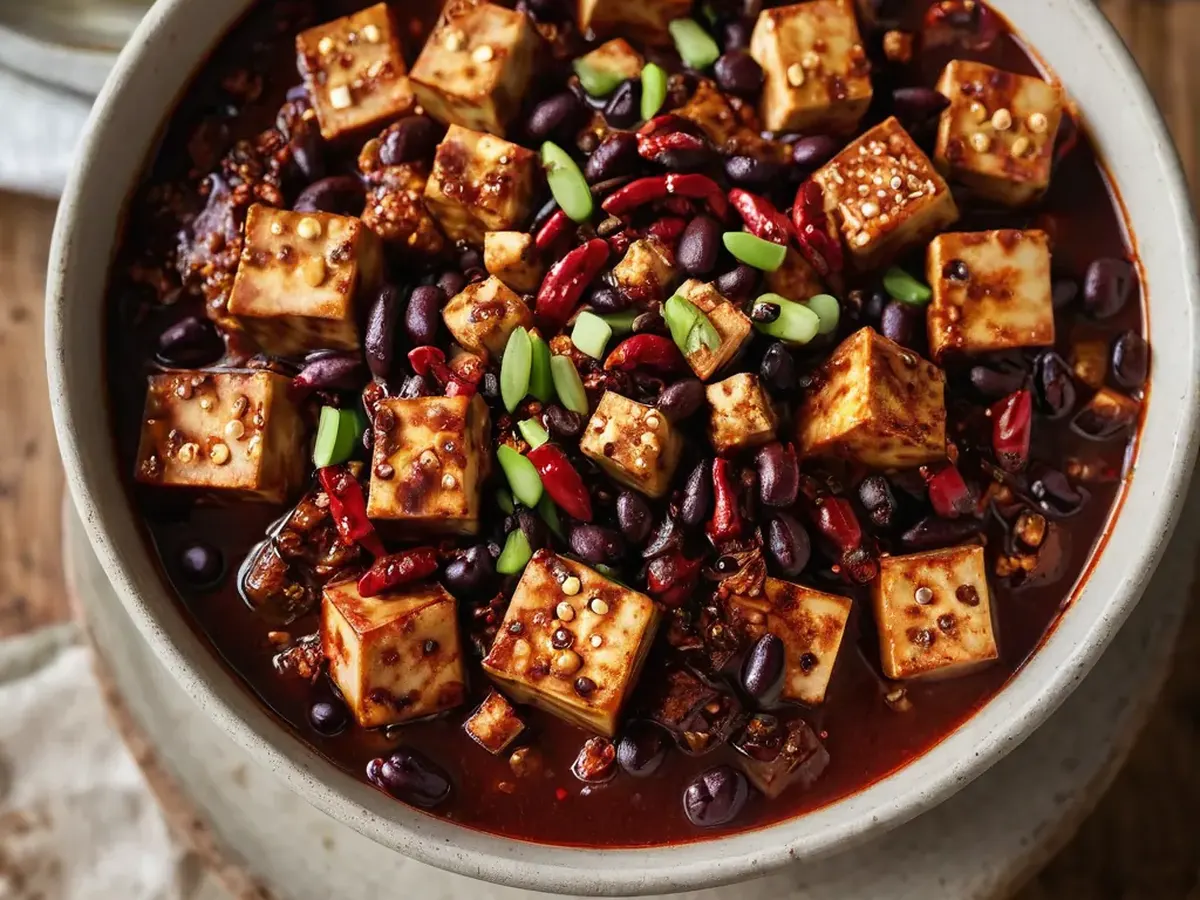
Silken tofu simmers in a savory doubanjiang and black-bean sauce, then gets finished with crisp garlic, dried chilies, and Sichuan peppercorns.
About This Recipe
Sichuan-Style Mapo Tofu With Crispy Garlic And Chili layers soft tofu with a deep red, savory sauce and a lively finish of fried garlic. Doubanjiang and fermented black beans bring salty, fermented depth, while dried chilies and Sichuan peppercorns create the familiar balance of heat and tingle. The tofu stays delicate and creamy inside, making the crisp garnish and aromatic oil especially welcome at the table.
Mapo tofu is one of the best-known dishes associated with Sichuan cooking, a style celebrated for bold aromatics and the interplay of spicy heat with Sichuan pepper's numbing sensation. The dish changes from kitchen to kitchen, but doubanjiang, tofu, and a fragrant chili base give it a recognizable center. This home-style version keeps the spirit of that balance while making the crisp garlic topping part of the main experience.
Begin by warming the tofu in water while the sauce is mixed. The gentle heat takes the chill off the cubes and helps them settle into the simmering sauce without a sharp temperature change. Whisk the broth, soy sauces, wine, sugar, salt, cornstarch, and water until smooth so the starch can thicken evenly later.
The garlic, chilies, and peppercorns are cooked separately so their aromas stay clear and their textures remain distinct. Keep the oil at moderate heat and remove the garnish as soon as the garlic turns golden, since bitter burnt garlic can overwhelm the fermented bean flavors. Leaving the seasoned oil in the skillet gives the sauce a fragrant foundation.
Frying the doubanjiang and black beans briefly unlocks their color and savory depth before the broth is added. Once the sauce reaches a gentle simmer, slide in the warm tofu and move it with a tilt of the pan rather than a hard stir. The cubes need only a few minutes to absorb the chili-bean flavor while the cornstarch turns the sauce glossy.
Serve the tofu over plain steamed rice, with a cooling cucumber or leafy vegetable side to make the peppercorn tingle easier to appreciate. Reduce the dried chilies for a gentler dish, but keep enough doubanjiang to preserve the sauce's fermented character. Cool leftovers within two hours, refrigerate them for 3 to 4 days, and reheat gently with a splash of broth because silken tofu becomes more fragile after chilling.
Ingredients
- 14 ounces firm silken tofu, drained and cut into 1-inch cubes
- 2 tablespoons vegetable oil, divided
- 1 tablespoon Sichuan peppercorns, toasted and coarsely ground
- 1 tablespoon dried red chilies, torn into pieces
- 6 cloves garlic, thinly sliced
- 1 tablespoon fermented black beans, rinsed and chopped
- 2 tablespoons doubanjiang (spicy broad bean paste)
- 1 cup vegetable broth
- 1 teaspoon light soy sauce
- 1 teaspoon Shaoxing wine
- 1 teaspoon dark soy sauce for color
- 1 teaspoon cornstarch
- 1 teaspoon water
- 1 teaspoon sugar
- 1 teaspoon sesame oil
- 2 green onions, sliced
- 1/2 teaspoon salt
Step-by-Step Instructions
- Warm the tofu and mix the slurry Gently place the cubed tofu into a bowl of warm water to keep it warm while you prepare the aromatics. In a small bowl, whisk together the vegetable broth, soy sauces, Shaoxing wine, sugar, salt, cornstarch, and water until the cornstarch is fully dissolved.
- Crisp the garlic and chilies Heat 1 tablespoon of vegetable oil in a wok or large skillet over medium heat. Add the dried chilies and ground Sichuan peppercorns, stirring constantly for 30 seconds until fragrant but not burnt. Add the sliced garlic and stir-fry for 1 to 2 minutes until golden and crisp. Remove the garlic and chilies with a slotted spoon and set them aside on paper towels, leaving the oil in the pan.
- Build the chili-bean sauce Add the remaining 1 tablespoon of oil to the pan and heat it over medium heat. Stir in the chopped fermented black beans and doubanjiang, frying for 1 minute until the oil turns deep red. Pour in the reserved broth mixture and bring it to a gentle simmer, stirring to dissolve the bean paste.
- Simmer the tofu gently Carefully slide the tofu cubes into the simmering sauce using a wide spatula. Do not stir vigorously; tilt the pan and nudge the tofu around the edges instead. Simmer for 3 to 4 minutes until the tofu is heated through and the sauce lightly coats it.
- Finish with sesame and scallions Drizzle the sesame oil over the tofu and sauce, then gently fold in the reserved crispy garlic and chilies. Remove the pan from the heat, transfer the dish to a serving bowl, garnish with the sliced green onions, and serve hot over steamed rice.
Utensils
- Bowl for warming the tofu
- Small mixing bowl
- Whisk
- Wok or large skillet
- Slotted spoon
- Wide spatula
- Paper towels
- Chef's knife and cutting board
- Measuring cups and spoons
- Serving bowl
Nutrition Per Serving
| Nutrient | Amount | % Daily Value* |
|---|---|---|
| Calories | 285 kcal | 14% |
| Protein | 12 g | 24% |
| Total Fat | 14 g | 18% |
| Saturated Fat | 3 g | 15% |
| Carbohydrates | 28 g | 10% |
| Fiber | 4 g | 14% |
| Sugars | 4 g | 8% |
| Sodium | 920 mg | 40% |
Nutrition is an estimate based on the listed ingredients and four servings.
Storage & Reheating
Within two hours of cooking, divide leftover Mapo Tofu into shallow portions and refrigerate them in an airtight container at 40°F (4°C) or below. Use refrigerated leftovers within 3 to 4 days; freezing is not recommended for silken tofu because thawing can make it spongy.
Reheat Mapo Tofu gently in a skillet over medium-low heat with a splash of vegetable broth or water. Nudge the tofu rather than stirring it, and verify that the center reaches 165°F (74°C) before serving.
Practical Cooking Notes
The tofu is ready when it is heated through and the sauce coats it lightly. Keep the simmer gentle and use the wide spatula to nudge the cubes instead of stirring through them.
Reduce the dried chilies for less direct heat, but keep the measured doubanjiang for its fermented depth. Plain rice and a cooling vegetable side make the peppercorn tingle easier to appreciate.
Troubleshooting
The sauce is too thin.
Likely cause: The cornstarch slurry settled or did not simmer long enough to activate.
Fix: Whisk the slurry again immediately before adding it and simmer gently for another minute until the sauce lightly coats the tofu.
The tofu breaks apart.
Likely cause: The pan was stirred too aggressively or the sauce reached a rolling boil.
Fix: Use warm tofu, a gentle simmer, and a wide spatula. Tilt the pan and nudge the cubes around the edges instead of stirring through them.
The dish tastes too salty.
Likely cause: Doubanjiang, soy sauce, and fermented black beans vary in saltiness.
Fix: Use low-sodium broth, taste before adding extra salt, and loosen the finished sauce with a splash of water or broth and a pinch of sugar.
Frequently Asked Questions
Can I make this dish without Sichuan peppercorns?
Yes, but the sauce will lose the citrusy aroma and numbing sensation that distinguish Sichuan-style cooking. You can add a little lemon zest for brightness, though it will not reproduce the peppercorn's texture or flavor.
How do I prevent the tofu from breaking apart?
Use warm tofu, a gentle simmer, and a wide spatula. Tilt the pan and nudge the cubes around the edges instead of stirring through them, and avoid a rolling boil.
How can I adjust the heat level in this dish?
Reduce the dried chilies or remove their seeds for less direct heat. Keep the doubanjiang measured because it supplies fermented depth as well as spice, and taste the sauce before adding any extra salt.
Can I freeze the leftovers?
Freezing is not recommended for silken tofu because thawing can make it spongy and release water into the sauce. Refrigerate leftovers for 3 to 4 days and reheat them gently for the best texture.