Soy-Glazed Ginger Scallion Beef Noodles
Soy-Glazed Ginger Scallion Beef Noodles is a Chinese recipe categorized as main course, with 20 min of prep, 10 min of cooking, and 30 min total. It yields 4 servings.
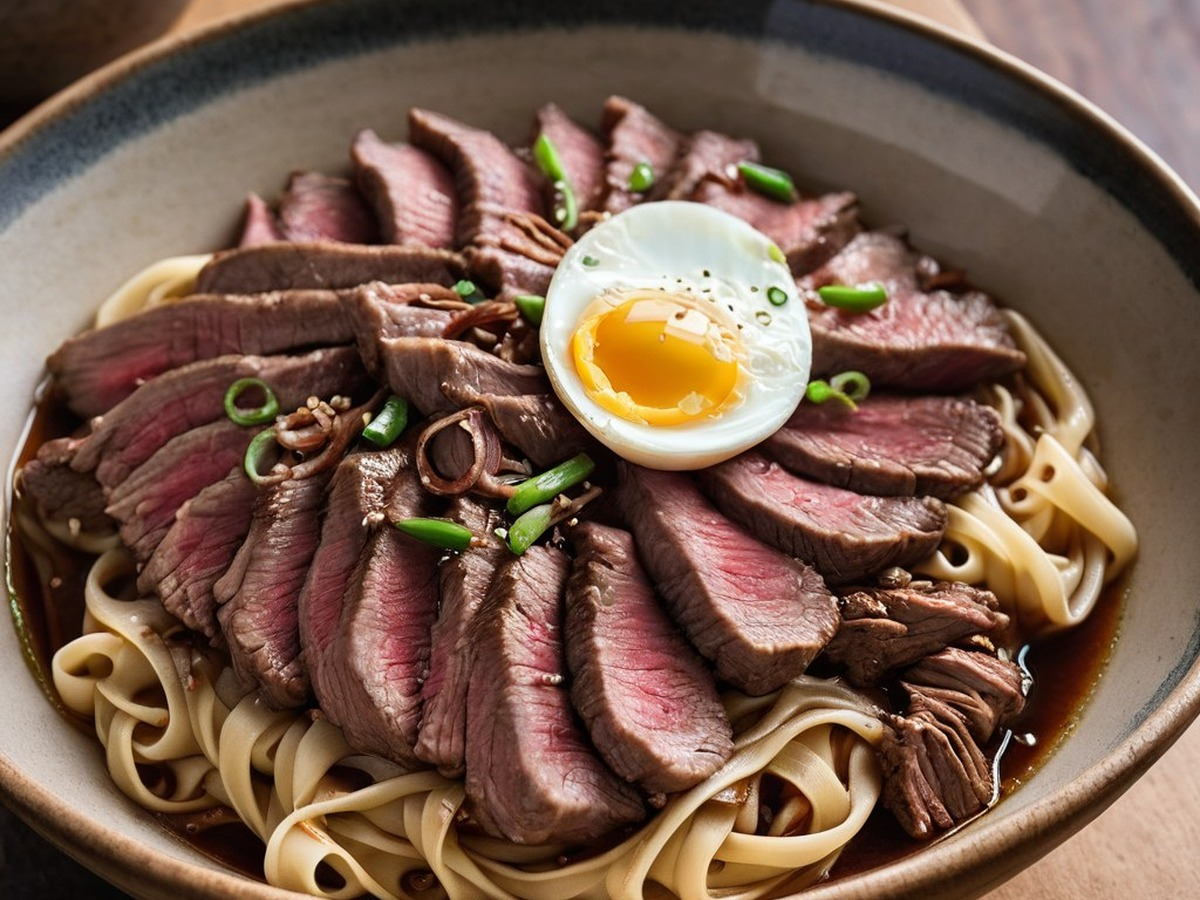
Flavor & Inspiration
Thinly sliced beef is seared quickly with ginger and the white parts of scallions, then coated in a soy-based glaze and tossed with noodles. Slicing against the grain and keeping the pan hot help the beef remain tender.
Ingredients
- 12 oz (340 g) flank steak, sliced thinly against the grain
- 1 tablespoon cornstarch
- 1 tablespoon soy sauce
- 1 teaspoon sesame oil
- 12 oz (340 g) fresh egg noodles or dried wheat noodles
- 2 tablespoons vegetable oil
- 1 tablespoon fresh ginger, grated
- 3 cloves garlic, minced
- 4 scallions, sliced (white and green parts separated)
- 1/3 cup soy sauce
- 2 tablespoons oyster sauce
- 1 tablespoon dark soy sauce
- 1 tablespoon sugar
- 1/2 cup beef broth
- 1 teaspoon sesame oil (for finishing)
Ingredient flexibility
flank steak: skirt steak
Expected result: Skirt steak is slightly more fibrous but offers a similar beefy flavor and tenderness when sliced correctly.
Adjustment: Slice against the grain just as firmly as flank steak; no other adjustments needed.
fresh egg noodles: dried wheat noodles
Expected result: Dried noodles have a firmer texture and may require slightly longer cooking times to achieve the same chewiness.
Adjustment: Follow package cooking times carefully and rinse with cold water after draining to stop the cooking process before tossing with the sauce.
oyster sauce: hoisin sauce
Expected result: Hoisin sauce is sweeter and less savory than oyster sauce, altering the flavor balance of the glaze.
Adjustment: Reduce the added sugar by half a teaspoon to compensate for the sweetness of the hoisin sauce.
Step-by-Step Instructions
- Marinate the beefIn a medium bowl, toss the sliced flank steak with 1 tablespoon cornstarch, 1 tablespoon soy sauce, and 1 teaspoon sesame oil until the meat is evenly coated. Let the beef rest at room temperature for 15 minutes while you prepare the other ingredients.
- Cook the noodlesBring a large pot of water to a boil and cook the egg noodles according to package directions until al dente. Drain the noodles and toss them with a teaspoon of sesame oil to prevent sticking, then set aside in a warm bowl.
- Sear the beefHeat a large wok or skillet over high heat until smoking, then add 1 tablespoon of vegetable oil. Add the marinated beef in a single layer and cook undisturbed for 2 minutes until a brown crust forms, then stir-fry for another 2 minutes until the beef is cooked through and reaches an internal temperature of 160°F. Transfer the beef to a plate and set aside.
- Stir-fry aromaticsIn the same wok, add the remaining 1 tablespoon of vegetable oil over medium-high heat. Add the white parts of the scallions, grated ginger, and minced garlic, stirring constantly for 30 seconds until fragrant but not browned.
- Simmer the glazePour in the soy sauce, oyster sauce, dark soy sauce, sugar, and beef broth, scraping up any browned bits from the bottom of the pan. Bring the mixture to a simmer and cook for 2 minutes until the sauce thickens slightly and the sugar dissolves completely.
- Combine and finishReturn the cooked beef and any accumulated juices to the wok, adding the cooked noodles and tossing everything together for 1 minute until the noodles are coated in the glaze. Stir in the green parts of the scallions and the final teaspoon of sesame oil, then remove from heat immediately.
Utensils
- Medium mixing bowl
- Large pot
- Colander
- Wok or large skillet
- Tongs or spatula
- Plate for the cooked beef
- Instant-read thermometer
- Chef's knife and cutting board
- Measuring cups and spoons
Nutrition Per Serving
- Calories: 520 kcal
- Protein: 28 g
- Fat: 18 g
- Carbohydrates: 62 g
- Fiber: 3 g
- Sodium: 1150 mg
Estimated per serving from the listed ingredients and yield; not a laboratory analysis.
Storage & Reheating
Storage
Refrigerate the leftover Soy-Glazed Ginger Scallion Beef Noodles within two hours of cooking by dividing them into shallow portions to ensure rapid cooling. Store the noodles and beef in an airtight or covered container at 40°F (4°C) or below, and consume them within 3 to 4 days for best quality and safety. Note that the noodles may absorb sauce over time, so you may need to add a splash of water or broth when reheating.
Reheating
Reheat this hot dish in a skillet or wok over medium heat to best retain the texture of the beef and the gloss of the glaze. Add a small splash of water or beef broth while tossing frequently to prevent the noodles from drying out and to ensure the sauce re-emulsifies. Verify that all leftovers reach an internal temperature of 165°F (74°C) before serving.
Practical Cooking Notes
The beef is done when it reaches an internal temperature of 160°F and has a firm, opaque appearance with no pink juices. The sauce is ready when it has thickened enough to coat the back of a spoon and bubbles vigorously.
Slicing the beef against the grain is critical to breaking down muscle fibers and ensuring a tender bite rather than a chewy texture. Stir-frying over high heat for a short duration prevents the beef from releasing too much moisture, which would otherwise dilute the glaze and result in steaming instead of searing.
Perishable leftovers must be refrigerated within two hours of cooking to prevent bacterial growth. Ensure the beef reaches an internal temperature of 160°F during the initial cooking, followed by a three-minute rest, and that any reheated portions reach 165°F.
The listed substitutions can change moisture, sweetness, salinity, and cook time; make one change at a time and judge the final texture before serving.
Editorially validated for internal consistency and food-safety rules; not yet independently kitchen-tested.
Troubleshooting
The beef is tough and chewy
Likely cause: The beef was sliced with the grain or cooked for too long.
Fix: Always slice the meat thinly against the grain and cook it quickly over high heat until it just reaches the target temperature.
The sauce is too thin
Likely cause: Too much liquid was added or the cornstarch was not used effectively.
Fix: Simmer the sauce longer to reduce it, or mix a teaspoon of cornstarch with cold water and stir it in to thicken the glaze quickly.
The noodles are mushy
Likely cause: The noodles were overcooked or left sitting in hot water.
Fix: Cook the noodles to al dente according to package instructions and rinse them with cold water immediately after draining to stop the cooking process.
Recipe FAQs & Cooking Guidance
Can I use a different cut of beef?
Yes, you can use skirt steak, sirloin, or even flank steak, provided you slice it thinly against the grain to ensure tenderness.
How do I prevent the noodles from sticking together?
Toss the cooked noodles with a small amount of sesame oil immediately after draining and keep them separate until you are ready to combine them with the sauce.
Can I make this dish spicy?
Absolutely; add 1 to 2 teaspoons of chili oil or sliced fresh chilies when stir-frying the aromatics to introduce heat without overpowering the ginger flavor.
Is this dish suitable for a gluten-free diet?
To make this gluten-free, substitute the soy sauce with a gluten-free tamari and ensure the noodles are made from rice or another gluten-free grain.