Braised Red-Curry Chicken With Lemongrass And Kaffir Lime
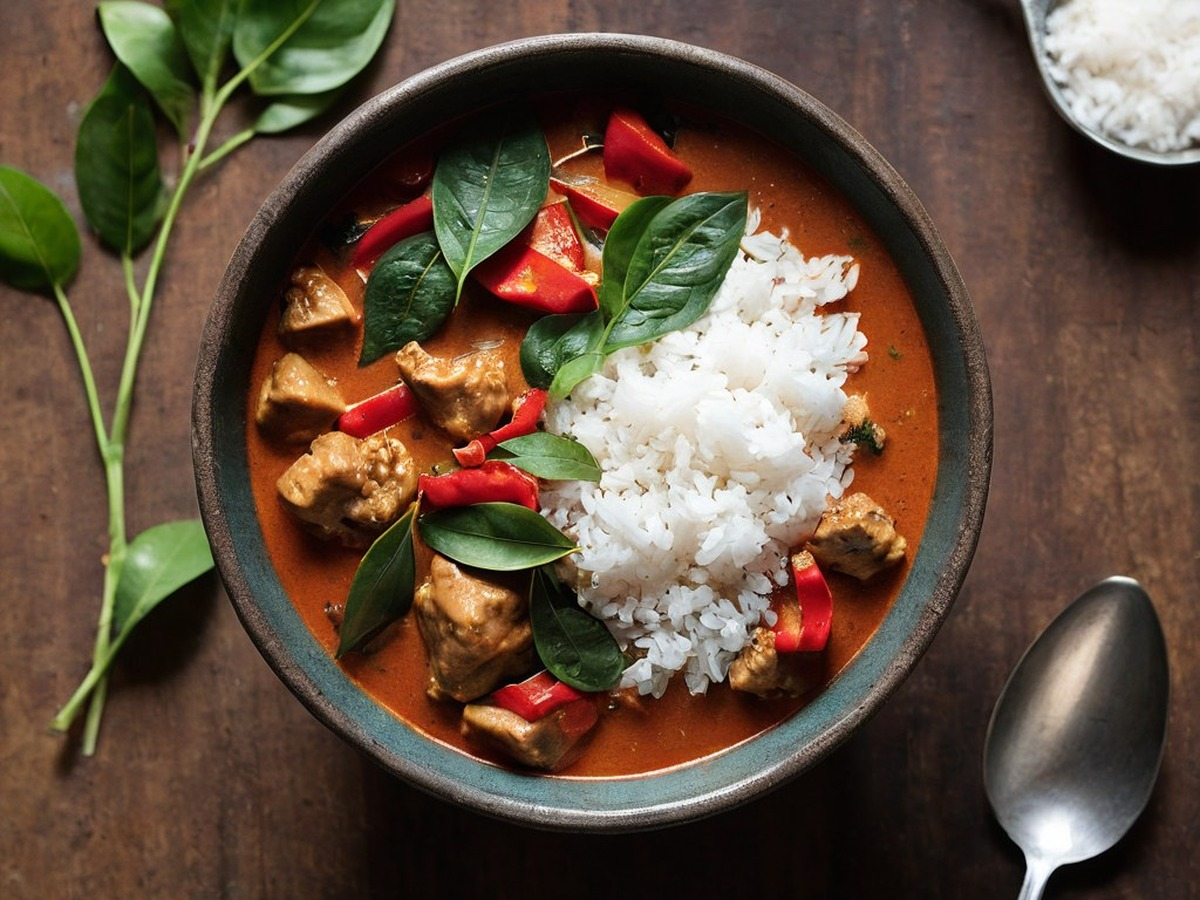
Coconut-Braised Chicken with Red Curry and Citrus
Chicken thighs are browned, then gently braised in coconut milk, red curry paste, lemongrass, and makrut lime before peppers, spinach, and fresh lime finish the sauce.
About This Recipe
This braised red-curry chicken is the kind of dinner that makes the kitchen smell inviting long before it reaches the table. Chicken thighs stay juicy as they simmer in coconut milk, while red curry paste gives the sauce color, warmth, and a savory depth. Lemongrass and makrut lime bring a bright citrus lift, so the finished bowl feels rich without becoming heavy.
The flavor profile draws on Southeast Asian curry traditions, where aromatic herbs, chile, coconut, and an assertive balance of salty, sweet, sour, and spicy notes work together. It is a home-kitchen braise rather than a strict regional classic, which leaves room for the pantry-friendly use of chicken broth and a little brown sugar. Makrut lime leaves add a floral citrus character that ordinary lime juice cannot provide on its own.
Start by drying and browning the chicken in batches if the pot feels crowded. Those golden bits on the bottom become part of the sauce when the coconut milk and broth are added, giving the braise more flavor than a one-step simmer. Blooming the curry paste in the same pot also softens its raw edge and wakes up the spices before the liquid goes in.
Keep the braise at a gentle simmer rather than letting it boil hard. A low, steady heat gives the chicken time to become tender while keeping the coconut milk smooth, and the covered pot holds in the lemongrass and lime-leaf aroma. Check the thickest piece at 165 degrees F (74 degrees C) so the doneness cue is clear even when the pieces vary in size.
Bell pepper, spinach, lime juice, and cilantro go in at the end to keep the bowl lively. The pepper should still have a little bite, the spinach only needs a brief wilt, and the lime should sharpen the sauce instead of disappearing into it. Taste before serving, because curry pastes and fish sauces vary in salt and heat from brand to brand.
Serve the curry over jasmine rice so every spoonful catches the coconut sauce. A cool cucumber salad, extra lime, or a few sliced chiles makes a refreshing counterpoint when you want more contrast. Cool leftovers within two hours, refrigerate them in shallow airtight containers, and use them within three to four days; reheat gently until the center reaches 165 degrees F (74 degrees C).
Ingredients
- 1 1/2 lb boneless, skinless chicken thighs, cut into 1-inch pieces (680g)
- 2 tablespoons neutral cooking oil (30mL)
- 2 tablespoons red curry paste (30g)
- 2 lemongrass stalks, bruised and cut into 2-inch pieces
- 4 makrut lime leaves, formerly called kaffir lime leaves, torn
- 1 can (13.5 oz) full-fat coconut milk (400mL)
- 1 cup low-sodium chicken broth (240mL)
- 1 tablespoon fish sauce (15mL)
- 1 teaspoon palm sugar or brown sugar (4g)
- 1 red bell pepper, sliced into strips (150g)
- 1 cup baby spinach (30g)
- 1 tablespoon fresh lime juice (15mL)
- 2 tablespoons fresh cilantro, chopped (8g)
- 3 cups cooked jasmine rice, for serving (450g)
This post contains Amazon affiliate links. We may earn a commission if you purchase through them, at no additional cost to you.
Step by Step Instructions
- Prepare the aromatics Bruise the lemongrass with the side of a knife, tear the makrut lime leaves, and slice the bell pepper. Pat the chicken dry so it can brown instead of steam.
- Brown the chicken Heat the oil in a large Dutch oven over medium-high heat. Add the chicken in a single layer and brown it for 3 to 4 minutes per side, working in batches if needed. Transfer the chicken to a plate.
- Bloom the curry paste Lower the heat to medium and add the red curry paste to the same pot. Stir for about 1 minute, scraping up the browned bits, until the paste smells fragrant.
- Build the braising liquid Add the lemongrass and makrut lime leaves, then pour in the coconut milk and chicken broth. Stir in the fish sauce and palm sugar until the sugar dissolves and the liquid is smooth.
- Braise the chicken Return the chicken and any juices to the pot. Bring the curry to a gentle simmer, cover, and cook for 18 to 20 minutes, stirring once or twice, until the chicken is tender.
- Add the bell pepper Stir in the sliced bell pepper and simmer uncovered for 5 minutes. The pepper should soften slightly while keeping enough bite to contrast with the creamy sauce.
- Finish with spinach and lime Remove the pot from the heat. Discard the lemongrass pieces and lime leaves, then fold in the spinach and lime juice until the spinach wilts.
- Check the chicken Use an instant-read thermometer in the thickest piece; the chicken should reach 165 degrees F (74 degrees C). Taste the sauce and adjust with a little more lime or fish sauce if needed.
- Serve over rice Spoon the curry over warm jasmine rice and scatter the cilantro over each bowl. Serve while the sauce is fragrant and the rice is hot.
Utensils
- Large Dutch oven or heavy-bottomed pot
- Chef's knife
- Cutting board
- Wooden spoon
- Tongs
- Liquid measuring cup
- Measuring spoons
- Instant-read thermometer
- Ladle
- Serving bowls
This post contains Amazon affiliate links. We may earn a commission if you purchase through them, at no additional cost to you.
Nutrition Per Serving
| Nutrient | Amount | % Daily Value* |
|---|---|---|
| Calories | 520 kcal | 26% |
| Protein | 31 g | 62% |
| Fat | 35 g | 45% |
| Saturated Fat | 24 g | 120% |
| Carbohydrates | 29 g | 11% |
| Sugars | 6 g | — |
| Fiber | 4 g | 14% |
| Sodium | 920 mg | 40% |
Nutrition is an estimate based on the listed ingredients and four servings.
Variations & Serving Suggestions
- Use extra bell pepper, mushrooms, or snap peas when you want more vegetables in the bowl.
- Serve with cucumber salad or steamed greens for a cool, crisp contrast to the coconut sauce.
- For a dairy-free table, keep the recipe as written and check packaged curry paste and fish sauce labels.
Storage & Reheating
Cool leftovers within two hours, transfer them to shallow airtight containers, and refrigerate at 40 degrees F (4 degrees C) or below. Use the curry within three to four days.
Reheat gently in a covered saucepan with a splash of broth or water, stirring occasionally, until the center reaches 165 degrees F (74 degrees C). Add fresh lime and cilantro after reheating.
Practical Cooking Notes
Give the chicken room in the pot so it can take on color instead of releasing liquid and steaming.
A low simmer keeps the coconut milk smooth and gives the chicken time to become tender.
Fresh lime and cilantro go in after the heat is off so the sauce stays bright and aromatic.
Frequently Asked Questions
Can I use chicken breasts instead of thighs?
Yes, boneless chicken breasts work, but they are leaner and can dry out sooner. Cut them into even pieces, keep the simmer gentle, and check the thickest piece at 165 degrees F (74 degrees C) rather than cooking by time alone.
What can I use if I cannot find makrut lime leaves?
Use 1 teaspoon of finely grated lime zest plus an extra teaspoon of lime juice at the end. The substitution will be less floral, but it will still give the coconut curry a fresh citrus edge.
How can I adjust the heat?
Use less red curry paste for a milder curry, or add extra paste or sliced fresh chile for more heat. Add in small amounts because curry pastes vary widely in intensity and saltiness.
Can I make this curry ahead of time?
Yes. The curry can be cooled, covered, and refrigerated for three to four days, and the flavor often rounds out overnight. Reheat it gently on the stovetop with a splash of broth or water, then add fresh lime and cilantro just before serving.