Tropical Sunshine Mango Saffron Risotto
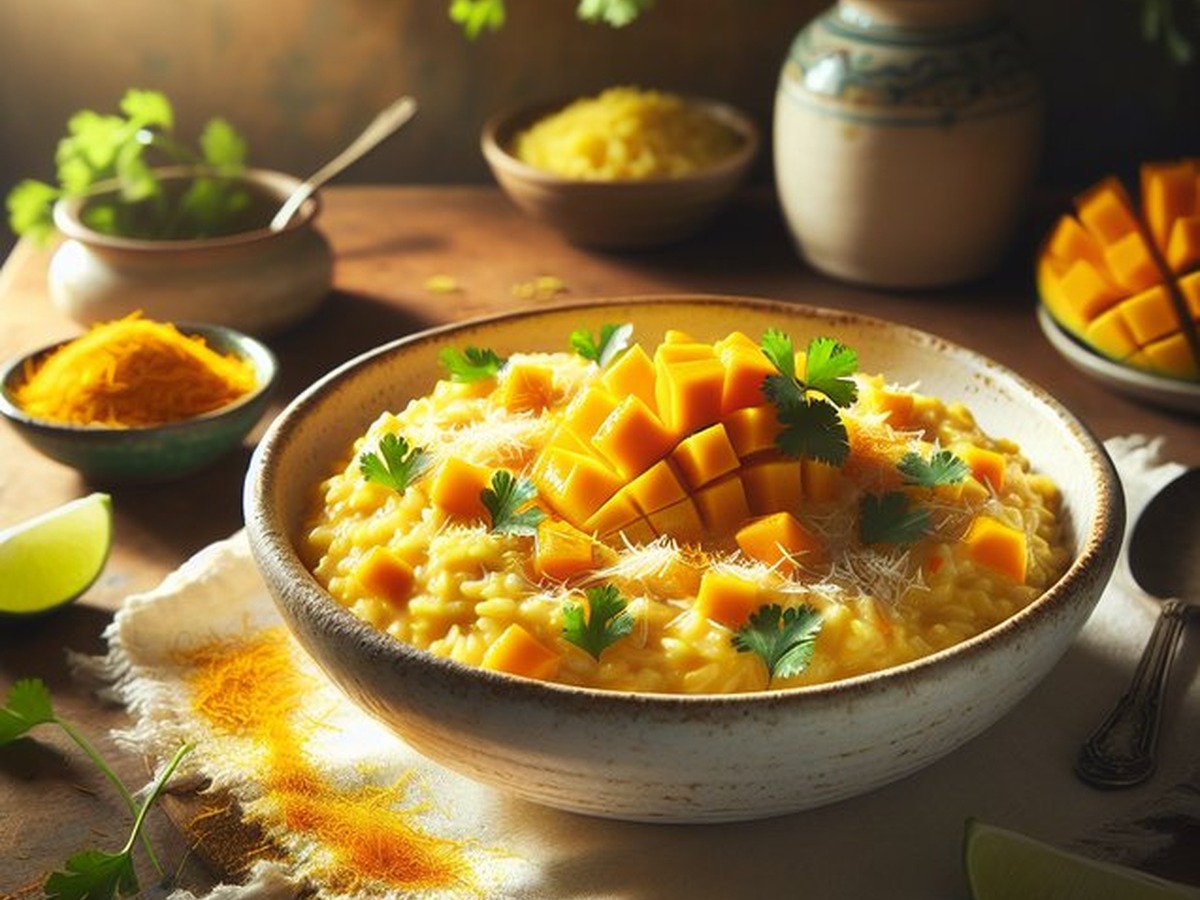
Golden Saffron Rice with Fresh Mango and Parmesan
Creamy saffron risotto with juicy mango, Parmesan, white wine, and fresh cilantro makes a bright vegetarian main course with Italian technique and a sunny finish.
About This Recipe
Tropical Sunshine Mango Saffron Risotto brings a bright, juicy note to the familiar comfort of creamy rice. Saffron gives the dish its golden color and floral depth, while ripe mango adds a soft sweetness that is balanced by Parmesan, white wine, and black pepper. The fruit goes in near the end so it stays distinct rather than melting into a sugary sauce.
Risotto is rooted in northern Italy’s rice-growing regions, where short-grain rice is cooked slowly with broth until it becomes fluid and spoonable. Mango is not a traditional Italian risotto ingredient, so this is best understood as a sunny home-kitchen variation that borrows the technique rather than claiming a regional origin. The contrast makes the dish useful for a vegetarian dinner when you want something familiar with an unexpected finish.
Begin with a clean vegetable broth and keep it warm beside the skillet. Cook the onion gently in olive oil and butter, then toast the Arborio rice until the grains are coated and their edges turn translucent. White wine lifts the savory flavor from the pan and gives the finished rice enough acidity to balance the mango.
Add the broth gradually, stirring often enough to encourage starch but not so vigorously that the grains break. Bloom the saffron in a little warm broth before it reaches the pan, which spreads its color and aroma through the rice. Keep a final splash of broth nearby because risotto can thicken quickly once the heat is turned off.
The risotto is ready when the grains are tender outside with a small bite in the center and the mixture moves slowly across the plate. Fold in Parmesan and mango off the heat, then taste before adding more salt; the cheese brings its own seasoning. Cilantro adds a fresh, citrusy edge, but it should support the saffron and fruit rather than dominate them.
Serve the bowls immediately with extra mango, cilantro, and a crisp salad or roasted green vegetable. Cool leftovers within two hours and refrigerate them for up to three days in shallow containers. Reheat gently with a splash of broth until the center reaches 165°F (74°C), then add a few fresh mango pieces at the table to restore contrast.
Ingredients
- 1 1/2 cups Arborio rice
- 4 cups low-sodium vegetable broth, kept warm
- 1 cup fresh mango, diced
- 1 small yellow onion, finely chopped
- 2 tablespoons olive oil
- 1 tablespoon unsalted butter
- 1/2 cup finely grated Parmesan cheese
- 1/4 teaspoon saffron threads
- 1/2 cup dry white wine
- 1 teaspoon kosher salt
- 1/4 teaspoon freshly ground black pepper
- 2 tablespoons chopped fresh cilantro, plus more to garnish
Step-by-Step Instructions
- Warm the broth Pour the vegetable broth into a small saucepan and keep it at a gentle simmer over low heat. Do not let it boil hard while the rice cooks.
- Soften the onion Heat the olive oil and butter in a wide skillet over medium heat. Add the onion and cook until soft and translucent, about 3 to 4 minutes.
- Toast the rice and add wine Stir in the Arborio rice and cook for 2 minutes, until the grains are glossy and their edges look slightly translucent. Add the white wine and stir until it is nearly absorbed.
- Ladle in the broth Add the warm broth one ladle at a time, stirring often and waiting until most of the liquid is absorbed before adding more. Continue until the rice is creamy outside and still has a slight bite, about 20 to 25 minutes.
- Bloom the saffron Stir the saffron threads into 2 tablespoons of warm broth in a heatproof cup and let them stand for a few minutes. Add the saffron mixture to the skillet during the final few ladles so the color disperses evenly.
- Finish the risotto Remove the skillet from the heat and stir in the Parmesan, salt, and black pepper. Fold in most of the diced mango and the cilantro gently so the fruit keeps its shape.
- Rest and adjust Let the risotto stand for 1 minute. It should spread slowly in the bowl; loosen it with a splash of warm broth if it has tightened while resting.
- Serve Spoon the risotto into shallow bowls and top with the remaining mango, cilantro, and a little extra Parmesan. Serve immediately while the grains are creamy and the fruit is fresh.
Nutrition Per Serving
| Nutrient | Amount | % Daily Value* |
|---|---|---|
| Calories | 520 kcal | 26% |
| Protein | 12 g | 24% |
| Total Fat | 18 g | 23% |
| Saturated Fat | 8 g | 40% |
| Carbohydrates | 77 g | 28% |
| Fiber | 3 g | 11% |
| Sugars | 9 g | 10% |
| Sodium | 560 mg | 24% |
Nutrition is an estimate based on the listed ingredients and four servings.
Variations & Serving Suggestions
- Use peaches or diced roasted squash in place of mango when they are in season.
- Replace cilantro with flat-leaf parsley or basil for a gentler herb finish.
- Use a vegetarian Parmesan-style cheese if you want the entire dish to remain vegetarian.
Serve with a crisp salad, roasted asparagus, or sautéed greens.
Storage & Reheating
Cool leftover risotto within two hours, transfer it to shallow airtight containers, and refrigerate it at 40°F (4°C) or below for up to three days. Store a few fresh mango pieces separately if you want a brighter garnish later.
Reheat gently in a skillet over low to medium-low heat with a splash of vegetable broth until the center reaches 165°F (74°C). Add fresh mango and cilantro after the rice is hot so they keep their color and freshness.
Practical Cooking Notes
A broad surface helps the broth evaporate evenly and gives the rice room to move without boiling hard.
Risotto continues to thicken off the heat, so keep a few spoonfuls warm for the final texture adjustment.
Butter, Parmesan, mango, and cilantro keep their clearest flavor when folded in after the rice is tender.
Troubleshooting
The risotto is too thick.
Likely cause: the rice absorbed broth while resting.
Fix: stir in warm broth gradually until the rice spreads slowly.
The mango disappears.
Likely cause: it was cooked too long or stirred too firmly.
Fix: fold it in off the heat and reserve some pieces for the top.
The saffron flavor is uneven.
Likely cause: the threads were not bloomed first.
Fix: dissolve them in warm broth before adding them to the final ladles.
Frequently Asked Questions
Can I use frozen mango in this risotto?
Yes. Thaw the mango, drain away excess liquid, and dice it before adding it at the end. Frozen mango is usually softer than fresh, so fold it in gently and reserve a few fresh or well-drained pieces for garnish if possible.
What broth should I use for a vegetarian risotto?
Choose a low-sodium vegetable broth with a clean, savory flavor. Mushroom broth also works, but it will make the finished dish earthier and may compete slightly with the mango and saffron.
How do I know when the risotto is done?
The grains should be creamy on the outside with a slight bite in the center. When spooned into a bowl, the risotto should spread slowly rather than sit in a stiff mound; add warm broth if it looks too thick.
Can I prepare this risotto ahead of time?
You can dice the mango, chop the onion and cilantro, grate the cheese, and bloom the saffron mixture ahead. Cook the rice close to serving because risotto is creamiest when it goes from the skillet to the bowl immediately.
Cook Next & Build the Technique
Equipment
- Wide heavy-bottomed skillet or sauté pan
- Small saucepan for the warm vegetable broth
- Chef's knife
- Cutting board
- Wooden spoon
- Ladle
- Heatproof cup
- Measuring cups and spoons
- Fine grater
- Shallow serving bowls
- Instant-read thermometer for reheating