How to Braise Meat: Sear, Simmer, and Cook Until Tender
Turn tough, larger cuts of beef or lamb into fork-tender braises by searing the meat, adding liquid only partway up the cut, and cooking gently in a covered pot until the meat yields to a fork.
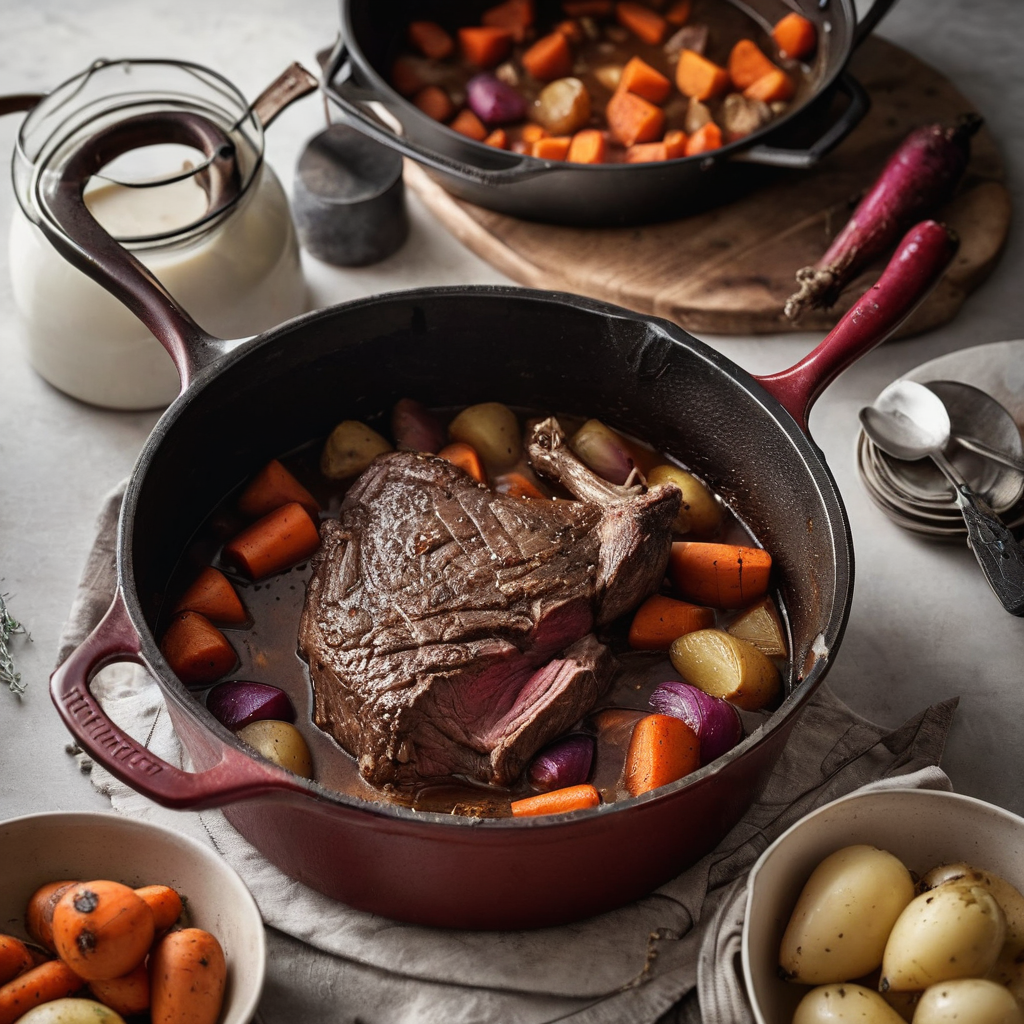
Purpose
Braising works well for less-tender cuts such as chuck roast, brisket, and short ribs. Brown the meat, add liquid partway up the cut, then cover and cook gently until fork-tender.
When To Use It
Choose braising for larger, tougher cuts that need time to soften. This includes 3 to 4 pound beef chuck roasts, briskets, and 4-inch by 2-inch short ribs. It works best when you have time to cook slowly rather than needing a quick sear-and-serve meal.
Equipment
You need a heavy pot with a tight-fitting lid, such as a Dutch oven. The covered pot helps hold moisture during the long cook. Use a food thermometer to check the safe internal temperature.
Procedure
Start by searing the meat in hot fat until browned on all sides. Remove the meat and add enough liquid to reach only partway up the cut. Return the meat to the pot and cover it tightly. Cook gently on the stovetop at a low simmer or in an oven set to 325 degrees F. For a 3 to 4 pound beef chuck roast or brisket, plan for 1 1/2 to 2 1/2 hours. For 4-inch by 2-inch short ribs, the time is similar. If you are cooking at 5,000 feet, expect to add about one-fourth more time. Always check the meat with a fork to judge tenderness rather than relying solely on the clock.
Visual Cues
The meat is ready when a fork slides in and out with little resistance. The liquid should bubble very gently. Keep the cut partly submerged as it cooks.
Mistakes
Avoid a hard boil, which can make the meat tough. Ensure the lid fits tightly to prevent steam from escaping. Do not assume the meat is done just because the time has passed; check for fork tenderness. If the meat is still firm, continue cooking gently. Remember that a fork-tender texture is different from the safe internal temperature. Whole beef and lamb cuts must reach at least 145 degrees F followed by a 3-minute rest to be safe to eat.