Coq au Vin
Coq au Vin with Burgundy Wine, Bacon, and Mushrooms
Chicken braises slowly in Burgundy wine with bacon, mushrooms, and pearl onions for a deeply savory French classic.
About This Recipe
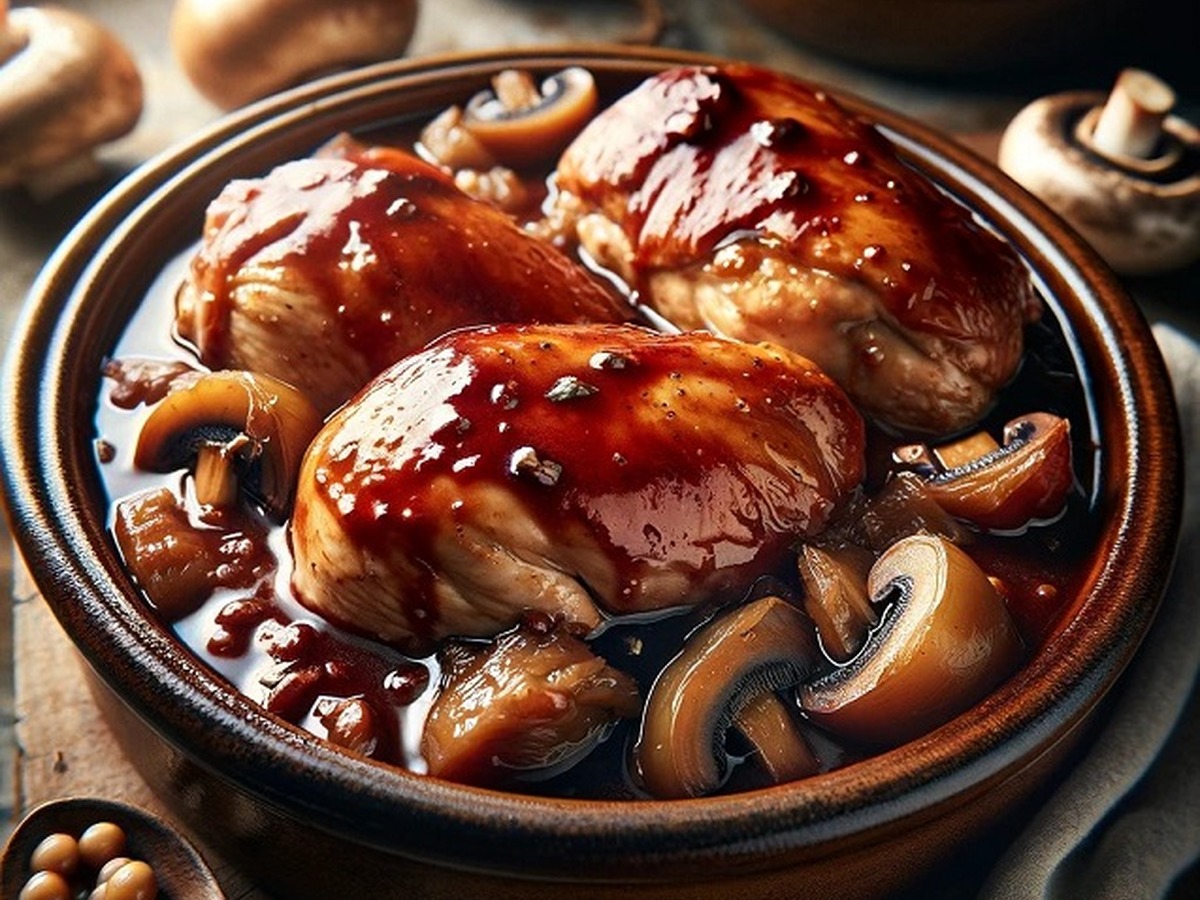
Coq au Vin is a slow French braise built for a deep, glossy sauce and tender chicken. Red wine, bacon, mushrooms, pearl onions, garlic, and thyme share one pot, with each ingredient adding a different kind of savoriness. The long, gentle simmer turns an initially rustic mixture into a dinner that feels generous and composed.
The name means rooster in wine, and the dish belongs to the broad French tradition of cooking poultry in a flavorful braising liquid. Versions vary by region and household, with Burgundy-style red wine, bacon, onions, and mushrooms among the most familiar combinations. It is less about one fixed formula than about the patient technique of browning first and letting wine and stock slowly become a sauce.
Pat the chicken dry before seasoning so the skin and exposed surfaces can brown rather than steam. Work in batches in the Dutch oven, giving each piece room to take on color and leaving the browned bits behind for the sauce. The bacon is cooked first, so its rendered fat and smoky edges become part of the foundation without requiring a separate pan.
Pearl onions and mushrooms need their own time in the pot to develop color before the liquid is added. Garlic and tomato paste then bring an aromatic sweetness and a little savory depth, while optional flour gives the braising liquid extra body. For a gluten-free version, leave the flour out or use a certified gluten-free thickener that suits your kitchen.
Once the Burgundy wine and chicken stock reach a simmer, return the chicken and bacon along with the bay leaf and thyme. Keep the pot covered and the heat low enough for only a quiet bubble, checking near the end rather than stirring constantly. The chicken is ready when the thickest piece reaches 165°F (74°C) and the meat yields easily when tested.
Serve Coq au Vin with mashed potatoes, crusty bread, buttered noodles, or simple green beans so the wine sauce does not go to waste. Like many braises, it can be made a day ahead and reheated gently, which gives the flavors time to settle together. Cool leftovers promptly, refrigerate them for 3 to 4 days, and bring the center back to 165°F (74°C) before serving.
Ingredients
- 1 whole chicken, cut into serving pieces
- 2 cups red Burgundy wine
- 2 cups chicken stock
- 1 cup pearl onions, peeled
- 2 cups mushrooms, quartered
- 4 slices bacon, chopped
- 2 garlic cloves, minced
- 1 tablespoon tomato paste
- 2 tablespoons all-purpose flour (optional)
- 1 bay leaf
- 4 fresh thyme sprigs
- 1/2 teaspoon kosher salt and 1/4 teaspoon black pepper, plus more to taste
- 2 tablespoons olive oil
- 2 tablespoons fresh parsley, chopped, for garnish
Step-by-Step Instructions
- Season the chicken Pat the chicken pieces dry and season them with the kosher salt and black pepper.
- Crisp the bacon Heat the olive oil in a large Dutch oven over medium heat; cook the bacon until crisp, then transfer it to a plate.
- Brown the chicken Brown the chicken in batches on all sides in the bacon drippings, then transfer it to the plate with the bacon.
- Cook the vegetables Add the pearl onions and mushrooms and cook until browned; stir in the garlic for 1 minute.
- Build the braising liquid If using the flour, sprinkle it over the vegetables and stir for 1 minute. Stir in the tomato paste, then add the Burgundy wine and chicken stock and bring to a simmer.
- Braise the chicken Return the chicken and bacon to the pot, add the bay leaf and thyme sprigs, cover, and simmer gently for about 1 1/2 hours, until the chicken is tender and reaches 165°F (74°C).
- Finish the sauce Discard the bay leaf and thyme stems, taste the sauce, adjust the salt and pepper if needed, and garnish with the chopped parsley.
- Serve Serve the Coq au Vin with mashed potatoes or crusty bread.
Nutrition Per Serving
| Nutrient | Amount | % Daily Value* |
|---|---|---|
| Calories | 400 kcal | 20% |
| Protein | 30 g | 60% |
| Total Fat | 20 g | 26% |
| Saturated Fat | 6 g | 30% |
| Carbohydrates | 10 g | 4% |
| Fiber | 2 g | 7% |
| Sugars | 4 g | 8% |
| Sodium | 800 mg | 35% |
Nutrition is an estimate based on the listed ingredients and four servings.
Storage & Reheating
Within two hours of cooking, divide leftover Coq au Vin into shallow portions and refrigerate them in an airtight container at 40°F (4°C) or below. Use refrigerated leftovers within 3 to 4 days; the sauce often tastes more integrated the next day.
Reheat the braise gently in a covered Dutch oven or saucepan over medium-low heat, adding a splash of chicken stock if the sauce has tightened. Warm it until the center reaches 165°F (74°C), then garnish with fresh parsley.
Practical Cooking Notes
Use a large Dutch oven with a lid, plate or tray, cutting board, chef's knife, tongs, wooden spoon, measuring tools, small bowl, and serving dish.
The thickest chicken piece should reach 165°F (74°C), and the meat should yield easily to a fork. Keep the braise at a gentle simmer so the chicken becomes tender without the sauce reducing too quickly.
A dry, medium-bodied red wine works well when Burgundy is unavailable. Choose a bottle you would enjoy drinking, since its character remains in the finished sauce.
Troubleshooting
The sauce is thin.
Likely cause: The braising liquid has not reduced enough or the optional flour was skipped without another thickener.
Fix: Simmer uncovered for a few minutes after the chicken is tender, or whisk a small amount of certified gluten-free thickener with water and add it gradually.
The chicken is tough.
Likely cause: The simmer was too hot, the pot was uncovered, or the chicken needed more time for the connective tissue to soften.
Fix: Cover the Dutch oven and continue at a gentle simmer in 10-minute increments until the thickest piece is tender and reaches 165°F (74°C).
The sauce tastes sharp.
Likely cause: The wine reduced quickly or the braising liquid was not balanced with enough stock.
Fix: Lower the heat, add a splash of chicken stock, and let the sauce settle for a few minutes before adjusting salt and pepper.
Frequently Asked Questions
Can I use a different red wine instead of Burgundy?
Yes. Choose a dry, medium-bodied red wine that you would enjoy drinking, such as Pinot Noir or another light red. Avoid very sweet or heavily oaked wines because they can make the sauce taste unbalanced after reduction.
How do I know when Coq au Vin is done?
The thickest chicken piece should reach 165°F (74°C), and the meat should feel tender when pierced with a fork. The wine-stock sauce should lightly coat a spoon; simmer it uncovered for a few minutes if it needs more reduction after the chicken is tender.
Can I make Coq au Vin ahead?
Yes. Cook it completely, cool it promptly, and refrigerate it in a covered container within two hours. Reheat it gently on the stovetop until the center reaches 165°F (74°C), adding a splash of stock if the sauce has tightened.
How can I make Coq au Vin gluten-free?
Omit the optional all-purpose flour or replace it with a certified gluten-free thickener. Check the labels on the chicken stock and bacon, and keep the rest of the listed ingredients unchanged.
Cook Next & Build the Technique
Equipment
- Large Dutch oven with lid
- Large plate or tray
- Cutting board
- Chef's knife
- Tongs
- Wooden spoon
- Measuring cups and spoons
- Small bowl
- Serving dish
Coq au Vin has this amazing combination of rustic charm and sophistication. On one hand, it’s a hearty, comforting dish perfect for a cozy evening. On the other hand, the layers of flavor and the elegant presentation make it feel like a gourmet experience. Every spoonful feels thoughtfully crafted, and the aroma alone while cooking is enough to make anyone excited for dinner.