Chicken Cacciatore
Hunter-Style Chicken with Tomato, Herbs, and Capers
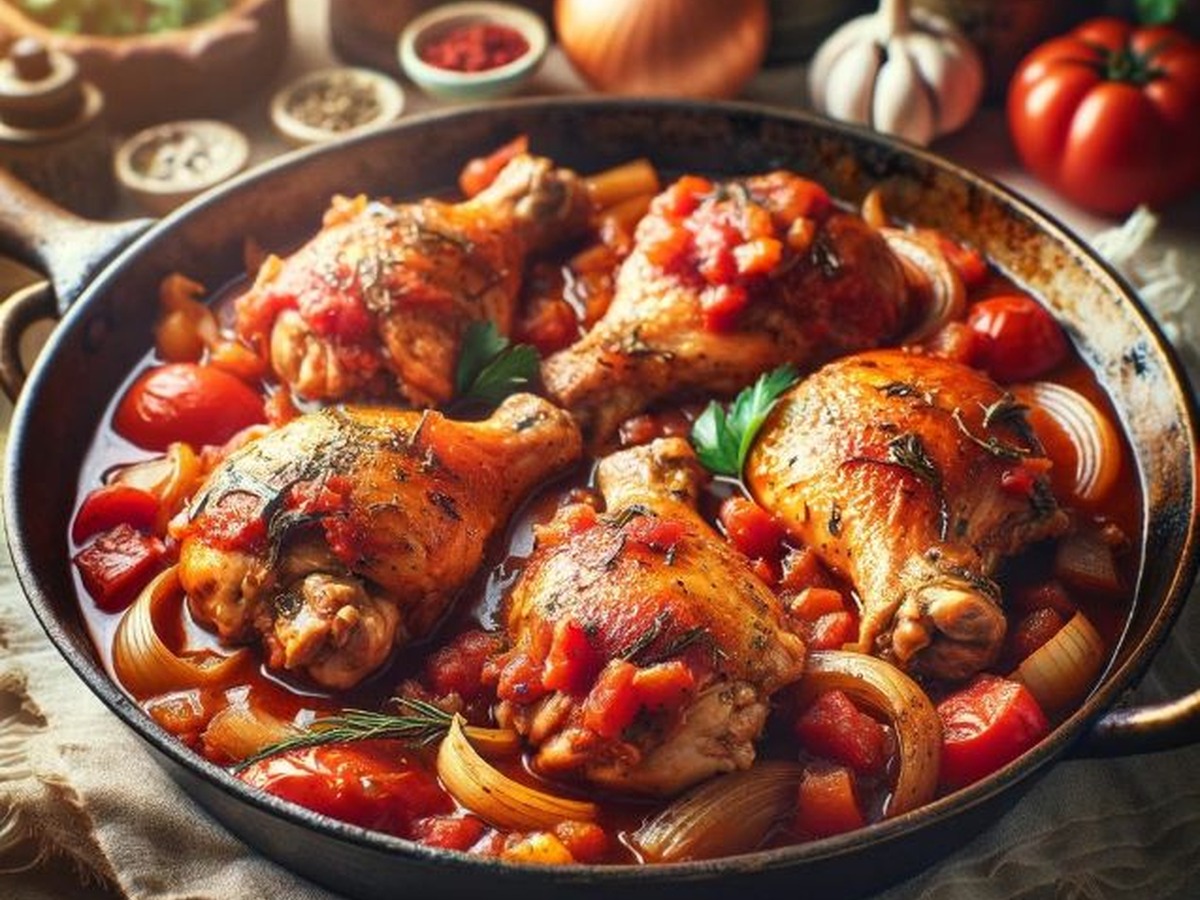
Chicken thighs simmer with tomatoes, peppers, mushrooms, herbs, and capers in a rustic sauce made for spooning over polenta or crusty bread.
About This Recipe
Chicken Cacciatore is a rustic Italian braise with the kind of sauce that invites a piece of bread to the plate. Chicken thighs brown first, then simmer with onion, pepper, mushrooms, tomatoes, herbs, and capers until the meat is tender and the pan juices turn savory and bright. It is a generous one-pan dinner that feels special while relying on familiar pantry ingredients.
The name cacciatore means hunter-style, a label used for homey preparations built around what was available rather than one fixed formula. Across Italian kitchens, cacciatore may be made with chicken or rabbit, with wine or vinegar, and with different combinations of tomatoes, peppers, olives, or herbs. This version follows the broad spirit of that tradition: brown the main ingredient, build flavor in the same pan, and let the sauce do the work.
Dry the chicken well before it meets the skillet, especially if the skin is meant to turn golden. Let the thighs sit undisturbed long enough to develop color, then turn them briefly and set them aside while the vegetables soften in the seasoned pan fat. The browned bits left on the bottom are not waste; the wine will loosen them and carry their flavor into the tomato sauce.
Give the onion, pepper, and mushrooms a few minutes to take on color before adding the garlic. The garlic needs only a short stir, while the wine benefits from a brief reduction so its acidity becomes part of the sauce rather than sitting on top of it. Crushed tomatoes, oregano, rosemary, and capers then create a balance of sweetness, savory depth, and little bursts of briny brightness.
Return the chicken skin-side up and keep most of the skin above the liquid as the thighs simmer. Gentle heat gives the meat time to become tender without turning the sauce harsh or watery, and uncovering the pan near the end concentrates the flavors. Check the thickest thigh at 165°F (74°C), then give the chicken a few minutes to rest before scattering parsley over the top.
Serve cacciatore with polenta, pasta, crusty bread, or a simple green vegetable that can share the tomato sauce without competing with it. Leftovers keep well for up to three days in the refrigerator, and the flavor often becomes rounder overnight. Reheat the chicken covered over low to medium-low heat with a splash of broth or water, then finish with fresh parsley so the dish tastes lively again.
Ingredients
- 4 bone-in, skin-on chicken thighs, about 2 lb total (900g)
- 1 teaspoon kosher salt (5g)
- 1/2 teaspoon black pepper (1g)
- 2 tablespoons extra-virgin olive oil (30mL)
- 1 large yellow onion, sliced
- 1 red bell pepper, sliced
- 8 oz cremini mushrooms, sliced (225g)
- 3 garlic cloves, minced
- 1/2 cup dry red wine (120mL)
- 1 can crushed tomatoes (28 oz / 794g)
- 1 teaspoon dried oregano
- 1 teaspoon chopped fresh rosemary
- 2 tablespoons drained capers (18g)
- 1/4 cup fresh parsley, chopped (15g)
Step-by-Step Instructions
- Season the chicken Pat the chicken thighs dry and season both sides with the kosher salt and black pepper.
- Brown the chicken Heat the olive oil in a wide skillet or braiser over medium-high heat and brown the chicken skin-side down for 6 to 8 minutes, then brown the second side for 3 minutes; transfer to a plate.
- Soften the vegetables Pour off all but 2 tablespoons of fat, add the onion, red bell pepper, and cremini mushrooms, and cook for 7 to 8 minutes, until softened and lightly browned.
- Add the garlic Stir in the garlic and cook for about 30 seconds, just until fragrant.
- Reduce the wine Pour in the red wine, scrape up the browned bits, and simmer for 2 to 3 minutes, until reduced by half.
- Build the tomato sauce Stir in the crushed tomatoes, oregano, rosemary, and capers, then nestle the chicken skin-side up into the sauce.
- Simmer gently Cover and simmer over low heat for about 35 minutes, until the chicken is tender and reaches 165°F (74°C) at the thickest point.
- Thicken and rest Uncover for the last few minutes if the sauce needs to thicken, then let the chicken rest for 5 minutes and finish with parsley.
- Serve Spoon the sauce over the chicken and serve with polenta, pasta, crusty bread, or a green vegetable.
Nutrition Per Serving
| Nutrient | Amount | % Daily Value* |
|---|---|---|
| Calories | 350 kcal | 18% |
| Protein | 25 g | 50% |
| Total Fat | 20 g | 26% |
| Saturated Fat | 6 g | 30% |
| Carbohydrates | 15 g | 5% |
| Fiber | 4 g | 14% |
| Sugars | 8 g | 9% |
| Sodium | 620 mg | 27% |
Nutrition is an estimate based on the listed ingredients and four servings.
Storage & Reheating
Cool the chicken in its sauce within two hours, refrigerate it in a shallow covered container, and use it within three days. Keeping the chicken with the tomato sauce helps the meat stay moist while the flavors settle.
Reheat covered over low to medium-low heat with a splash of broth or water, turning the pieces once for even warmth. The chicken and sauce can be frozen in a well-sealed container for up to three months; add fresh parsley after reheating.
Practical Cooking Notes
Pat the thighs dry before seasoning so the skin can brown instead of steaming.
Let the wine lift the browned bits before the tomatoes go in; that is where much of the braise depth begins.
Return the chicken skin-side up and uncover near the end so the sauce thickens without completely softening the top.
Troubleshooting
The chicken skin is pale.
Likely cause: the thighs were damp or moved too soon in the pan.
Fix: dry the chicken well, preheat the skillet, and leave the skin side undisturbed until deeply golden.
The sauce is too thin.
Likely cause: the covered pan retained more liquid than expected.
Fix: move the chicken to a plate and simmer the sauce uncovered for a few minutes until it coats a spoon.
The chicken is not tender.
Likely cause: the pieces need more time at a gentle simmer.
Fix: cover the pan and continue cooking until the thickest thigh reaches 165°F (74°C) and feels tender when pierced.
Frequently Asked Questions
Can I use boneless chicken thighs for cacciatore?
Yes. Boneless thighs cook faster, so begin checking them after about 20 minutes of simmering and remove them when the thickest piece reaches 165°F (74°C). Bone-in thighs stay especially juicy and add more flavor to the sauce.
Can I make Chicken Cacciatore ahead of time?
Yes. Cool the chicken in its sauce, refrigerate it in a shallow covered container for up to three days, and reheat it gently over low to medium-low heat. Add a splash of broth or water if the sauce has thickened in the refrigerator.
What can I use instead of red wine?
Replace the wine with an equal amount of chicken broth and add 1 tablespoon of balsamic vinegar or red-wine vinegar. Let the liquid simmer briefly before adding the tomatoes so the acidity blends into the sauce.
How do I know when the chicken is done?
Check the thickest part of a thigh with an instant-read thermometer; it should reach 165°F (74°C). The meat should also feel tender when pierced, and the juices should run clear rather than pink.
Cook Next & Build the Technique
Equipment
- Wide skillet or braiser with lid
- Chef's knife
- Cutting board
- Tongs
- Wooden spoon
- Measuring cups and spoons
- Instant-read thermometer
- Large plate for browned chicken
- Serving spoon