Osso Buco With Gremolata And Saffron Orzo
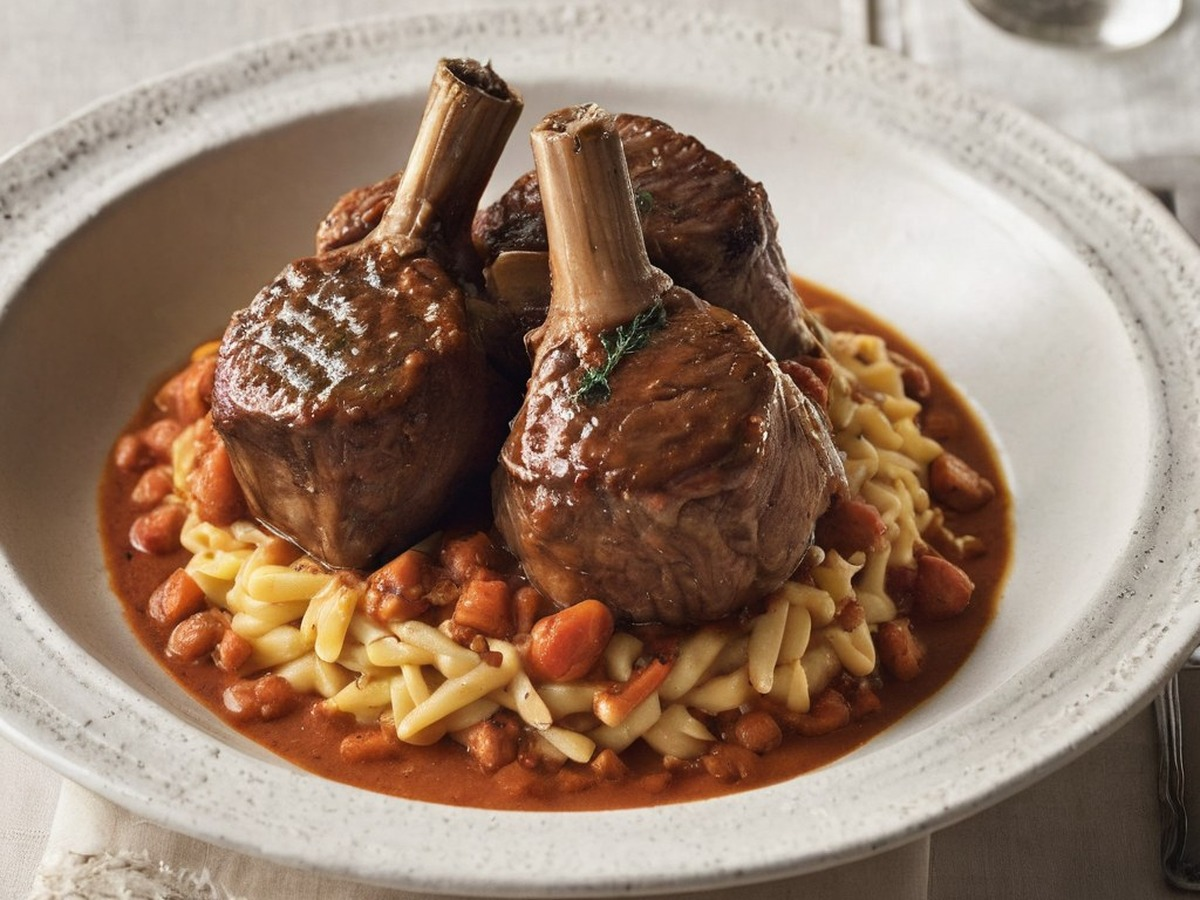
Braised Veal Shanks, Lemon Gremolata & Saffron Orzo
Tender veal shanks braise in a saffron-scented tomato sauce, then meet lemony gremolata and buttery saffron orzo for a deeply comforting Italian dinner.
About This Recipe
Osso Buco With Gremolata And Saffron Orzo is a dinner built on contrast: slow-braised veal becomes spoon-tender in a tomato and saffron sauce, while lemony gremolata brings a clean, green finish. The orzo catches the braising juices and gives the shank a soft, fragrant base. It is the kind of meal that fills the kitchen with a savory aroma long before it reaches the table.
Osso buco is closely associated with Milanese cooking, where cross-cut veal shanks are valued for the rich flavor around the bone and the marrow at the center. The classic presentation is often finished with gremolata, a simple mixture of parsley, lemon, and garlic that keeps the braise from feeling too heavy. Saffron is a natural companion to that tradition, and the orzo here offers a practical, spoonable way to carry the sauce.
The braise begins with a proper sear. Pat the shanks dry, dust them lightly with flour, and brown them deeply in the Dutch oven so the pot develops a savory fond before the wine goes in. The onion, carrot, celery, garlic, tomatoes, stock, and saffron then turn those browned bits into a sauce that can stand up to the long, gentle oven time.
Keep the pot covered while the veal cooks at 325°F (165°C), and check it once or twice rather than opening it constantly. Two to two and a half hours is a useful guide, but tenderness is the better signal: the meat should pull away from the bone with a fork and reach at least 145°F (63°C), followed by a three-minute rest. If the liquid is getting low, add a splash of water before the sauce catches on the bottom.
The saffron orzo is best cooked separately so it stays distinct instead of absorbing all of the braising liquid. Stir in butter while it is warm, then finish the plate with parsley, lemon zest, garlic, and lemon juice mixed just before serving. Spoon the sauce around the orzo, set the shank on top, and let the gremolata cut through the richness with every bite.
Plan on three hours from the first preparation to the finished plate, with most of that time hands-off in the oven. Cool the veal and sauce within two hours and refrigerate them separately from the orzo for up to three days. Reheat gently until the center reaches 165°F (74°C), loosen the sauce with a splash of stock, and add fresh gremolata at the table so the lemon and parsley stay bright.
Ingredients
- 4 veal shanks (about 1.5 lb total), cross-cut 1 inch thick
- 1/2 cup all-purpose flour
- 1/4 cup extra-virgin olive oil
- 1 large onion, finely chopped
- 2 carrots, finely chopped
- 2 celery stalks, finely chopped
- 4 cloves garlic, minced
- 1 cup dry white wine
- 1 can (28 oz) whole peeled tomatoes, crushed by hand
- 2 cups beef stock
- 1 teaspoon saffron threads, crumbled
- 1 cup orzo pasta
- 1 tablespoon unsalted butter
- 1/2 teaspoon salt, plus more for seasoning
- 1/4 teaspoon black pepper
- 1/2 cup fresh parsley leaves, chopped
- 1 lemon, zested and juiced
- 1 small garlic clove, minced
Step-by-Step Instructions
- Prepare and sear the veal Pat the veal shanks dry and season generously with salt and pepper. Dredge each shank in the flour, shaking off excess. Heat the olive oil in a large Dutch oven over medium-high heat and sear the shanks until deeply browned on both sides, about 4 minutes per side. Transfer them to a plate.
- Build the vegetable base Reduce the heat to medium and add the onion, carrots, and celery to the pot. Cook until softened and translucent, about 5 minutes, then stir in the minced garlic and cook for 1 minute until fragrant.
- Deglaze and start the braise Pour in the white wine and scrape up the browned bits. Add the crushed tomatoes, beef stock, and crumbled saffron, then return the veal shanks so they are mostly surrounded by liquid. Bring to a simmer, cover tightly, and transfer to a 325°F (165°C) oven.
- Braise until tender Braise the veal for 2 to 2 1/2 hours, checking occasionally and adding a splash of water if the pot looks dry. The meat is ready when it is falling away from the bone and reaches at least 145°F (63°C), followed by a three-minute rest.
- Cook the saffron orzo While the veal braises, cook the orzo in a large pot of salted water until al dente. Drain it, toss it with the butter and a pinch of salt, and stir in a little of the remaining saffron so the pasta keeps its color and aroma.
- Make the gremolata Combine the chopped parsley, lemon zest, minced garlic, and a squeeze of lemon juice in a small bowl. Mix well, taste, and add a pinch of salt if needed just before serving.
- Plate and serve Spoon saffron orzo onto each plate, set a warm veal shank on top, and ladle over enough braising sauce to reach the pasta. Finish generously with the fresh gremolata and serve immediately.
Utensils
- Large Dutch oven with lid
- Tongs
- Large plate or tray
- Chef's knife
- Cutting board
- Measuring cups
- Measuring spoons
- Large pot for the orzo
- Colander
- Small bowl for the gremolata
- Serving plates
Nutrition Per Serving
| Nutrient | Amount | % Daily Value* |
|---|---|---|
| Calories | 680 kcal | 34% |
| Protein | 42 g | 84% |
| Total Fat | 28 g | 36% |
| Saturated Fat | 10 g | 50% |
| Carbohydrates | 58 g | 21% |
| Fiber | 4 g | 14% |
| Sugars | 8 g | 16% |
| Sodium | 850 mg | 37% |
Nutrition is an estimate based on the listed ingredients and four servings.
Variations & Serving Suggestions
- Use bone-in beef shanks instead of veal and extend the braising time until fork-tender.
- Replace the orzo with saffron risotto, polenta, or crusty bread for catching the sauce.
- Keep the gremolata classic with parsley, lemon, and garlic, or add a little orange zest for a softer citrus note.
Serve the shanks over the saffron orzo with the gremolata added at the table.
Storage & Reheating
Cool the veal and sauce within two hours, cover them, and refrigerate them separately from the orzo for up to three days. Keeping the pasta apart prevents it from absorbing all of the braising liquid while it sits.
Reheat the veal and sauce gently in a covered pan until the center reaches 165°F (74°C), loosening the sauce with a splash of stock. Warm fresh orzo separately and finish with new gremolata.
Practical Cooking Notes
Surface moisture blocks browning, so pat the shanks dry before seasoning and flouring them.
The sauce should come high around the meat but not cover it completely; turn or baste once if needed.
The marrow in the bone is edible and especially good with a little gremolata and sauce spooned over it.
Troubleshooting
The sauce is too thin.
Likely cause: the pot held too much liquid or the sauce did not reduce after the veal was removed.
Fix: simmer the sauce uncovered until it lightly coats a spoon.
The shanks are still firm.
Likely cause: the braise needs more time or the oven ran cool.
Fix: cover the pot and continue cooking until the meat pulls away from the bone.
The orzo is sticky.
Likely cause: it sat after draining or cooked past al dente.
Fix: toss it promptly with butter and loosen it with warm stock before plating.
Frequently Asked Questions
Can I make osso buco ahead of time?
Yes. Braise the veal and sauce up to two days ahead, cool them promptly, and refrigerate them in a covered container. Reheat gently, cook fresh orzo, and mix a new batch of gremolata just before serving for the best texture and brightness.
What can I use instead of veal shanks?
Bone-in beef shanks are the closest substitute, but they are denser and may need about 30 additional minutes of braising. Check tenderness rather than relying only on the clock, and keep the same 145°F (63°C) minimum temperature followed by a three-minute rest.
How do I know when the osso buco is done?
The meat should be very tender and beginning to pull away from the bone when tested with a fork. The thickest part should reach at least 145°F (63°C), then rest for three minutes before serving so the juices settle.
Can I use a slow cooker instead of the oven?
You can brown the shanks and vegetables first, then cook them with the wine, tomatoes, stock, and saffron on low until fork-tender, usually 6 to 8 hours. Cook the orzo separately and make the gremolata just before serving so neither becomes mushy or dull.