Braised Beef Ragu over Tagliatelle
Slow-Braised Beef, Tomato, Red Wine, and Fresh Egg Pasta
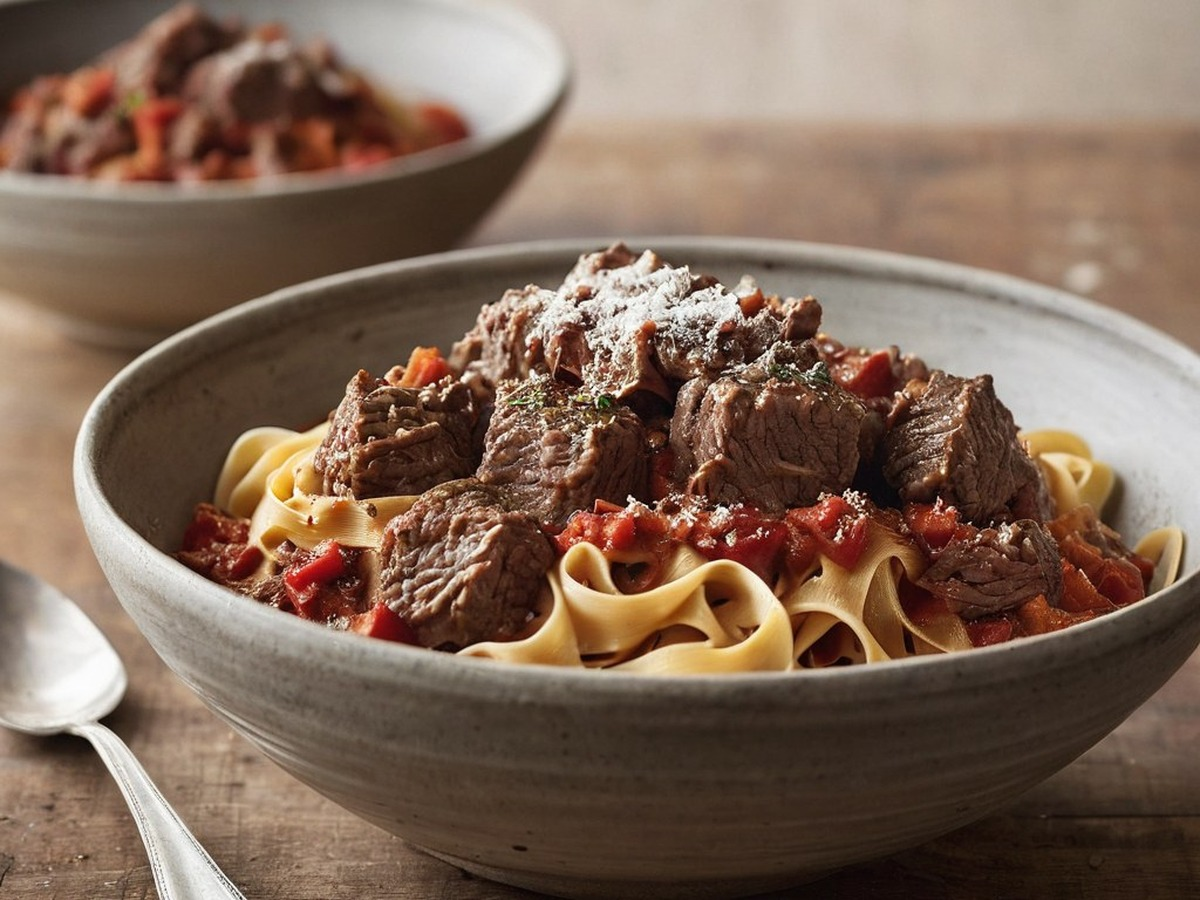
Beef chuck, tomatoes, red wine, and vegetables slowly braise into a rich ragu that clings to fresh tagliatelle and finishes with Parmigiano-Reggiano.
About This Recipe
Braised Beef Ragu over Tagliatelle is a slow, generous dinner built for a pot that can stay on the stove while the day winds down. Beef chuck becomes tender in a tomato and red-wine sauce with onion, carrot, celery, and garlic, while broad egg pasta gives the ragu somewhere to settle. Parmigiano-Reggiano at the table adds a salty, nutty finish to the rich sauce.
The word ragù is related to the French ragout, but Italian cooks made the idea their own across many regions and kitchens. Some versions are finely minced, some are built around large pieces of meat, and the balance of tomato, wine, milk, stock, or herbs changes with local habits. This recipe belongs to that broad home-cooking tradition, with a long braise designed to turn an affordable cut into a deeply flavored pasta sauce.
Brown the beef in batches before the vegetables go into the pot. The browned surface leaves savory bits on the bottom, and the vegetables soften into a base that can carry the sauce for hours. Cooking the tomato paste briefly before the wine also deepens its flavor, while reducing the wine by half keeps its fruit and acidity without leaving a raw alcohol note.
Once the tomatoes and stock are added, the ragu needs patience more than attention. Keep the pot at a quiet simmer rather than a hard boil so the connective tissue in the chuck can soften without tightening the meat. Stir occasionally, check the liquid level, and wait for the beef to separate easily with a fork before shredding it into the sauce.
Fresh tagliatelle cooks quickly, so save it for the end. Reserve some pasta water before draining, then toss the noodles with the ragu while they are still warm; a small splash of water helps the sauce cling to the broad strands without making it thin. Parmigiano-Reggiano, black pepper, and a little of the cooking water can bring the finished bowl into balance.
This is a natural make-ahead meal because the sauce often tastes even rounder after a night in the refrigerator. Cool it promptly, store it in a shallow airtight container, and use it within three to four days, keeping the pasta separate when possible. The ragu also freezes well, so a long braise can provide more than one comforting dinner without asking you to repeat the slow part.
Ingredients
- 2 lb beef chuck, cut into 1-inch cubes (900g)
- 3 tablespoons extra-virgin olive oil, divided (45mL)
- 1 large yellow onion, finely diced
- 2 carrots, finely diced
- 2 celery stalks, finely diced
- 4 garlic cloves, minced
- 2 tablespoons tomato paste (30g)
- 1 cup dry red wine (240mL)
- 1 can whole peeled tomatoes, crushed (28 oz / 794g)
- 1 cup low-sodium beef stock (240mL)
- 2 bay leaves
- 1 teaspoon dried oregano
- 1 teaspoon kosher salt (6g)
- 1/2 teaspoon black pepper (1g)
- 1 lb fresh egg tagliatelle (450g)
- 1/2 cup grated Parmigiano-Reggiano (50g)
Step-by-Step Instructions
- Season the beef Season the beef chuck evenly with the kosher salt and black pepper.
- Brown the beef Heat 2 tablespoons of olive oil in a large Dutch oven over medium-high heat and brown the beef in batches, turning as needed; transfer it to a plate.
- Soften the vegetables Add the remaining tablespoon of olive oil, onion, carrots, and celery to the Dutch oven and cook for about 8 minutes, until softened.
- Cook the aromatics Stir in the garlic and tomato paste and cook for 2 minutes, stirring often, until the paste darkens slightly and the garlic is fragrant.
- Reduce the wine Pour in the red wine, scrape up the browned bits, and simmer until the wine has reduced by half.
- Build the braise Return the beef and its juices to the pot, then add the crushed tomatoes, beef stock, bay leaves, and dried oregano.
- Braise gently Cover and maintain a very gentle simmer for about 3 hours, stirring occasionally, until the beef is fork-tender and easily shreds.
- Finish the ragu Remove the bay leaves, shred the beef into the sauce, and simmer uncovered for 10 to 15 minutes if the ragu needs to thicken.
- Cook the pasta Cook the fresh tagliatelle in salted boiling water until al dente, reserving 1/2 cup of pasta water before draining.
- Toss and serve Toss the tagliatelle with the beef ragu, adding pasta water as needed, and serve with grated Parmigiano-Reggiano.
Nutrition Per Serving
| Nutrient | Amount | % Daily Value* |
|---|---|---|
| Calories | 680 kcal | 34% |
| Protein | 42 g | 84% |
| Total Fat | 28 g | 36% |
| Saturated Fat | 11 g | 55% |
| Carbohydrates | 65 g | 24% |
| Fiber | 5 g | 18% |
| Sugars | 10 g | 11% |
| Sodium | 720 mg | 31% |
Nutrition is an estimate based on the listed ingredients and four servings.
Storage & Reheating
Cool the ragu promptly, refrigerate it in a shallow airtight container, and use it within three to four days. Store the sauce and tagliatelle separately when possible so the pasta does not absorb all of the liquid.
Reheat the ragu gently over low heat with a spoonful of beef stock or water, then cook fresh pasta for the best texture. The cooled sauce can also be frozen in a well-sealed container for up to three months.
Practical Cooking Notes
Leave space between the beef cubes so they sear instead of steaming and leave flavorful browned bits for the wine to lift.
A gentle simmer gives the chuck time to soften without tightening the meat or making the sauce greasy.
A small splash of starchy water helps the ragu cling to fresh tagliatelle without thinning the finished sauce.
Troubleshooting
The ragu is too thin.
Likely cause: the sauce contains more liquid than the pot can reduce during the covered braise.
Fix: remove the lid after the beef is tender and simmer gently until the sauce coats a spoon, stirring so it does not catch.
The beef is still tough.
Likely cause: the braise has not had enough time at a gentle temperature.
Fix: keep the pot covered and simmer quietly, checking every 20 minutes until the beef separates easily with a fork.
The pasta is clumping.
Likely cause: the tagliatelle sat after draining without sauce.
Fix: reserve pasta water, toss the noodles with ragu immediately, and loosen with a small splash of water if needed.
Frequently Asked Questions
Can I make the beef ragu ahead of time?
Yes. Braise and shred the ragu, cool it promptly, and refrigerate it in a shallow airtight container for three to four days. Reheat it gently with a splash of beef stock or water while you cook fresh tagliatelle.
What can I use instead of red wine?
Replace the wine with an equal amount of beef stock and add 1 tablespoon of balsamic vinegar. Let the mixture reduce briefly so the acidity softens before the tomatoes and stock go into the pot.
Can I make this ragu in a slow cooker?
Yes. Brown the beef and soften the vegetables first, then transfer them with the remaining ingredients through the oregano to a slow cooker. Cook on low for 7 to 8 hours, remove the bay leaves, shred the beef, and adjust the sauce before serving.
How do I know when the beef is ready?
The chuck is ready when it separates easily with a fork and shreds into the sauce. If it remains firm after three hours, keep the braise at a gentle simmer and check it every 20 minutes rather than raising the heat sharply.
Keep Exploring
Equipment
- Large Dutch oven
- Chef's knife
- Cutting board
- Wooden spoon
- Tongs
- Measuring cups and spoons
- Large plate for browned beef
- Large pot for pasta
- Colander
- Forks for shredding