Cumin Lamb with Sichuan Peppercorns and Braised Napa Cabbage
Slow-Braised Cumin Lamb with Sichuan Peppercorns and Napa Cabbage
Tender lamb shoulder, toasted cumin, and Sichuan peppercorns share a savory braise with Napa cabbage for a warming main course.
About This Recipe
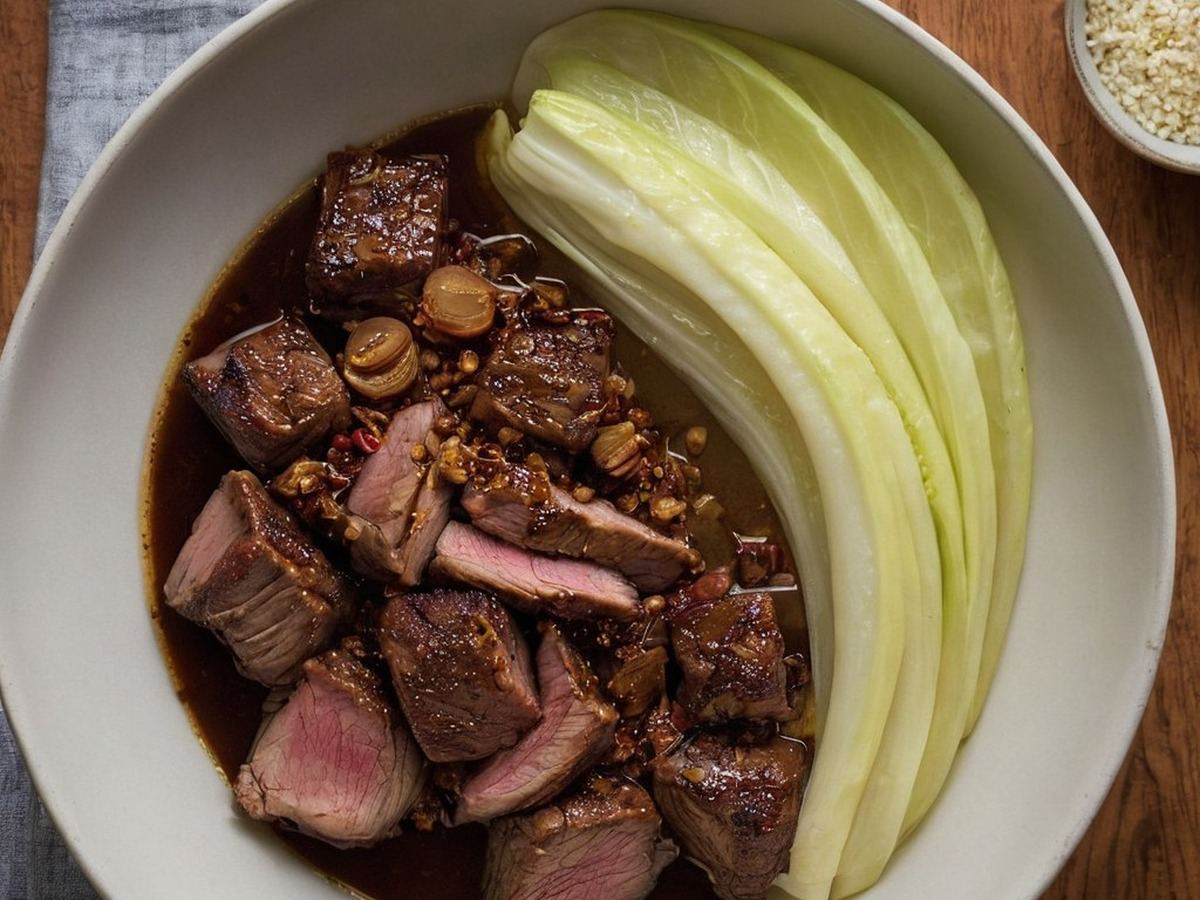
Cumin Lamb with Sichuan Peppercorns and Braised Napa Cabbage is a slow, savory dish with a warm spice profile and a glossy broth. Lamb shoulder becomes tender during the covered braise, while cumin and Sichuan peppercorns give the sauce a toasted aroma and a gentle tingle. Napa cabbage softens into the cooking liquid, making the finished bowl feel hearty without becoming heavy.
Cumin-rich lamb is especially familiar in northwestern Chinese and Xinjiang-influenced cooking, while Sichuan peppercorn is a signature aromatic of Sichuan cuisine. Bringing the two together makes a cross-regional flavor conversation rather than a claim about one traditional dish. The result keeps the earthy cumin and lamb at the center, then uses peppercorn, garlic, and red chile for lift.
Cut the lamb into even cubes and brown it in batches so the pieces develop color instead of steaming. The browned bits left in the Dutch oven become part of the braising base, adding depth that a quick simmer cannot create. Once the lamb is in the pot, keep the heat low enough for a quiet simmer so the connective tissue has time to relax.
Bloom the onion, garlic, cumin, Sichuan peppercorns, and red pepper flakes in the same pot after the lamb is seared. Moderate heat is important because toasted spices should smell warm and fragrant, not scorched. Shaoxing wine, soy sauce, and broth then loosen the fond and carry those aromatics through the long cook.
Wait to add the Napa cabbage until the lamb is nearly fork-tender. The cabbage needs only a short braise to become silky and absorb the spiced broth while keeping a little structure of its own. A cornstarch slurry added at the end gives the sauce a light gloss without turning the dish into a thick stew.
Spoon the lamb and cabbage over rice or another plain grain that can catch the sauce, and finish with green onions and sesame oil. The dish can be made a day ahead, which gives the braising liquid time to round out; add fresh cabbage or scallions near the end of reheating for a clearer texture. Cool leftovers promptly, refrigerate them for 3 to 4 days, and reheat gently until steaming hot.
Ingredients
- 1 1/2 lb boneless lamb shoulder, cut into 1-inch cubes (680g)
- 1 teaspoon kosher salt (5g)
- 1/2 teaspoon black pepper (1g)
- 2 tablespoons neutral oil (30mL)
- 1 large yellow onion, sliced (200g)
- 4 garlic cloves, minced (12g)
- 1 tablespoon ground cumin (6g)
- 1 teaspoon Sichuan peppercorns, lightly crushed (2g)
- 1/2 teaspoon red pepper flakes (1g)
- 1 tablespoon Shaoxing wine (15mL)
- 2 tablespoons low-sodium soy sauce (30mL)
- 1 cup low-sodium chicken broth (240mL)
- 1 small Napa cabbage, cut into 2-inch strips (700g)
- 1 teaspoon cornstarch (3g)
- 2 tablespoons water (30mL)
- 1 teaspoon toasted sesame oil (5mL)
- 2 green onions, sliced
Step-by-Step Instructions
- Season the lamb Season the lamb with the kosher salt and black pepper.
- Brown the lamb Heat the neutral oil in a Dutch oven over medium-high heat and brown the lamb in batches for 6 to 8 minutes; transfer it to a plate.
- Bloom the aromatics Add the onion and cook for 4 minutes, then add the garlic, cumin, Sichuan peppercorns, and red pepper flakes and cook for 30 seconds.
- Braise the lamb Return the lamb and add the Shaoxing wine, soy sauce, and chicken broth; bring to a simmer, cover, and cook on low for 45 to 60 minutes, until fork-tender.
- Add the cabbage Add the Napa cabbage, cover, and braise for 6 to 8 minutes, until tender but not mushy.
- Thicken the sauce Mix the cornstarch and water, stir the slurry into the simmering broth, and cook for 1 minute, until glossy.
- Finish and serve Remove the Cumin Lamb with Sichuan Peppercorns and Braised Napa Cabbage from the heat, stir in the toasted sesame oil, and finish with green onions.
Utensils
- Dutch oven with lid
- Chef's knife and cutting board
- Tongs
- Measuring cups and spoons
- Small bowl and whisk for the cornstarch slurry
- Plate for the browned lamb
- Wooden spoon or ladle
Nutrition Per Serving
| Nutrient | Amount | % Daily Value* |
|---|---|---|
| Calories | 485 kcal | 24% |
| Protein | 38 g | 76% |
| Total Fat | 28 g | 36% |
| Saturated Fat | 10 g | 50% |
| Carbohydrates | 14 g | 5% |
| Fiber | 4 g | 14% |
| Sugars | 4 g | 8% |
| Sodium | 620 mg | 27% |
Nutrition is an estimate based on the listed ingredients and four servings.
Storage & Reheating
Within two hours of cooking, divide leftover Cumin Lamb and Napa Cabbage into shallow portions and refrigerate them in an airtight container at 40°F (4°C) or below. Use refrigerated leftovers within 3 to 4 days; the braising liquid will become more rounded as it rests.
Reheat the lamb gently in a covered saucepan over medium-low heat with a splash of chicken broth or water. Stir only as needed, add fresh cabbage or green onions near the end if desired, and verify that the center reaches 165°F (74°C) before serving.
Practical Cooking Notes
The lamb is ready when a fork slides easily into the thickest cube and the center is no longer chewy. If using a thermometer for food-safety guidance, lamb should reach at least 145°F (63°C) followed by a three-minute rest.
Keep the pot at a gentle simmer rather than a rolling boil. The low, covered heat gives the connective tissue time to soften and keeps the broth from reducing before the lamb is tender.
Troubleshooting
The sauce is too thin.
Likely cause: The cornstarch slurry settled or was added before the broth reached a simmer.
Fix: Whisk the slurry again, stir it into the gently simmering broth, and cook for about a minute until the sauce lightly coats a spoon.
The lamb is tough.
Likely cause: The braise was too short, the simmer was too hot, or the cubes were unusually large.
Fix: Cover the pot and continue simmering in 10 to 15 minute increments until a fork slides easily into the thickest cube.
The dish lacks depth.
Likely cause: The lamb was not browned well or the cumin and peppercorns were not bloomed in the oil.
Fix: Brown the lamb in batches, toast the spices until fragrant, and scrape the fond into the broth with the Shaoxing wine.
Frequently Asked Questions
What cut of lamb works best?
Lamb shoulder is the best choice because its connective tissue becomes tender during the covered braise. Lamb leg can work, but it is leaner and may need closer attention so it does not overcook.
Can I make this gluten-free?
Yes. Use certified gluten-free tamari in place of soy sauce and choose a gluten-free dry sherry or cooking wine instead of Shaoxing wine. Check the labels on the broth and spice pastes as well.
How do I know the lamb is tender?
A fork should slide easily into the thickest cube, and the meat should yield without a chewy center. If it still resists after the first braising window, cover the pot and simmer for another 10 to 15 minutes before adding the cabbage.
Can I reduce the Sichuan peppercorns?
Yes. Reduce them from 1 teaspoon to 1/2 teaspoon for a gentler numbing sensation while keeping the cumin unchanged. The dish will still have its warm, earthy spice profile.