Grilled Octopus in White Wine and Fennel
Charred Octopus with Fennel, Lemon, and White Wine
Tender octopus is gently poached, quickly grilled, and folded into a bright fennel and white-wine sauce with lemon, garlic, and parsley.
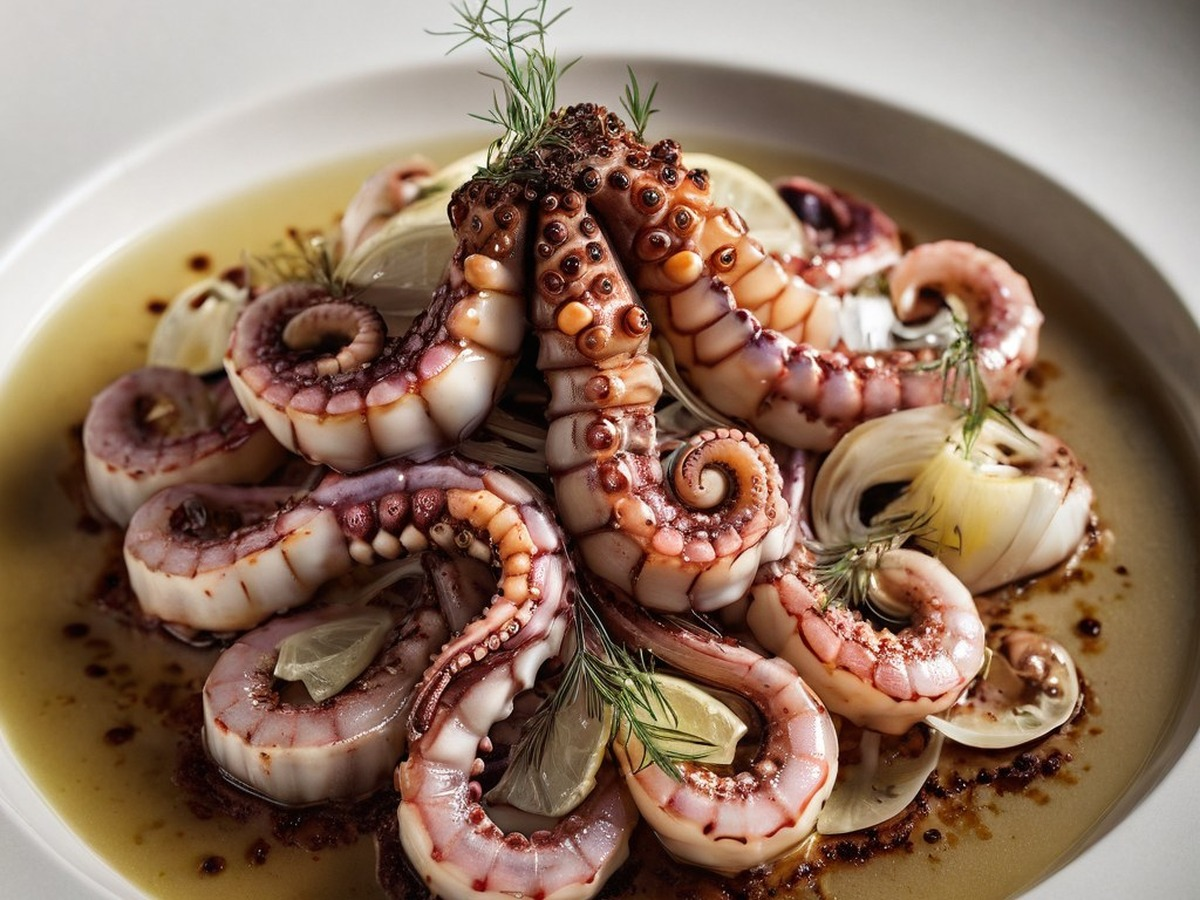
About This Recipe
Grilled Octopus in White Wine and Fennel turns a dramatic ingredient into a warm, approachable appetizer. The octopus is gently poached until tender, dried carefully, and finished over high heat so the tentacles pick up char without losing their softness. A fennel, garlic, white-wine, and lemon sauce brings anise, acidity, and olive-oil richness to the plate.
Octopus appears in many coastal Mediterranean kitchens, where it may be served chilled in salads, dressed with olive oil, or cooked over a live fire after a tenderizing step. Italian antipasti often rely on that contrast between carefully cooked seafood and bright herbs or citrus rather than a heavy sauce. This recipe follows that broad coastal logic while giving fennel the starring aromatic role beside the wine and lemon.
The first stage is gentle poaching, not a rolling boil. Keep the water at a quiet simmer and begin checking when a knife slides easily into the thickest tentacle; timing can vary with the size of the octopus. Drain it well and pat every piece dry, because surface moisture will steam on the grill and make it harder to develop the smoky edges that give the dish its character.
Once the grill or grill pan is fully hot, the octopus needs only a short sear. Two or three minutes per side is enough to create browned ridges while the tender interior warms through, and moving it to a plate promptly protects the texture achieved during poaching. High heat works best when it is brief and deliberate rather than a second long cooking phase.
The fennel sauce can be made while the octopus is on the grill. Let the sliced bulb soften in olive oil until sweet, then reinforce it with crushed fennel seed and garlic before adding the white wine and lemon juice. Reduce the liquid by about half, season afterward, and fold in the octopus only long enough for the sauce to coat it; lemon zest, parsley, and fennel fronds should be added off the heat so they stay fresh.
Serve the octopus warm with toasted bread, a crisp salad, or soft polenta for a light main course. The poached tentacles can be prepared several hours ahead, chilled, and dried before grilling, which makes the final assembly easy when guests arrive. Refrigerate leftovers promptly and reheat gently, since another long blast of high heat can make the tentacles firm; finish with fresh lemon and fennel fronds at the table.
Ingredients
- 1 1/2 lb cleaned octopus, tentacles separated (680g)
- 1 bay leaf
- 1 medium fennel bulb, fronds reserved and bulb thinly sliced
- 1 teaspoon fennel seeds, lightly crushed (2g)
- 1/2 cup dry white wine (120mL)
- 1/4 cup extra-virgin olive oil, divided (60mL)
- 2 garlic cloves, thinly sliced
- 1 tablespoon fresh lemon juice (15mL)
- 1 teaspoon finely grated lemon zest (2g)
- 1/2 teaspoon sea salt (3g)
- 1/4 teaspoon black pepper (0.5g)
- 2 tablespoons fresh parsley, chopped (8g)
Step-by-Step Instructions
- Poach the octopus Place the octopus and bay leaf in a pot, cover with water, bring to a gentle simmer, and cook for 45 to 60 minutes, until a knife slides easily into the thickest tentacle.
- Dry the tentacles Drain the octopus, discard the bay leaf, and pat the tentacles completely dry.
- Grill the octopus Heat a grill or grill pan to high, brush the octopus with 1 tablespoon olive oil, and grill for 2 to 3 minutes per side, until charred; transfer to a plate.
- Soften the fennel Heat 2 tablespoons olive oil in a skillet over medium heat, add the sliced fennel bulb, and cook for 6 to 8 minutes, until tender.
- Add the aromatics Add the fennel seeds and garlic and cook for about 1 minute, until fragrant.
- Reduce the wine Pour in the white wine and lemon juice and simmer for 4 to 6 minutes, until reduced by half.
- Finish the sauce Season the fennel sauce with the sea salt and black pepper, then fold in the grilled octopus for about 1 minute, just to warm it through.
- Add the fresh finish Remove the skillet from the heat and stir in the lemon zest, parsley, remaining olive oil, and reserved fennel fronds before serving.
Nutrition Per Serving
| Nutrient | Amount | % Daily Value* |
|---|---|---|
| Calories | 215 kcal | 11% |
| Protein | 22 g | 44% |
| Total Fat | 10 g | 13% |
| Saturated Fat | 2 g | 10% |
| Carbohydrates | 6 g | 2% |
| Fiber | 2 g | 7% |
| Sugars | 2 g | 2% |
| Sodium | 380 mg | 17% |
Nutrition is an estimate based on the listed ingredients and four servings.
Storage & Reheating
Cool the octopus and fennel sauce promptly, refrigerate them in a shallow covered container, and use them within two to three days. Keeping the octopus with the sauce helps protect the tentacles from drying out in the refrigerator.
Reheat gently over low heat just until warmed through; a second long grilling session can make the octopus firm. Add fresh lemon zest, parsley, and fennel fronds after reheating so the bright flavors return.
Practical Cooking Notes
Pat the poached tentacles thoroughly dry so the hot grill can char the surface instead of steaming it.
A high, brief sear gives the octopus color without undoing the tenderness created during poaching.
Parsley, lemon zest, and fennel fronds stay more aromatic when they are stirred in after the skillet leaves the burner.
Troubleshooting
The octopus is rubbery.
Likely cause: it was boiled hard or grilled for too long.
Fix: keep the poaching water at a gentle simmer, test the thickest tentacle, and limit the grill stage to a few minutes per side.
The octopus will not char.
Likely cause: the tentacles still have surface moisture or the grill is not hot enough.
Fix: pat the octopus dry again, brush it lightly with oil, and preheat the grill or pan fully before cooking.
The fennel sauce is too sharp.
Likely cause: the wine and lemon have not reduced enough or the sauce was seasoned too early.
Fix: simmer briefly until the liquid is reduced by half, then season and balance with olive oil or a little broth if needed.
Frequently Asked Questions
How do I make octopus tender before grilling?
Poach it at a gentle simmer until a knife slides easily into the thickest tentacle, usually 45 to 60 minutes for this amount. Avoid a hard boil, drain it well, and pat it dry before it goes on the grill.
Can I make this octopus without an outdoor grill?
Yes. A very hot cast-iron grill pan or heavy skillet works well indoors. Cook the dried tentacles in batches if needed so they sear rather than release enough moisture to steam.
How do I know when the octopus is ready?
It is ready after poaching when the thickest tentacle is easily pierced with a knife, and it is ready to grill when the outside has browned charred edges. The grill stage is brief because the octopus is already tender.
Can I prepare the octopus ahead of time?
Yes. Poach and chill the octopus several hours ahead, then pat it dry and grill it just before serving. Refrigerate leftovers promptly and reheat gently with the fennel sauce rather than grilling them again for a long time.
Keep Exploring
Equipment
- Large pot for poaching
- High-heat grill or grill pan
- Large skillet
- Chef's knife
- Cutting board
- Tongs
- Wooden spoon
- Fine grater or microplane