Grilled Lemongrass Pork Satay With Peanut Chilli Sauce
Grilled Lemongrass Pork Satay With Peanut Chilli Sauce is a Thai recipe categorized as appetizer, with 30 min of prep, 15 min of cooking, and 2 hr 45 min total. It yields 4 servings.
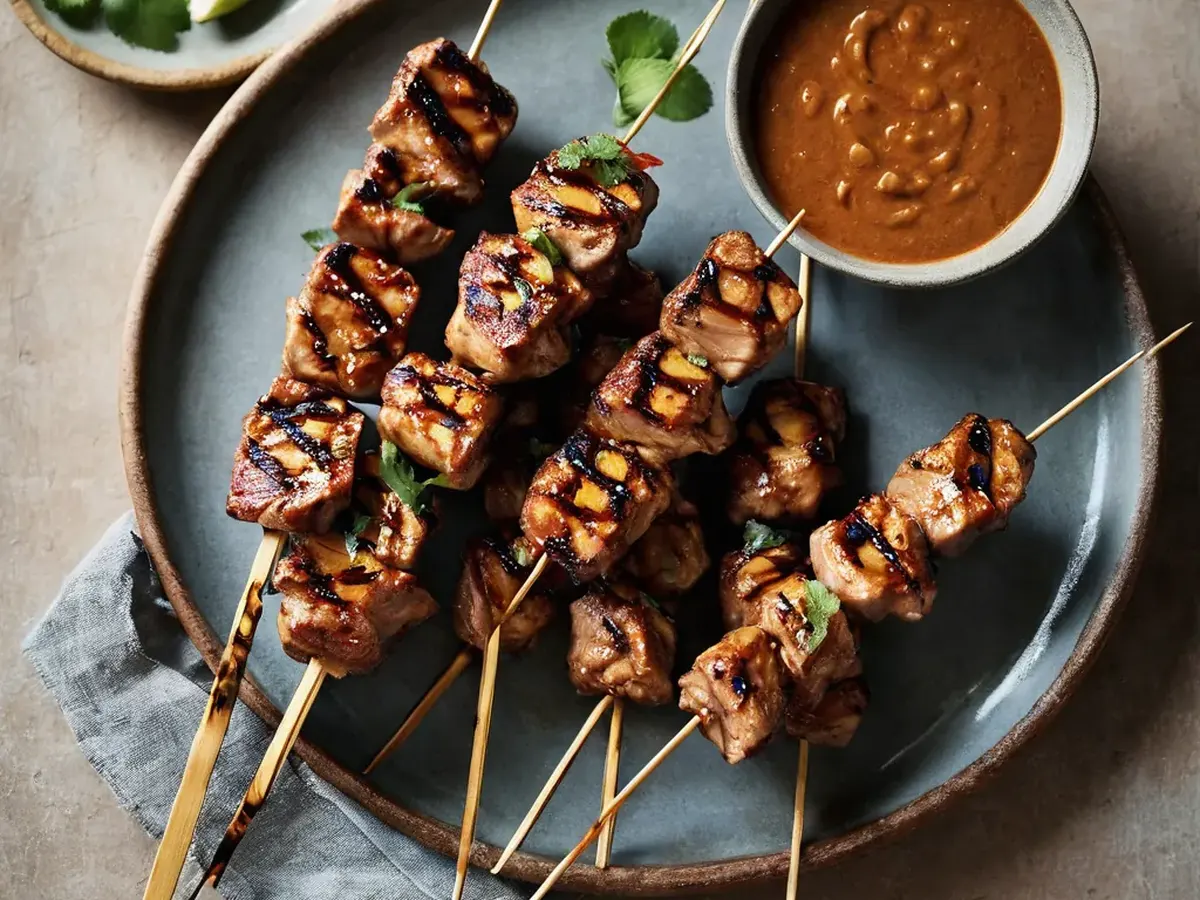
Flavor & Inspiration
This grilled lemongrass pork satay draws its inspiration from the vibrant street food culture of Thailand, where aromatic herbs and bold spices define the culinary landscape. The dish relies on the bright, citrusy notes of lemongrass and kaffir lime leaves to cut through the richness of the pork, creating a balanced flavor profile that is both refreshing and savory. Aromatic spices like coriander and cumin are toasted and ground fresh to build a deep, earthy foundation that complements the lean meat without overpowering it. The resulting skewers are charred on the outside while remaining juicy within, offering a textural contrast that is characteristic of well-executed Thai grilling techniques.
Serving these skewers with a rich peanut chili sauce adds a creamy, spicy element that ties the entire plate together in a harmonious finish. The dish is particularly suited for summer gatherings or as a starter that invites conversation and shared enjoyment among friends and family. Its make-ahead nature allows the marinade to fully penetrate the meat, ensuring consistent flavor in every bite regardless of when the grill is fired up.
This recipe respects the traditional methods of Thai cooking while remaining accessible to home cooks seeking to explore Southeast Asian flavors. The interplay between the smoky char of the pork and the fresh, zesty marinade creates a complex sensory experience that engages the palate immediately. Each strip of meat absorbs the essence of the lemongrass and lime, resulting in a tender bite that releases a burst of citrus aroma upon chewing.
The peanut chili sauce provides a velvety texture that coats the tongue, balancing the heat of the chili with the nutty depth of the roasted peanuts. Fresh cilantro leaves scattered over the top add a final layer of green brightness that lifts the heavy richness of the sauce. Lime wedges served on the side allow diners to adjust the acidity to their personal preference, enhancing the natural sweetness of the pork.
The visual appeal of the dish is striking, with the golden-brown char of the meat contrasting against the creamy beige of the sauce and the vibrant green of the garnish. This appetizer serves as an excellent introduction to Thai cuisine for those unfamiliar with the region, offering a familiar yet exotic taste profile. The nature of the recipe makes it inclusive for a wide range of dietary needs without sacrificing flavor or texture.
Ingredients
- 1 pound pork tenderloin, cut into 1/2-inch thick strips
- 2 stalks fresh lemongrass, white parts only, finely minced
- 4 kaffir lime leaves, stems removed and finely minced
- 2 teaspoons ground coriander
- 1 teaspoon ground cumin
- 1 teaspoon salt
- 1/2 teaspoon black pepper
- 2 tablespoons vegetable oil
- 1 tablespoon fish sauce
- 1 tablespoon lime juice
- 1/2 cup creamy peanut butter
- 2 tablespoons chili garlic sauce
- 1 tablespoon soy sauce (labeled gluten-free)
- 1 tablespoon brown sugar
- 1/2 cup warm water
- 1 lime, cut into wedges for serving
- 1/4 cup fresh cilantro leaves for garnish
Ingredient flexibility
Pork tenderloin: Chicken breast
Expected result: Chicken breast is leaner and has a milder flavor, resulting in a less rich satay with a slightly different texture.
Adjustment: Reduce grilling time to 3-4 minutes per side and ensure the internal temperature reaches 165°F.
Fish sauce: Tamari (gluten-free)
Expected result: Tamari provides a similar savory umami depth but lacks the distinct fermented fish flavor of fish sauce.
Adjustment: Use an equal amount of tamari, but consider adding a pinch of sugar to balance the slightly less complex flavor profile.
Kaffir lime leaves: Lime zest
Expected result: Lime zest offers a bright citrus note but lacks the unique floral and complex aroma of kaffir lime leaves.
Adjustment: Use 1 tablespoon of fresh lime zest to replace the 4 minced leaves, adding it during the final minutes of marinating to preserve the volatile oils.
Step-by-Step Instructions
- Build the sauceIn a medium bowl, whisk together the minced lemongrass, kaffir lime leaves, ground coriander, ground cumin, salt, black pepper, vegetable oil, fish sauce, and lime juice until well combined. Add the pork strips to the bowl and toss thoroughly to coat every piece, ensuring the marinade penetrates the meat. Cover the bowl with plastic wrap and refrigerate for at least 2 hours or up to 24 hours to allow the flavors to develop fully. Discard the fibrous lemongrass and lime leaf pieces before eating the cooked meat.
- Make the peanut chili sauceWhile the pork marinates, combine the creamy peanut butter, chili garlic sauce, gluten-free soy sauce, and brown sugar in a small saucepan over low heat. Stir continuously as the mixture warms, then gradually whisk in the warm water until the sauce reaches a smooth, pourable consistency. Remove from heat and set aside, stirring occasionally to maintain a uniform texture before serving.
- Thread the pork onto skewersPreheat a grill or grill pan to medium-high heat and lightly oil the grates to prevent sticking. Remove the pork from the marinade, allowing excess liquid to drip off, and thread the strips onto soaked wooden or metal skewers. Place the skewers on the grill, leaving space between them to ensure even cooking and proper charring on all sides.
- Grill the pork skewersCook the skewers for 4 to 5 minutes per side, turning occasionally, until the pork develops a nice char and reaches an internal temperature of 165°F. Use an instant-read thermometer inserted into the thickest part of the meat to verify the temperature without touching the skewer. Once the pork reaches the target temperature, remove the skewers from the heat and let them rest for 3 minutes to allow the juices to redistribute.
- Serve the satayArrange the grilled pork skewers on a serving platter and drizzle generously with the prepared peanut chili sauce. Garnish with fresh cilantro leaves and serve immediately with lime wedges on the side for squeezing over the meat. The combination of smoky pork, aromatic herbs, and spicy creamy sauce creates a complete appetizer ready to be enjoyed.
Nutrition Per Serving
- Calories: 520 kcal
- Protein: 28 g
- Fat: 32 g
- Carbohydrates: 18 g
- Fiber: 2 g
- Sodium: 680 mg
Estimated per serving.
Storage & Reheating
Storage
Refrigerate the grilled pork skewers and peanut chili sauce within two hours of cooking by dividing them into shallow portions and placing them in separate airtight or covered containers at 40°F (4°C) or below. Consume these leftovers within 3 to 4 days to ensure optimal quality and safety.
Reheating
Reheat the pork skewers in a skillet over medium heat or in an oven at 350°F, adding a splash of water or extra sauce to retain moisture and prevent the meat from drying out. Warm the peanut sauce separately in a saucepan or microwave, stirring frequently, and verify that the pork reaches an internal temperature of 165°F before serving.
Practical Cooking Notes
Grill or grill pan, Instant-read thermometer, Medium mixing bowl, Small saucepan, Skewers (wooden or metal), Whisk
Grill the pork until it reaches an internal temperature of 145°F, then allow it to rest for three minutes before serving. The meat should be firm to the touch but still juicy, with visible char marks on the exterior. Check the thickest part with an instant-read thermometer; it must reach 145°F before serving.
Properly mincing the lemongrass and kaffir lime leaves is crucial for releasing their essential oils, as large pieces will remain fibrous and unpleasant to eat. Ensuring the pork strips are of uniform thickness guarantees even cooking and prevents some pieces from being undercooked while others are overdone.
Refrigerate all perishable leftovers, including the pork and peanut sauce, within two hours of cooking to prevent bacterial growth. Ensure the pork reaches a safe internal temperature of 165°F during reheating to eliminate harmful pathogens.
The listed substitutions can change moisture, sweetness, salinity, and cook time; make one change at a time and judge the final texture before serving.
Troubleshooting
The pork is dry after grilling.
Likely cause: The meat was overcooked or the marinade lacked sufficient oil to retain moisture.
Fix: Next time, reduce grilling time by 1-2 minutes and ensure the marinade includes enough oil to coat the meat evenly before cooking.
The peanut sauce is too thick.
Likely cause: The sauce has cooled and thickened, or too little water was added during preparation.
Fix: Whisk in warm water one tablespoon at a time until the desired pourable consistency is achieved before serving.
The skewers are burning before the pork is cooked.
Likely cause: The grill temperature was too high, causing the exterior to char rapidly.
Fix: Move the skewers to a cooler part of the grill or reduce the heat to medium to allow the interior to cook through without burning the outside.
Recipe FAQs & Cooking Guidance
Can I make the peanut sauce ahead of time?
Yes, the peanut chili sauce can be prepared up to three days in advance and stored in an airtight container in the refrigerator. If the sauce thickens upon cooling, simply stir in a teaspoon of warm water to restore its pourable consistency before serving.
What is the best way to prevent the skewers from burning?
Soak wooden skewers in water for at least 30 minutes before grilling to prevent them from charring or catching fire. If using metal skewers, ensure the grill grates are clean and lightly oiled to help the meat slide easily without sticking.
Is this recipe suitable for a gluten-free diet?
Yes, this recipe is naturally gluten-free provided you use a certified gluten-free soy sauce and verify that the chili garlic sauce does not contain wheat. Always check the labels of all packaged condiments to ensure they meet gluten-free standards.
Can I use a different type of nut butter?
You can substitute creamy peanut butter with cashew butter for a milder, creamier sauce, but the flavor profile will be less distinctively nutty. Almond butter is another option, though it may impart a slightly sweeter and more delicate taste to the final dish.