Metal vs Bamboo Skewers: A Practical Guide
The best skewer is the one that suits the food, the heat source, and how often you plan to use it.
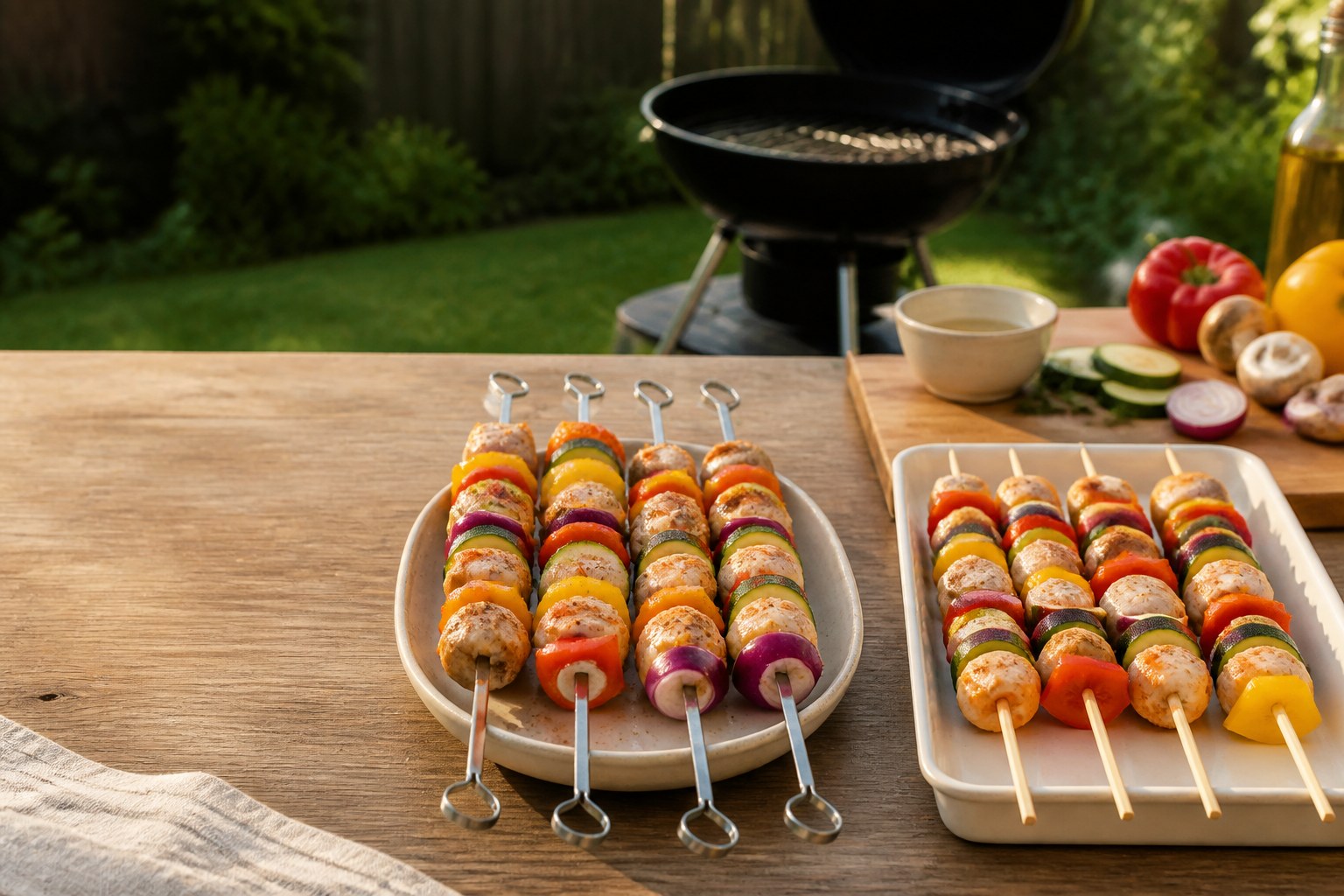
When metal makes sense
Flat stainless-steel skewers resist spinning when you turn the food and can be reused for years. They conduct heat into the center of ingredients, which can help dense pieces cook evenly, but their handles and exposed ends become very hot. Choose a length that fits fully over your grill or pan and use sturdy tongs or heat-safe gloves.
When bamboo is convenient
Bamboo skewers are inexpensive, lightweight, and useful when serving a group. Soaking can reduce surface scorching, but it does not make wood fireproof; keep exposed ends away from direct flame and monitor them. Avoid splintered skewers and never reuse wood that contacted raw meat.
Build a skewer that cooks evenly
Cut ingredients to similar thickness and leave a little space between pieces so hot air can circulate. Very dense vegetables may need a short head start, while delicate fruit or herbs are better grouped separately. Mixing raw chicken with quick-cooking shrimp or fragile vegetables on one skewer makes timing harder, not more efficient.
Grill without cross-contamination
Keep the platter and tools used for raw meat separate from those used for cooked food. Carry a clean plate to the grill and use a thermometer to check the thickest pieces. USDA grilling guidance specifically recommends separate platters, cutting boards, and utensils for raw and cooked foods.
Cleanup and storage
Let metal skewers cool completely, soak only as needed to loosen residue, then wash and dry them before storing. Keep pointed ends capped or contained. Discard used bamboo skewers once cool; their rough surface is difficult to clean reliably.