Thai Red Curry With Bamboo Shoots And Thai Eggplant
Thai Red Curry With Bamboo Shoots And Thai Eggplant is a Thai recipe categorized as main course, with 15 min of prep, 25 min of cooking, and 40 min total. It yields 4 servings.
Flavor & Inspiration
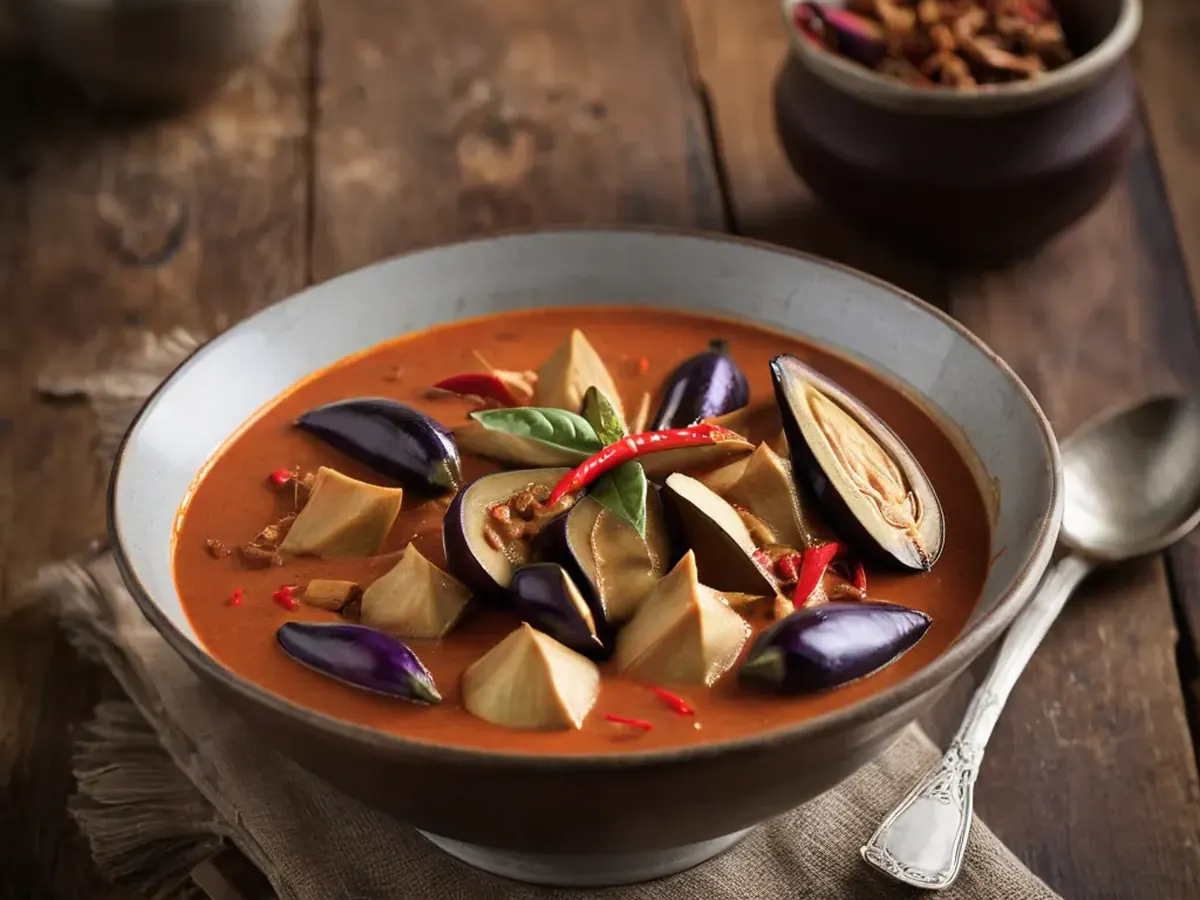
This Thai red curry draws its soul from the vibrant street food traditions of central Thailand where aromatic pastes and fresh herbs define the culinary landscape. The interplay of fiery red curry paste and creamy coconut milk creates a rich, velvety base that coats every ingredient in warm, spicy sweetness. Fresh basil leaves are stirred in at the end to provide a bright, anise-like finish that cuts through the richness of the coconut.
The texture of the dish is a study in contrasts with the soft, yielding flesh of the Thai eggplant meeting the satisfying crunch of the bamboo shoots. It is a comforting yet lively meal that pairs beautifully with steamed jasmine rice to soak up the savory sauce. The deep red hue of the curry paste promises a complex heat that builds gradually with each spoonful of the simmered broth.
Aromatic spices within the paste release their essential oils into the hot oil before the coconut milk transforms them into a mellow, fragrant sauce. The addition of palm sugar balances the sharp acidity of the lime juice to create a harmonious profile of sweet and savory notes. Sliced red chilies garnish the top to offer a final burst of visual color and a touch of fresh heat for those who desire it.
This vegetarian main course stands as a testament to the balance of flavors that characterizes authentic Thai cooking. The bamboo shoots absorb the spiced coconut liquid while retaining their distinct crispness throughout the simmering process. Thai eggplants soften until they are tender yet hold their shape to provide a substantial bite within the creamy sauce.
The dish arrives at the table steaming hot with a glossy sheen that reflects the light and invites immediate tasting. It serves as an ideal centerpiece for a family dinner or a gathering of friends who appreciate bold, aromatic flavors. The combination of ingredients creates a meal that is both satisfying and light enough to be enjoyed without heaviness.
Ingredients
- 2 tablespoons vegetable oil
- 3 tablespoons red curry paste
- 1 can (13.5 ounces) full-fat coconut milk
- 1 cup vegetable broth
- 1 pound Thai eggplants, quartered
- 1 can (8 ounces) bamboo shoots, drained and rinsed
- 1 tablespoon soy sauce or tamari
- 1 tablespoon palm sugar or brown sugar
- 1 cup fresh Thai basil leaves
- 1 teaspoon lime juice
- 1 red chili, sliced for garnish
Ingredient flexibility
Thai eggplants: Firm green beans or zucchini
Expected result: Green beans will retain more crunch while zucchini will become very soft, altering the texture profile significantly.
Adjustment: Add green beans 5 minutes earlier than the bamboo shoots; add zucchini in the last 5 minutes of cooking.
Red curry paste: Green curry paste
Expected result: Green curry paste offers a fresher, more herbaceous heat with a different spice balance compared to the dried chilies in red paste.
Adjustment: Use the same quantity but taste before adding extra sugar, as green paste can be slightly less sweet.
Palm sugar: Brown sugar
Expected result: Brown sugar provides a similar molasses-like sweetness but lacks the complex, caramel-like notes of palm sugar.
Adjustment: Use a 1:1 ratio, but dissolve thoroughly to ensure no graininess remains in the sauce.
Step-by-Step Instructions
- Sauté the curry pasteHeat the vegetable oil in a deep skillet or Dutch oven over medium heat. Add the red curry paste and stir constantly for about 1 to 2 minutes until it becomes fragrant and the oil begins to separate slightly from the paste.
- Simmer the coconut basePour in the coconut milk and vegetable broth, stirring to dissolve the paste completely. Bring the mixture to a gentle simmer, then add the soy sauce and sugar, stirring until the sugar has fully dissolved.
- Cook the vegetablesAdd the quartered Thai eggplants and drained bamboo shoots to the simmering liquid. Reduce the heat to medium-low, cover the pot, and cook for 10 to 12 minutes until the eggplants are tender enough to be pierced easily with a fork but still hold their shape, and the bamboo shoots are heated through.
- Finish with herbsRemove the pot from the heat and stir in the fresh Thai basil leaves and lime juice. Taste and adjust seasoning with more sugar or lime juice if desired. Ladle the curry into bowls and garnish with sliced red chilies before serving.
Utensils
- Deep skillet or Dutch oven with lid
- Wooden spoon or silicone spatula
- Chef's knife and cutting board
- Measuring cups and spoons
- Ladle
- Serving bowls
Nutrition Per Serving
- Calories: 395 kcal
- Protein: 6 g
- Fat: 29 g
- Carbohydrates: 25 g
- Fiber: 5 g
- Sodium: 540 mg
Estimated per serving.
Storage & Reheating
Storage
Refrigerate any leftover Thai Red Curry within two hours of cooking by dividing it into shallow portions to ensure rapid cooling. Store the curry in an airtight or covered container at 40°F (4°C) or below, where it will remain safe to eat for 3 to 4 days. Note that the fresh Thai basil leaves may wilt and lose their vibrant color during storage, but the flavor will remain intact.
Reheating
Reheat this hot curry gently in a saucepan over medium-low heat, adding a splash of water or coconut milk to restore the sauce's consistency and retain its moisture. Stir frequently to ensure even heating and verify that the leftovers reach an internal temperature of 165°F (74°C) before serving. Alternatively, you can reheat it in the microwave in short intervals, stirring in between to prevent the coconut milk from separating.
Practical Cooking Notes
The Thai eggplants are done when they are tender enough to be pierced easily with a fork but still hold their shape, and the bamboo shoots are hot throughout. The sauce should be thickened and coating the vegetables, with no raw taste from the curry paste remaining.
Sautéing the curry paste in oil until fragrant is critical to release the essential oils and remove the raw flour taste often found in commercial pastes. Stirring the basil in only after removing the pot from heat prevents the leaves from wilting into a slimy texture and preserves their aromatic quality.
Refrigerate perishable leftovers within two hours of cooking to prevent bacterial growth, as the coconut milk and broth create a favorable environment for bacteria. Ensure the curry reaches an internal temperature of 165°F (74°C) when reheating to guarantee safety.
The listed substitutions can change moisture, sweetness, salinity, and cook time; make one change at a time and judge the final texture before serving.
Troubleshooting
The curry sauce is too thin.
Likely cause: Too much liquid was added or the vegetables released excess water.
Fix: Simmer the curry uncovered for an additional 5 to 10 minutes to reduce the liquid to the desired consistency.
The curry tastes too spicy.
Likely cause: The red curry paste used was particularly hot or too much was added.
Fix: Stir in a tablespoon of coconut milk or a pinch of sugar to balance the heat, and serve with extra rice to dilute the spice.
The eggplants are still hard after cooking.
Likely cause: The pieces were cut too large or the heat was too low.
Fix: Cut the eggplants into smaller, uniform pieces next time and ensure the liquid is at a gentle simmer before covering the pot.
Helpful Recipe Tips & FAQs
Can I use regular eggplants instead of Thai eggplants?
Yes, you can use small round Japanese or Chinese eggplants, but larger globe eggplants will become mushy and release too much water into the sauce.
How do I make this dish spicier?
Increase the amount of red curry paste or add fresh sliced bird's eye chilies during the sautéing stage for a more intense heat.
Is this dish suitable for a gluten-free diet?
Yes, provided you use a certified gluten-free tamari or soy sauce and verify that your curry paste does not contain wheat-based additives.
Can I prepare this curry ahead of time?
The curry base and vegetables can be cooked and stored for up to two days, but add the fresh basil and lime juice just before serving to preserve their bright flavors.