Tamarind Coconut Chicken Curry
Tamarind Coconut Chicken Curry is an Indian recipe categorized as main course, with 15 min of prep, 25 min of cooking, and 45 min total. It yields 4 servings.
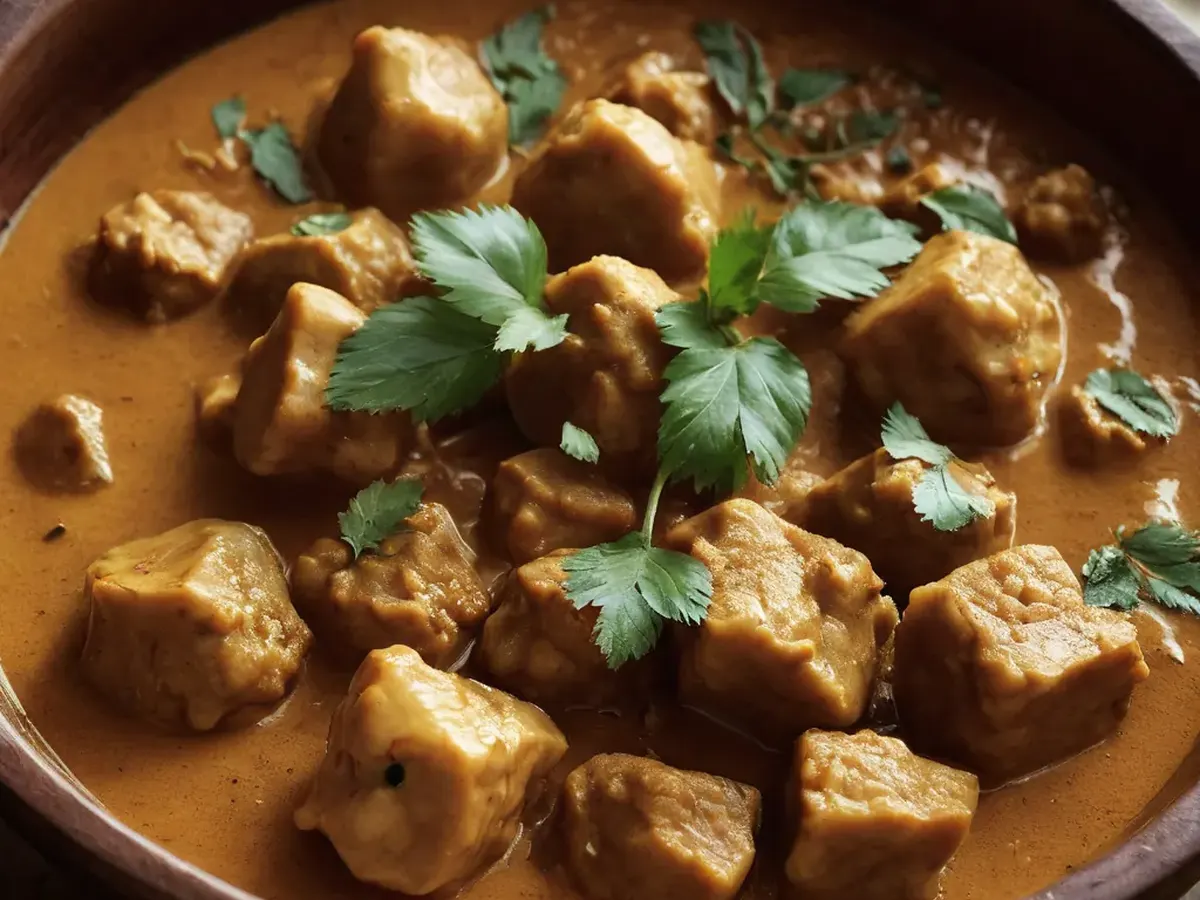
About This Recipe
Tamarind Coconut Chicken Curry is an Indian recipe categorized as main course, with 15 min of prep, 25 min of cooking, and 45 min total.
Tamarind Coconut Chicken Curry is organized around boneless, skinless chicken thighs, cut into 1-inch pieces, vegetable oil, medium yellow onion, finely chopped, cloves garlic, minced, prepared as one clear dish.
The Indian character stays clear because the listed ingredients do the work of building the dish.
Start with Sauté the aromatics Heat the vegetable oil in a large, heavy-bottomed pot or Dutch oven over medium heat. Add the chopped onion and cook, stirring frequently, until it becomes soft and translucent, about 5 minutes. Stir in the minced garlic and grated ginger, cooking for another minute until fragrant but not browned.
Next, Bloom the spices Add the turmeric, ground coriander, ground cumin, and red pepper flakes to the pot. Stir constantly for about 30 seconds to toast the spices and release their essential oils, being careful not to burn them.
The remaining ingredients round out Tamarind Coconut Chicken Curry, adding fresh ginger, grated, ground turmeric, ground coriander, ground cumin.
Use the listed quantities and timing as the baseline, then taste and adjust only where the recipe gives room to do so.
Serve Tamarind Coconut Chicken Curry according to the recipe yield and pair it with the sides or garnishes listed in the serving notes.
Ingredients
- 1 1/2 pounds boneless, skinless chicken thighs, cut into 1-inch pieces
- 2 tablespoons vegetable oil
- 1 medium yellow onion, finely chopped
- 3 cloves garlic, minced
- 1 tablespoon fresh ginger, grated
- 1 teaspoon ground turmeric
- 1 teaspoon ground coriander
- 1/2 teaspoon ground cumin
- 1/4 teaspoon red pepper flakes
- 1/2 cup tamarind paste
- 1 1/2 cups warm water
- 1 can (13.5 ounces) full-fat coconut milk
- 1 teaspoon salt
- 1 tablespoon fresh cilantro, chopped for garnish
Ingredient flexibility
tamarind paste: lemon juice
Expected result: Provides a bright citrus acidity but lacks the deep, complex sourness of tamarind.
Adjustment: Use 3 tablespoons of lemon juice added at the end of cooking to preserve the fresh flavor.
chicken thighs: chicken breast
Expected result: Results in a leaner texture that can become dry if overcooked.
Adjustment: Reduce cooking time by 5 minutes and remove from heat immediately once the internal temperature reaches 165°F.
vegetable oil: ghee
Expected result: Adds a rich, nutty dairy flavor that complements the spices.
Adjustment: Use the same quantity as vegetable oil; note that this makes the dish no longer dairy-free.
Step-by-Step Instructions
- Sauté the aromaticsHeat the vegetable oil in a large, heavy-bottomed pot or Dutch oven over medium heat. Add the chopped onion and cook, stirring frequently, until it becomes soft and translucent, about 5 minutes. Stir in the minced garlic and grated ginger, cooking for another minute until fragrant but not browned.
- Bloom the spicesAdd the turmeric, ground coriander, ground cumin, and red pepper flakes to the pot. Stir constantly for about 30 seconds to toast the spices and release their essential oils, being careful not to burn them.
- Cook the chickenIncrease the heat to medium-high and add the chicken pieces to the pot. Stir well to coat the meat in the spice mixture and cook for 3 to 4 minutes until the chicken is no longer pink on the outside.
- Simmer the curryIn a separate bowl, whisk the tamarind paste with the warm water until fully dissolved. Pour this mixture into the pot along with the coconut milk and salt. Bring the liquid to a gentle simmer, then reduce the heat to low. Cover the pot and let it cook for 15 to 20 minutes until the chicken is cooked through and tender.
- Check donenessInsert an instant-read thermometer into the thickest piece of chicken to verify it has reached 165°F. If the chicken is not yet at temperature, continue cooking for another 2 to 3 minutes and check again. The chicken is safe to eat when opaque throughout with no pink remaining.
- Garnish and serveRemove the pot from the heat and let the curry rest for 5 minutes to allow the flavors to meld. Ladle the curry into bowls and garnish with fresh chopped cilantro before serving immediately with steamed rice.
Nutrition Per Serving
- Calories: 520 kcal
- Protein: 32 g
- Fat: 32 g
- Carbohydrates: 18 g
- Fiber: 3 g
- Sodium: 640 mg
Estimated per serving.
Storage & Reheating
Storage
Refrigerate the Tamarind Coconut Chicken Curry leftovers within two hours of cooking by dividing them into shallow portions and placing them in an airtight or covered container at 40°F (4°C) or below. Consume the stored curry within 3 to 4 days for the best quality and safety.
Reheating
Reheat the curry in a saucepan over medium-low heat, adding a splash of water or coconut milk to maintain its creamy texture and prevent the chicken from drying out. Stir frequently until the dish is steaming hot throughout and verify that the internal temperature reaches 165°F (74°C) before serving.
Practical Cooking Notes
Heavy-bottomed pot or Dutch oven, Instant-read thermometer, Wooden spoon, Measuring cups and spoons, Ladle
The chicken is safe to eat when an instant-read thermometer inserted into the thickest piece registers 165°F. The sauce should be bubbling gently around the edges, and the chicken should be opaque throughout with no pink remaining.
Browning the chicken briefly before adding the liquid helps develop a deeper flavor base through the Maillard reaction. Stirring the spices constantly while blooming them prevents burning, which can introduce a bitter taste to the final dish.
Perishable leftovers must be refrigerated within two hours of cooking to prevent bacterial growth. Ensure the chicken reaches an internal temperature of 165°F before serving to guarantee safety.
The listed substitutions can change moisture, sweetness, salinity, and cook time; make one change at a time and judge the final texture before serving.
Troubleshooting
The curry tastes too sour
Likely cause: Too much tamarind was used or the tamarind variety is particularly tart.
Fix: Stir in a teaspoon of sugar or honey to balance the acidity, tasting as you add it until the desired flavor is achieved.
The sauce is too thin
Likely cause: Too much water was added or the chicken released excessive liquid during cooking.
Fix: Simmer the curry uncovered for an additional 5 to 10 minutes to allow the liquid to reduce and thicken naturally.
The chicken is dry
Likely cause: The chicken was overcooked or breast meat was used instead of thighs.
Fix: Reduce the cooking time in future batches and ensure you remove the chicken from heat as soon as it hits 165°F.
Helpful Recipe Tips & FAQs
Can I use tamarind concentrate instead of paste?
Yes, tamarind concentrate is a suitable substitute, but it is often more concentrated, so start with half the amount called for and adjust to taste.
How do I make this dish spicier?
You can increase the red pepper flakes or add a finely chopped fresh green chili along with the garlic and ginger at the beginning of cooking.
Can I prepare this curry ahead of time?
This curry often tastes better the next day as the flavors have more time to meld, making it an excellent option for meal prepping.
What is the best way to reheat the curry?
Reheat gently in a saucepan over low heat, adding a splash of water if the sauce has thickened too much, until it reaches 165°F.