Sheet Pans and Roasting Racks
Pan material, rim height, spacing, and airflow decide whether food roasts, steams, or browns.
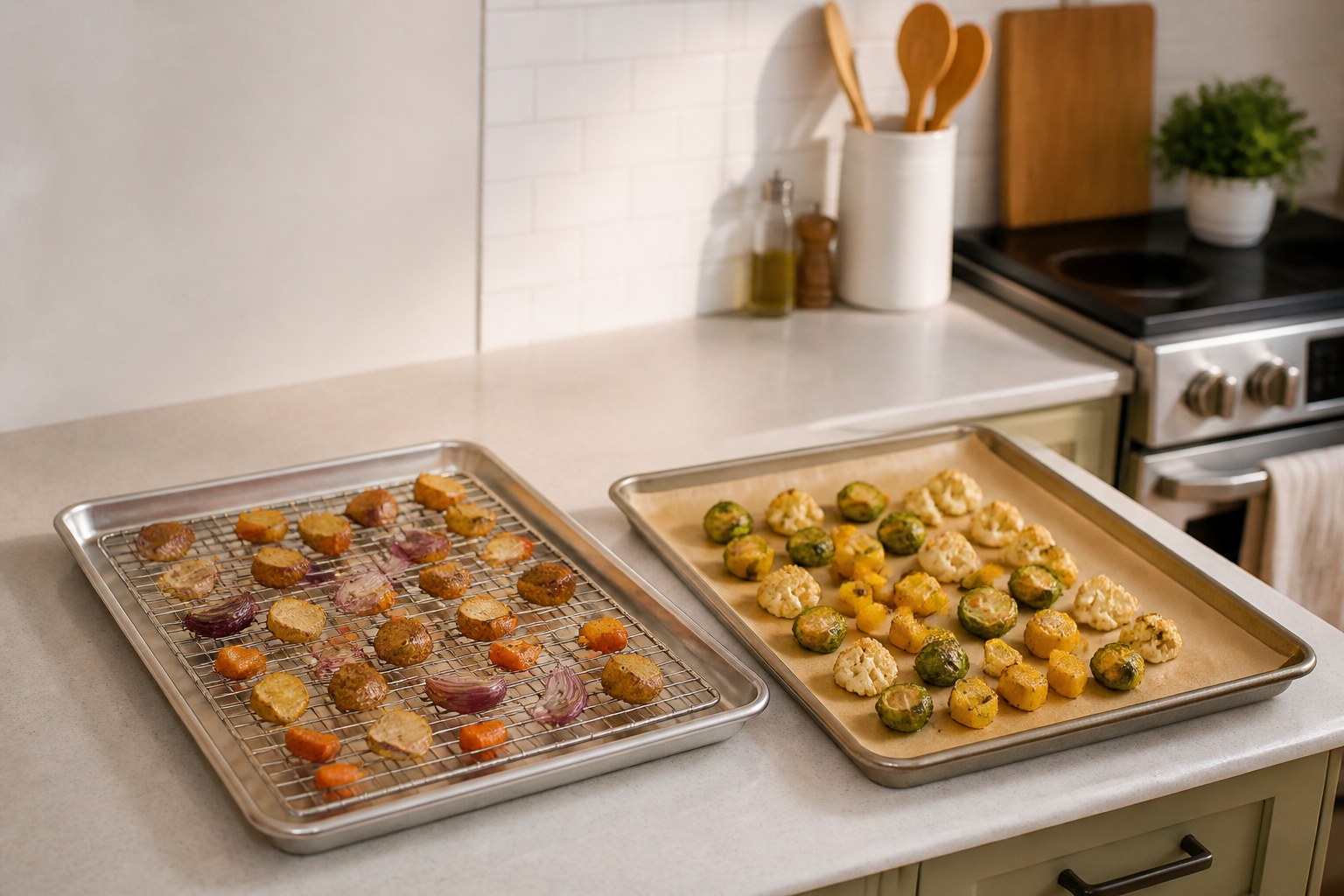
Choose sturdy, useful dimensions
A heavy-gauge rimmed sheet pan resists warping and catches juices. Half-sheet proportions fit many home ovens, while quarter sheets are convenient for small batches and separating ingredients with different cook times. Before buying, measure the usable oven rack area rather than relying on a product name.
Bare pan, parchment, foil, or rack
A lightly oiled bare metal surface encourages direct browning. Parchment simplifies cleanup and works well for vegetables, cookies, and sticky glazes within the paper maker's temperature limit. Foil is useful for containing drips but can cling to sugary foods. A fitted wire rack lifts food so hot air circulates and rendered fat can drain.
Spacing is an ingredient
Crowding traps moisture and turns roasting into steaming. Spread food in a single layer with visible space, use a second pan when needed, and rotate pans if your oven browns unevenly. Similar-size pieces finish together; mixed sizes should be added in stages.
Match the setup to the result
Use a rack for crisp edges around wings, cutlets, or glazed proteins. Roast vegetables directly on the pan for stronger contact browning. For delicate fish, parchment or a lightly greased surface reduces sticking. Dark pans generally brown faster than bright aluminum, so watch the first batch closely.
Care that extends pan life
Let a hot pan cool before washing to reduce sudden temperature stress. Avoid scraping nonstick finishes with metal tools. Cosmetic browning on an uncoated aluminum pan is not the same as structural damage; replace a pan when it is badly warped, cracked, or no longer stable on the rack.