Panang Curry With Shredded Chicken And Kaffir Lime
Panang Curry With Shredded Chicken And Kaffir Lime is a Thai recipe categorized as main course, with 15 min of prep, 25 min of cooking, and 40 min total. It yields 4 servings.
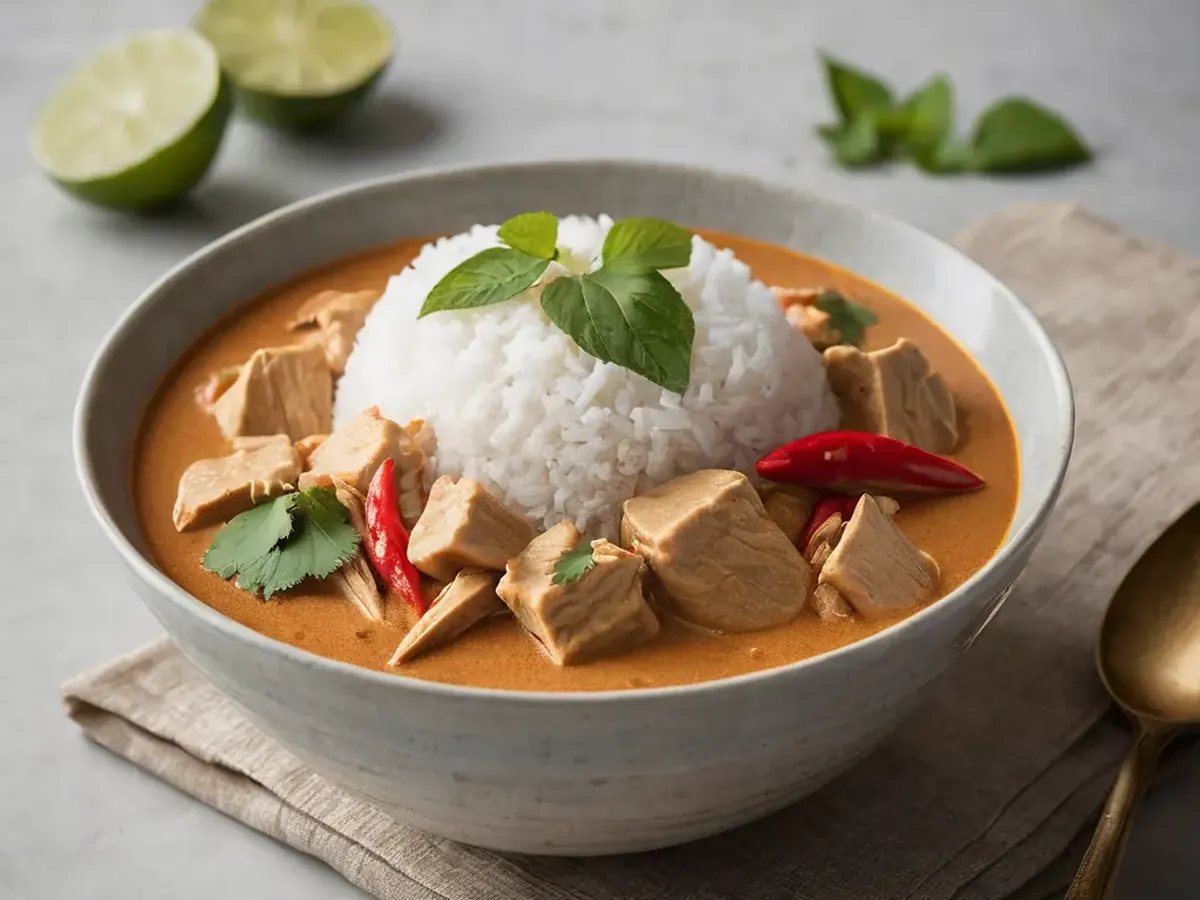
Flavor & Inspiration
This Panang curry draws its inspiration from the rich, coconut-based stews of central Thailand. The foundation of the flavor profile rests on the distinct aroma of toasted spices found within the curry paste. Fresh kaffir lime leaves provide a bright, citrusy counterpoint that cuts through the richness of the full-fat coconut milk. This careful balance ensures that every spoonful offers a complex interplay of heat, sweetness, and aromatic freshness.
Shredded chicken serves as the hearty protein that absorbs the thick, velvety sauce. The chicken pieces are broken down directly in the pan to ensure they are fully coated and infused with the spiced coconut broth. This method allows the meat to retain moisture while integrating seamlessly with the vegetables and herbs that simmer alongside it. The result is a unified dish where the protein and sauce become indistinguishable in their flavor contribution.
The finished dish presents a deep orange-red hue with a glossy sheen. The red bell pepper adds a vibrant splash of color and a crisp-tender bite that prevents the dish from feeling too heavy. Fresh lime juice stirred in at the end brightens the overall profile, lifting the heavy coconut notes with a sharp, clean finish. The aroma of the kaffir lime leaves permeates the kitchen, promising a dining experience that is both fragrant and deeply flavorful.
This curry is an ideal meal for a cozy weeknight dinner or a relaxed gathering. It pairs exceptionally well with steamed jasmine rice, which acts as a neutral base to soak up the rich, spiced sauce. The gluten-free and dairy-free nature of the ingredients makes it accessible for those with specific dietary needs. Fresh cilantro leaves added as a garnish provide a final layer of herbal freshness that complements the warm spices.
The preparation involves a straightforward sequence of sautéing the paste, browning the chicken, and then simmering everything together. This approach ensures that the chicken is cooked through while the sauce reduces to a thick, clinging consistency. The use of certified gluten-free ingredients allows the dish to remain true to its traditional roots. The final result is a harmonious blend of textures and tastes that satisfies the appetite.
Serving the curry immediately while the coconut milk is still warm ensures that the fat remains emulsified. The combination of tender shredded chicken, crisp peppers, and aromatic herbs creates a dish that feels both substantial and refined. It honors the traditional techniques of Thai cooking while offering a comforting and approachable meal. The balance of flavors makes it a versatile option that can be enjoyed by a wide range of palates.
Ingredients
- 1 tablespoon peanut oil
- 2 tablespoons Panang curry paste (certified gluten-free)
- 1 pound boneless, skinless chicken breasts, cut into 1-inch chunks
- 1 can (13.5 ounces) full-fat coconut milk
- 1 cup chicken broth (certified gluten-free)
- 1 tablespoon fish sauce (certified gluten-free)
- 1 tablespoon palm sugar or brown sugar
- 2 kaffir lime leaves, stems removed and leaves torn into small pieces
- 1 red bell pepper, sliced into thin strips
- 1 tablespoon lime juice
- 2 tablespoons fresh cilantro leaves, chopped
- 1 cup cooked jasmine rice for serving
Ingredient flexibility
Panang curry paste: Red curry paste
Expected result: The dish will be slightly less sweet and have a different spice profile, with a milder, more herbal kick.
Adjustment: Add an extra 1 teaspoon of palm sugar to compensate for the reduced sweetness of the red curry paste.
Chicken breasts: Boneless, skinless chicken thighs
Expected result: The shredded chicken will be more tender and have a richer, deeper flavor.
Adjustment: Reduce the simmering time by 2 to 3 minutes as thighs cook slightly faster than breasts.
Kaffir lime leaves: Fresh lime zest
Expected result: The dish will lack the complex, floral citrus notes unique to kaffir lime leaves.
Adjustment: Add 1 teaspoon of lime zest during the final minute of cooking to maximize the aromatic oils.
Step-by-Step Instructions
- Sauté the curry pasteHeat the peanut oil in a large, deep skillet or Dutch oven over medium heat. Add the Panang curry paste and stir constantly for 1 to 2 minutes until it becomes fragrant and the oil begins to separate slightly from the paste.
- Brown the chickenAdd the chicken chunks to the skillet and stir to coat them thoroughly with the curry paste. Cook for 4 to 5 minutes, turning occasionally, until the chicken is opaque on the outside but not yet cooked through.
- Simmer the saucePour in the coconut milk and chicken broth, scraping the bottom of the pan to release any browned bits. Stir in the fish sauce and sugar until the sugar dissolves. Bring the mixture to a gentle simmer, then reduce the heat to low.
- Add aromatics and vegetablesStir in the torn kaffir lime leaves and the sliced red bell pepper. Cover the skillet and let the curry simmer for 10 to 12 minutes, allowing the chicken to cook through and the flavors to meld.
- Shred and finishRemove the skillet from the heat. Use two forks to shred the chicken directly in the pan until it is broken into bite-sized pieces. Stir in the fresh lime juice and taste the sauce, adding a pinch more sugar if it needs more sweetness or a splash more broth if it is too thick.
- Serve immediatelyLadle the hot curry over steamed jasmine rice and garnish with fresh cilantro leaves. Serve the dish immediately while the coconut milk is still warm and the chicken is tender.
Utensils
- Large deep skillet or Dutch oven with lid
- Chef's knife and cutting board
- Measuring cups and spoons
- Wooden spoon or spatula
- Two forks for shredding the chicken
- Ladle
- Serving bowls
Nutrition Per Serving
- Calories: 520 kcal
- Protein: 32 g
- Fat: 30 g
- Carbohydrates: 22 g
- Fiber: 2 g
- Sodium: 680 mg
Estimated per serving.
Storage & Reheating
Storage
Refrigerate the Panang curry leftovers within two hours of cooking by dividing them into shallow portions to ensure rapid cooling. Store the curry in an airtight or covered container at 40°F (4°C) or below, where it will remain safe to eat for 3 to 4 days.
Reheating
Reheat the curry in a skillet over medium-low heat, adding a splash of chicken broth or water to retain the sauce's moisture and creamy texture. Stir frequently until the dish is steaming hot throughout and verify that the chicken reaches an internal temperature of 165°F (74°C) before serving.
Practical Cooking Notes
The chicken is safe to eat when an instant-read thermometer inserted into the thickest piece registers 165°F. The sauce is ready when it has thickened slightly and the chicken is tender enough to be easily pulled apart with forks.
Toasting the curry paste in oil before adding liquid is essential to unlock the full depth of the spices and prevent a raw, powdery taste. Shredding the chicken directly in the pan allows the meat to absorb more of the sauce and creates a more uniform texture than cutting it beforehand.
Perishable leftovers must be refrigerated within two hours of cooking to prevent bacterial growth. Ensure the chicken reaches an internal temperature of 165°F during both the initial cooking and reheating phases to guarantee safety.
The listed substitutions can change moisture, sweetness, salinity, and cook time; make one change at a time and judge the final texture before serving.
Troubleshooting
The curry sauce is too thin.
Likely cause: The coconut milk may have been too watery or the simmering time was insufficient.
Fix: Continue to simmer the curry uncovered for an additional 5 to 10 minutes to reduce the liquid and thicken the sauce.
The curry tastes too spicy.
Likely cause: The Panang paste may have been too potent for the specific brand used.
Fix: Stir in a tablespoon of coconut milk or a pinch of sugar to balance the heat and dilute the spice concentration.
The chicken is dry after shredding.
Likely cause: The chicken may have been overcooked or the sauce was not used generously enough.
Fix: Add a splash of chicken broth or extra coconut milk to the shredded chicken and toss gently to re-moisten the meat.
Helpful Recipe Tips & FAQs
Can I use canned kaffir lime leaves instead of fresh?
Yes, you can use dried kaffir lime leaves, but you should crush them between your fingers before adding them to the simmering sauce to release their oils.
How do I make this dish spicier?
To increase the heat, add sliced fresh Thai bird's-eye chilies or a pinch of crushed red pepper flakes when sautéing the curry paste.
Is this dish naturally gluten-free?
Yes, provided you use certified gluten-free curry paste, fish sauce, and chicken broth, as these are the only potential sources of gluten in the recipe.
Can I freeze the leftovers?
While you can freeze the curry, the coconut milk may separate slightly upon thawing; simply reheat it gently and stir well to re-emulsify the sauce.