Aurora Dragonfruit Shrimp Fantasia
Aurora Dragonfruit Shrimp Fantasia is a Thai recipe categorized as main course, with 15 min of prep, 10 min of cooking, and 25 min total. It yields 4 servings.
Flavor & Inspiration
This dish draws its inspiration from the vibrant coastal traditions of Thai cuisine, where the natural sweetness of tropical fruits is frequently paired with savory seafood. The bright, pink flesh of the dragonfruit provides a subtle, refreshing counterpoint to the bold, aromatic notes of fresh Thai basil. This combination creates a flavor profile that feels both rooted in tradition and distinctly modern, offering a unique culinary experience. The interplay between the mild fruit and the pungent herbs defines the character of this meal, ensuring every bite remains balanced and engaging.
Searing the shrimp in a hot pan with garlic and chilies initiates a complex aroma that fills the kitchen with warmth and spice. The quick cooking method ensures the seafood retains a tender, succulent interior while developing a slight sear on the exterior. A glossy glaze forms as the fish sauce and sugar reduce, clinging tightly to the shrimp and coating the fruit cubes evenly. This technique locks in moisture and allows the flavors to meld without overwhelming the delicate texture of the seafood.
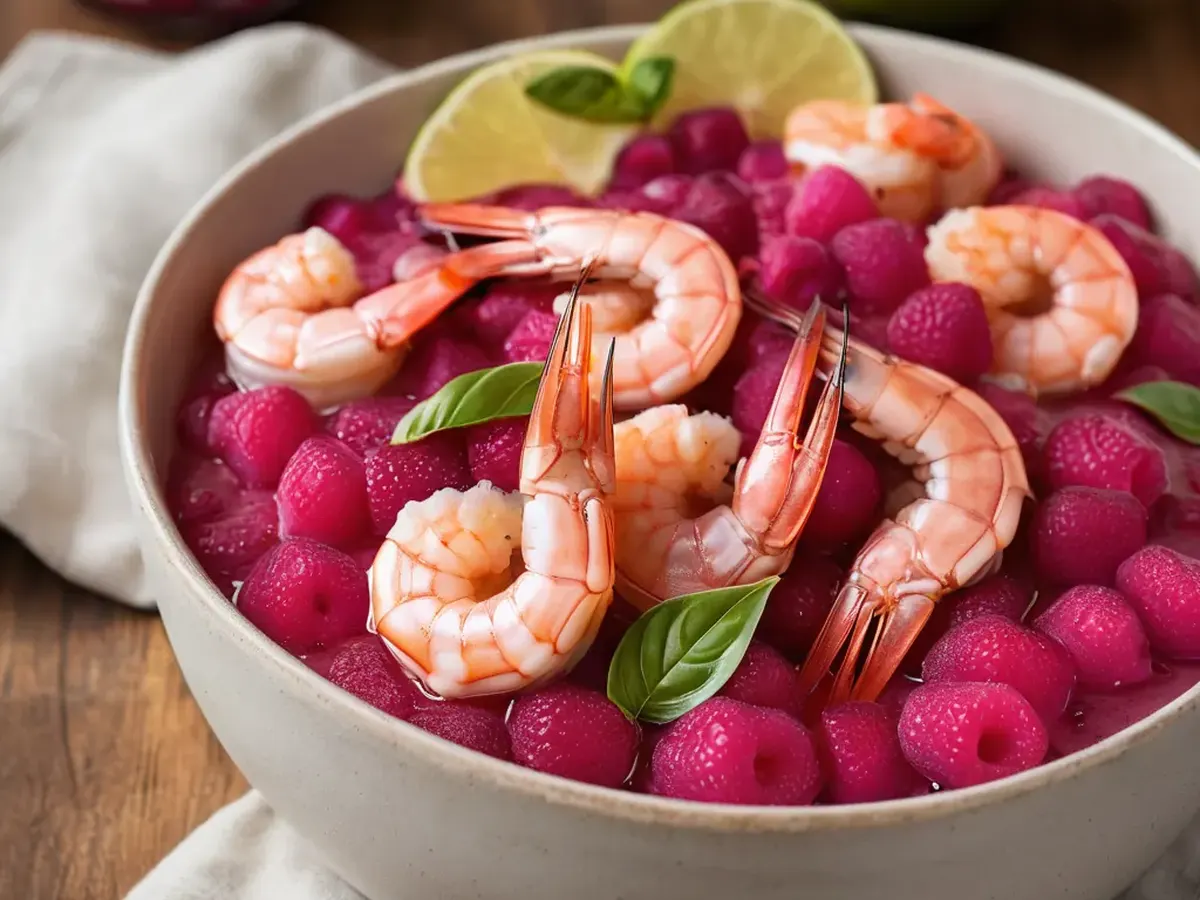
The finished appearance is striking, featuring the vivid magenta of the dragonfruit contrasting beautifully against the deep green basil and the pearly white of the shrimp. The texture offers a delightful contrast between the firm, juicy bite of the shrimp and the soft, slightly granular quality of the fruit. Fresh lime juice adds a necessary acidic lift that cuts through the natural sweetness of the fruit and enhances the overall brightness of the plate. The basil leaves wilt slightly from the residual heat, releasing their essential oils without losing their structural integrity.
This meal is ideally suited for a summer gathering or a warm evening when light, fresh ingredients are preferred over heavy, rich sauces. It pairs beautifully with steamed jasmine rice or a crisp green salad to balance the sweet and savory notes present in the dish. The high protein content makes it a satisfying main course that feels nourishing without being overly heavy. Diners can adjust the heat level by adding more fresh lime or adjusting the chili slices to their personal preference.
Preparing this dish requires attention to timing, as the shrimp must be cooked just until opaque to maintain their succulent texture. The aroma of sizzling garlic and chilies fills the kitchen, promising a meal that is both comforting and exciting for any home cook. The final presentation is a feast for the eyes, featuring the striking pink hue of the dragonfruit contrasting against the deep green basil leaves. This recipe celebrates the harmony of fresh ingredients and demonstrates how simple components can create a sophisticated dining experience.
Ingredients
- 1 pound large shrimp, peeled and deveined, tails removed
- 1 cup dragonfruit, peeled and cut into 1/2-inch cubes
- 1/2 cup fresh Thai basil leaves, loosely packed
- 2 tablespoons vegetable oil
- 3 cloves garlic, minced
- 1 Thai bird's-eye chili, thinly sliced
- 2 tablespoons fish sauce
- 1 tablespoon palm sugar or brown sugar
- 1 tablespoon lime juice
- 1 teaspoon cornstarch mixed with 1 tablespoon water
- 1 lime, cut into wedges for serving
Ingredient flexibility
dragonfruit: ripe mango
Expected result: Mango provides a similar sweetness but with a softer, more fibrous texture and a yellow-orange color.
Adjustment: Add the mango cubes during the final minute of cooking to prevent them from breaking down completely.
Thai basil: sweet basil
Expected result: Sweet basil has a milder, more licorice-like flavor compared to the spicy, peppery notes of Thai basil.
Adjustment: Add the sweet basil at the very end of cooking, just before serving, to preserve its delicate flavor.
fish sauce: soy sauce (gluten-free)
Expected result: Soy sauce offers a similar salty umami flavor but lacks the distinct fermented depth of fish sauce.
Adjustment: Use slightly less soy sauce than fish sauce as it can be saltier, and taste before adding more.
Step-by-Step Instructions
- Prepare the glaze mixtureIn a small bowl, whisk together the fish sauce, palm sugar, lime juice, and the cornstarch slurry until the sugar and cornstarch are fully dissolved. Set this mixture aside near the stove so it is ready to pour into the pan immediately after the shrimp are seared.
- Sear the shrimpHeat the vegetable oil in a large skillet or wok over medium-high heat until the oil shimmers. Add the minced garlic and sliced chili, stirring constantly for about 30 seconds until fragrant but not browned. Add the shrimp in a single layer and cook for 2 minutes on the first side without moving them to allow a light sear. Flip the shrimp and continue cooking for another 1 to 2 minutes until they turn opaque and pearly white on the outside.
- Thicken the saucePour the prepared glaze mixture into the skillet with the shrimp and stir gently to coat the seafood evenly. Continue to cook and stir for about 1 minute until the sauce bubbles and thickens slightly, creating a glossy coating that clings to the shrimp. Be careful not to overcook the shrimp at this stage as they will continue to cook from the residual heat.
- Incorporate fruit and herbsRemove the skillet from the heat immediately to prevent the shrimp from becoming rubbery. Gently fold in the dragonfruit cubes and fresh basil leaves, allowing the residual heat to wilt the basil slightly without cooking it further. The dragonfruit should remain distinct and firm within the sauce.
- Garnish and serveTransfer the sizzling shrimp and dragonfruit mixture to a serving platter or individual bowls. Serve immediately while warm, garnished with lime wedges on the side for diners to squeeze over the dish as desired. Discard any long, fibrous pieces of chili or garlic before eating if preferred.
Nutrition Per Serving
- Calories: 245 kcal
- Protein: 22 g
- Fat: 10 g
- Carbohydrates: 18 g
- Fiber: 2 g
- Sodium: 680 mg
Estimated per serving.
Storage & Reheating
Storage
Refrigerate any leftover Aurora Dragonfruit Shrimp Fantasia within two hours of cooking by dividing the mixture into shallow portions to ensure rapid cooling. Store the leftovers in an airtight or covered container at 40°F (4°C) or below, where they will remain safe to eat for 3 to 4 days. Note that the fresh basil and dragonfruit may soften slightly over time, so consuming them sooner is recommended for the best texture.
Reheating
Reheat this hot dish in a skillet over medium-low heat to gently warm the shrimp and sauce while retaining moisture and preventing the seafood from becoming rubbery. Add a splash of water or lime juice if the sauce has thickened too much, and stir frequently until the internal temperature reaches 165°F (74°C) as verified by a food thermometer. Avoid using a microwave, as it can unevenly cook the shrimp and make the texture tough.
Practical Cooking Notes
Large skillet or wok, Small mixing bowl, Whisk, Chef's knife, Cutting board, Serving platter
Shrimp are done when they turn opaque and pearly white with a firm, slightly springy texture, reaching an internal temperature of 145°F measured in the thickest part of the flesh without touching the shell or bone.
Searing the shrimp in a single layer without overcrowding the pan is critical to achieving a proper sear rather than steaming the seafood. Gently folding in the dragonfruit and basil at the end preserves their texture and prevents the fruit from disintegrating into the sauce.
Perishable leftovers must be refrigerated within two hours of cooking to prevent bacterial growth, as the combination of seafood and fresh fruit creates an ideal environment for bacteria. Ensure the shrimp reaches an internal temperature of 145°F during the initial cooking and 165°F during reheating to guarantee safety.
The listed substitutions can change moisture, sweetness, salinity, and cook time; make one change at a time and judge the final texture before serving.
Troubleshooting
Shrimp turned out rubbery and tough.
Likely cause: The shrimp were cooked for too long or at too high a temperature, causing the proteins to contract excessively.
Fix: Reduce cooking time by 30 seconds to 1 minute and ensure the shrimp are removed from heat immediately once they turn opaque.
Sauce did not thicken properly.
Likely cause: The cornstarch slurry was not mixed well before adding, or the heat was too low to activate the thickening agent.
Fix: Whisk the slurry again before adding and ensure the sauce is at a gentle simmer to allow the starch to gelatinize effectively.
Dragonfruit became mushy and disintegrated.
Likely cause: The fruit was added too early or stirred too vigorously during the cooking process.
Fix: Add the dragonfruit only after removing the pan from the heat and fold gently to maintain the fruit's structural integrity.
Recipe FAQs & Cooking Guidance
Can I use frozen shrimp for this recipe?
Yes, frozen shrimp works well, but you must thaw them completely in the refrigerator overnight and pat them very dry before cooking to ensure proper searing.
Is this dish spicy?
The heat level depends on the chili used; using one Thai bird's-eye chili provides a mild kick, while adding more will increase the spiciness significantly.
Can I make this dish ahead of time?
It is best served immediately after cooking, as the shrimp can become tough and the dragonfruit may lose its texture if stored with the sauce for too long.
What is the best side dish for this?
Steamed jasmine rice is the traditional pairing, as its neutral flavor and slightly sticky texture complement the sweet and savory glaze perfectly.