Saffron Kissed Vegetable Moussaka
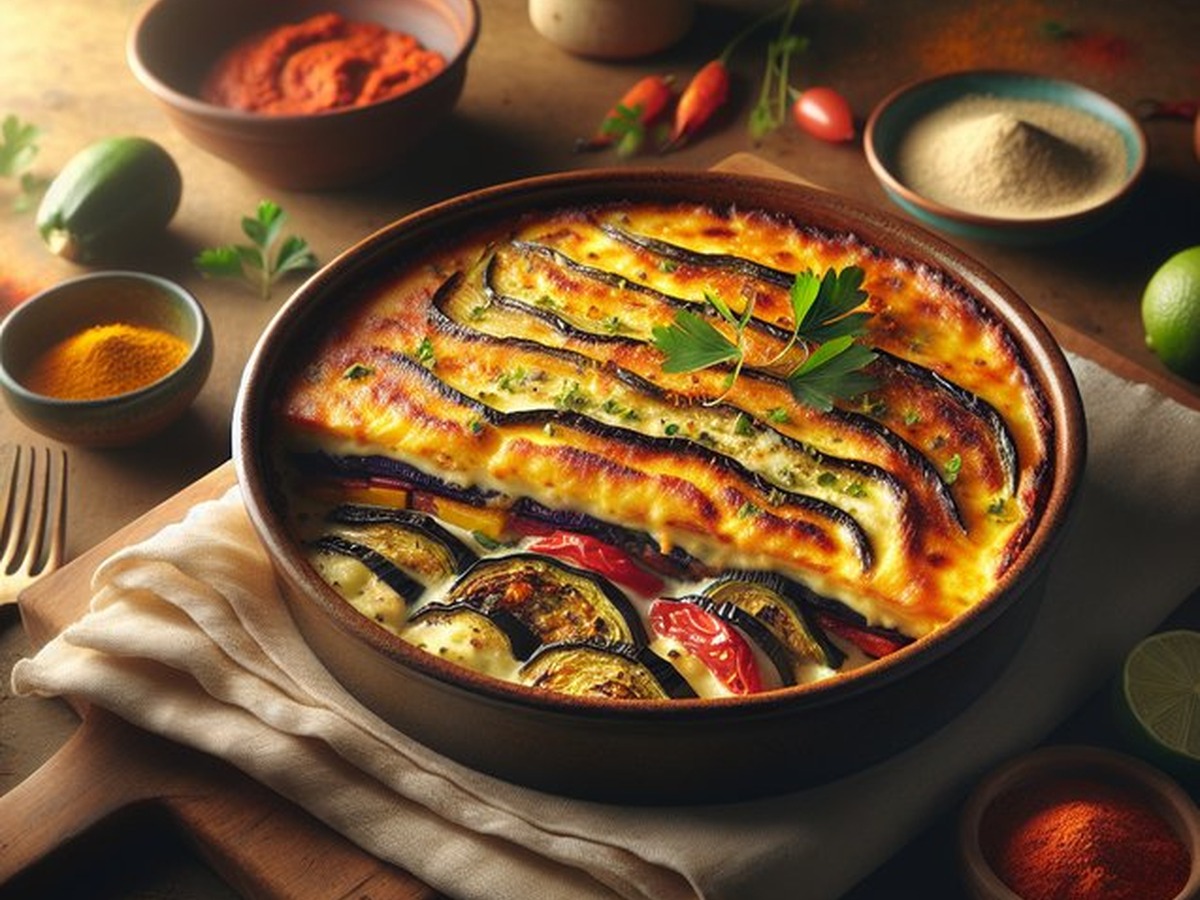
Layered Eggplant Moussaka with Saffron Ricotta
Layered eggplant, zucchini, peppers, and tomato meet a saffron-scented ricotta topping, béchamel, and a crisp golden crumb.
About This Recipe
Saffron Kissed Vegetable Moussaka is a generous baked dish of tender vegetables, tomato, warm spice, and a creamy golden top. Eggplant and zucchini give the filling a soft, hearty texture, while cinnamon and oregano add depth without making it heavy. The saffron ricotta and béchamel layers turn the casserole into something special enough for a gathering but comforting enough for a slow Sunday dinner.
Moussaka has many forms across the eastern Mediterranean, the Balkans, and the Middle East, so there is no single ingredient list that defines every version. Some are built around meat, others around vegetables, and toppings range from yogurt-based sauces to the béchamel associated with the modern Greek style. This vegetarian version keeps the familiar layered structure and adds saffron to the creamy middle for a floral, golden accent.
The vegetable filling should be cooked until tender but still distinct before it goes into the dish. Sautéing the onion and garlic first creates a sweet base, and a short simmer lets the tomato, cinnamon, and oregano settle around the eggplant and zucchini. If the filling looks watery, give it another minute or two on the stove so the finished layers hold together more cleanly.
Saffron is easiest to use when it is given a little warm water to bloom. Five minutes is enough for the threads to release their color and perfume before they are whisked into the ricotta, Parmesan, and egg. This keeps the saffron distributed through the topping instead of leaving its flavor in isolated streaks.
Assemble the moussaka with a light hand: spread each layer to the edges without compressing the vegetables. The béchamel protects the top while it bakes, and breadcrumbs add the crisp finish that contrasts with the soft filling underneath. Let the casserole rest before cutting so the sauce settles and each square keeps its shape.
Serve warm with a sharp green salad, olives, or crusty bread. The dish is an excellent make-ahead centerpiece: assemble it up to a day ahead, keep it chilled, and allow a little extra time in the oven if it goes in cold. Refrigerate leftovers within two hours, use them within three days, and reheat covered until hot before uncovering briefly to restore the top.
Ingredients
- 2 tablespoons (30mL) olive oil
- 1 large onion (150g), chopped
- 2 garlic cloves (6g), minced
- 1 large eggplant (300g), sliced
- 1 large zucchini (200g), sliced
- 1 red bell pepper (150g), chopped
- 1 can (14 ounces / 400g) diced tomatoes
- 1 teaspoon (1g) dried oregano
- 1 teaspoon (2g) ground cinnamon
- 1/4 teaspoon (0.5g) black pepper
- 1/4 teaspoon (1.5g) kosher salt
- 1/4 teaspoon (about 0.1g) saffron threads, lightly crushed
- 1 cup (240g) ricotta cheese
- 1/2 cup (50g) grated Parmesan cheese
- 1 large egg (50g)
- 2 cups (480mL) prepared béchamel sauce
- 1/2 cup (60g) breadcrumbs
- 1 tablespoon (15g) fresh parsley, chopped
This post contains Amazon affiliate links. We may earn a commission if you purchase through them, at no additional cost to you.
Step by Step Instructions
- Heat the oven Preheat the oven to 350°F (175°C) and lightly oil a 9-by-13-inch baking dish.
- Prepare the vegetables Slice the eggplant and zucchini into even pieces and chop the onion and bell pepper so the vegetables cook at a similar rate.
- Soften the onion Heat the olive oil in a large skillet over medium heat. Add the onion and cook for about 5 minutes, until translucent.
- Add the garlic and vegetables Stir in the garlic, eggplant, and zucchini and cook for 5 to 7 minutes, stirring occasionally, until the vegetables begin to soften.
- Build the tomato filling Add the red bell pepper, diced tomatoes, oregano, cinnamon, black pepper, and salt. Stir to combine.
- Simmer the filling Cook the vegetable mixture for about 10 minutes, until the tomatoes reduce slightly and the vegetables are tender but not collapsing.
- Bloom the saffron Steep the crushed saffron in 1 tablespoon of warm water for 5 minutes while the filling simmers.
- Make the ricotta layer Whisk the ricotta, Parmesan, egg, and saffron with its soaking water in a bowl until smooth and evenly colored.
- Start the assembly Spread half of the vegetable mixture across the bottom of the prepared baking dish.
- Add the ricotta Spoon half of the saffron ricotta mixture over the vegetables and spread it gently with a spatula.
- Finish the layers Add the remaining vegetables, then the remaining ricotta mixture, smoothing the top before adding the béchamel.
- Add the crust Pour the béchamel evenly over the top and sprinkle the breadcrumbs across the surface.
- Bake the moussaka Bake for 30 to 35 minutes, until the top is golden and bubbling at the edges.
- Rest and garnish Let the moussaka rest for 10 minutes so the layers settle, then garnish with parsley and serve warm.
Utensils
- Chef's knife
- Cutting board
- Large skillet
- Wooden spoon
- Measuring cups
- Measuring spoons
- Small bowl
- Whisk
- 9-by-13-inch baking dish
- Rubber spatula
- Oven mitts
This post contains Amazon affiliate links. We may earn a commission if you purchase through them, at no additional cost to you.
Nutrition Per Serving
| Nutrient | Amount | % Daily Value* |
|---|---|---|
| Calories | 370 kcal | 19% |
| Protein | 15 g | 30% |
| Fat | 23 g | 29% |
| Saturated Fat | 8 g | 40% |
| Carbohydrates | 28 g | 10% |
| Sugars | 6 g | — |
| Fiber | 5 g | 18% |
| Sodium | 360 mg | 16% |
Nutrition is an estimate based on the listed ingredients and eight servings.
Variations & Serving Suggestions
- Replace some of the eggplant or zucchini with mushrooms, roasted squash, or sweet potato.
- Use a gluten-free breadcrumb blend if needed and check that the prepared béchamel is also gluten-free.
- Serve with a sharp green salad, olives, or crusty bread to balance the creamy layers.
Storage & Reheating
Within two hours of cooking, cool leftovers and refrigerate them in a shallow airtight container at 40°F (4°C) or below. Use them within three days.
Reheat covered at 325°F (160°C) until hot throughout, then uncover for a few minutes if you want the breadcrumb topping to crisp again.
Practical Cooking Notes
Cook off excess tomato moisture so the layers stay distinct when the moussaka is cut.
A few minutes in warm water spreads its color and floral aroma through the ricotta.
Ten minutes out of the oven gives the creamy layers time to settle before serving.
Frequently Asked Questions
Can I swap out the vegetables?
Yes. Mushrooms, roasted squash, sweet potato, or additional bell pepper can replace some of the eggplant or zucchini. Cook any high-moisture vegetables until tender and fairly dry before layering so the moussaka does not become watery.
How do I get the most flavor from the saffron?
Lightly crush the threads and steep them in a tablespoon of warm water for about 5 minutes before mixing them into the ricotta layer. This releases the color and aroma evenly without needing a large amount of saffron.
Can I prepare the moussaka ahead of time?
Yes. Assemble it, cover it, and refrigerate it for up to 24 hours before baking. Let it sit out while the oven heats and add extra baking time if the center is still cold.
How should I reheat leftovers without drying them out?
Reheat a portion covered at 325°F (160°C) until hot throughout, then uncover it for a few minutes if you want the top to crisp. A small splash of water or tomato sauce at the edge of the dish helps protect the vegetables.