Mandarin Sesame Lotus Chicken
Mandarin Sesame Chicken with Lotus Root and Citrus-Soy Glaze
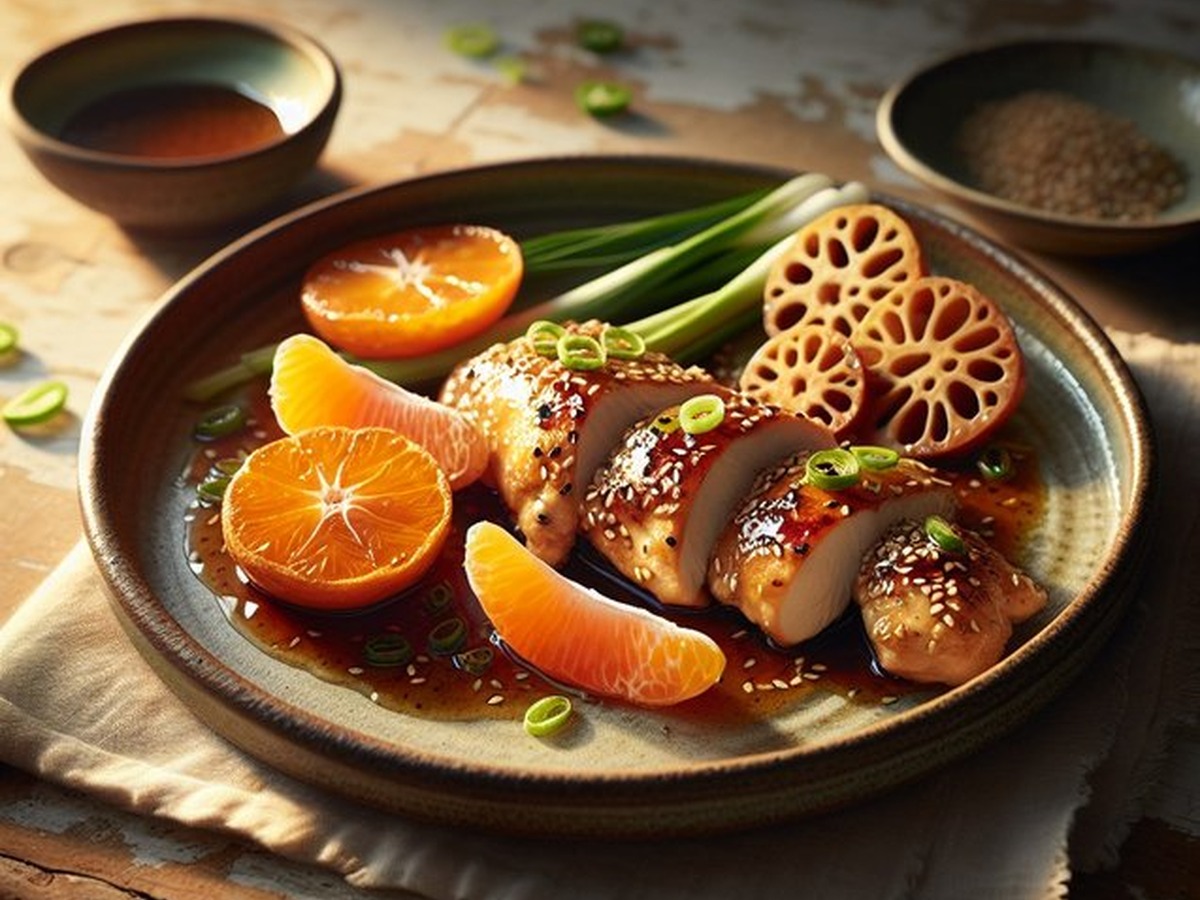
Crisp lotus root, tender chicken, and juicy mandarin segments come together in a glossy soy-honey sesame sauce finished with ginger, garlic, and green onions.
About This Recipe
This dish brings a bright, sweet-savory flavor to your table with boneless chicken thighs seared until golden. The lotus root adds a crisp texture that holds up well against the warm, glossy sauce. Mandarin segments provide a juicy burst that balances the savory soy and honey notes perfectly.
Start by heating oil in a large skillet over medium-high heat before adding the seasoned chicken pieces. Sear the meat until browned on all sides and nearly cooked through to ensure a tender interior. This step builds a flavorful foundation for the aromatics that follow in the pan.
Add minced garlic and ginger to the skillet, sautéing them briefly until the kitchen fills with their fragrance. Toss in the thinly sliced lotus root and cook for a few minutes until it softens slightly. The vegetables begin to take on a light color as they absorb the heat.
Whisk together soy sauce, honey, and rice vinegar in a small bowl to create a glossy, balanced sauce. Stir in the mandarin orange segments gently to coat them without breaking the fruit. Pour this mixture into the skillet to meld the flavors with the chicken and root.
Create a slurry by whisking cornstarch with water, then stir it into the simmering pan to thicken the sauce. Allow the mixture to bubble gently until the liquid coats the chicken and vegetables evenly. This step ensures a rich texture that clings to every bite.
Finish the dish by drizzling toasted sesame oil over the top for a nutty aroma. Sprinkle toasted sesame seeds and chopped green onions across the surface for a fresh, colorful contrast. These final touches add both visual appeal and a satisfying crunch to the meal.
Taste the dish before serving and adjust the seasoning with a little extra kosher salt if needed. The balance of sweet, salty, and tangy flavors should be harmonious and inviting. Serve the chicken and lotus root immediately while the sauce is still warm and glossy.
This recipe relies on precise timing to keep the lotus root crisp and the chicken tender. Ensure the skillet is hot enough to sear the meat quickly without steaming it. Following these steps guarantees a restaurant-quality result with minimal effort in your own kitchen.
Mandarin Sesame Lotus Chicken brings together tender chicken thighs, crisp lotus root, and juicy mandarin segments in a glossy soy-honey sauce. Rice vinegar keeps the glaze bright, while ginger, garlic, toasted sesame oil, and green onions build a warm, savory finish. It is the kind of skillet dinner that feels special at the table but still moves quickly once the ingredients are measured.
Lotus root, known as lian ou in Chinese cooking, is valued for its delicate sweetness and the lacy pattern revealed in every slice. It appears in soups, stir-fries, and braised dishes across Chinese food traditions, where its texture is often as important as its flavor. Here it meets mandarin and sesame in a contemporary home-style combination rather than representing one single regional classic.
Begin by blanching the lotus root briefly, then drain and pat it dry before it touches the pan. That short boil softens its raw edge while keeping the slices firm enough to brown. Dry surfaces matter because excess water would cool the oil and leave the root pale instead of lightly crisp at the edges.
Season the chicken and cook it in one layer so the thighs can brown instead of steaming. Move the chicken to a plate as soon as the thickest piece reaches 165°F (74°C), then use the same pan for the sauce. The browned bits left behind give the soy, honey, ginger, and garlic a deeper flavor without requiring a separate reduction.
Whisk the cornstarch and water until smooth before adding the slurry to the boiling sauce. It will turn glossy quickly, so a short simmer is enough; over-reducing would make the glaze too thick for the mandarin segments. Fold the chicken, lotus root, and citrus together at the end, handling the fruit gently so it keeps its shape.
Serve the finished skillet over jasmine rice or another neutral grain that can catch the sauce, with cucumber salad or wilted greens alongside. Add the sesame oil, seeds, and green onions just before serving so their aroma stays fresh. Refrigerate leftovers within two hours, use them within 3 to 4 days, and reheat gently to 165°F (74°C); if making components ahead, keep the lotus root and sauce separate until cooking.
Ingredients
- 1 1/2 lb boneless skinless chicken thighs, cut into 1-inch pieces (680g)
- 1/2 teaspoon kosher salt (3g)
- 1 tablespoon vegetable oil (15mL)
- 8 oz lotus root, peeled and thinly sliced (225g)
- 3 tablespoons low-sodium soy sauce (45mL)
- 2 tablespoons honey (42g)
- 1 tablespoon rice vinegar (15mL)
- 2 garlic cloves, minced (6g)
- 1 tablespoon fresh ginger, minced (15g)
- 2 tablespoons cornstarch (16g)
- 1/4 cup water (60mL)
- 1 cup mandarin orange segments, drained (240mL)
- 1 teaspoon toasted sesame oil (5mL)
- 2 tablespoons toasted sesame seeds (18g)
- 1/4 cup green onions, chopped (8g)
Step by Step Instructions
- Season the chicken Season the chicken thigh pieces with the kosher salt.
- Blanch the lotus root Blanch the sliced lotus root in boiling water for 3 minutes, drain it well, and pat it dry.
- Mix the sauce Whisk the soy sauce, honey, rice vinegar, garlic, and ginger in a small bowl.
- Make the slurry Whisk the cornstarch and water in a separate cup until smooth.
- Cook the chicken Heat the vegetable oil in a wok or large skillet over medium-high heat and cook the chicken in one layer for 6 to 8 minutes, until browned and the thickest piece reaches 165°F (74°C); transfer it to a plate.
- Stir-fry the lotus root Add the blanched lotus root and stir-fry for 3 to 4 minutes, until lightly browned but still crisp.
- Thicken the glaze Pour in the soy-honey sauce and bring it to a boil, then stir in the cornstarch slurry and cook until glossy and thickened.
- Finish with mandarin Return the chicken and its juices, add the drained mandarin orange segments, and fold gently for 1 minute so the fruit stays intact.
- Garnish and serve Remove from the heat, drizzle with the toasted sesame oil, and finish the Mandarin Sesame Lotus Chicken with the toasted sesame seeds and green onions.
Nutritional Information
| Nutrient | Amount | % Daily Value* |
|---|---|---|
| Calories | 483 kcal | 24% |
| Protein | 41 g | 82% |
| Total Fat | 22 g | 28% |
| Saturated Fat | 5 g | 25% |
| Carbohydrates | 38 g | 14% |
| Fiber | 2.6 g | 9% |
| Sugars | 22 g | 44% |
| Sodium | 663 mg | 29% |
*Percent Daily Values are based on a 2,000-calorie diet.
Storage & Reheating
Storage
Within two hours of cooking, divide leftover Mandarin Sesame Lotus Chicken into shallow portions and refrigerate them in an airtight container at 40°F (4°C) or below. Use refrigerated leftovers within 3 to 4 days; freeze sooner if they will not be used in that window.
Reheating
Reheat Mandarin Sesame Lotus Chicken gently in a covered skillet over low to medium-low heat with a small splash of the original sauce to retain moisture and flavor. Turn or stir as needed for even heating and verify that the center reaches 165°F (74°C) before serving.
Practical Cooking Notes
chef's knife, cutting board, saucepan, colander, measuring tools, small bowls, whisk, wok or large skillet, instant-read thermometer.
Check the thickest piece with an instant-read thermometer; poultry is ready at 165°F (74°C).
Prep time: 25 minutes. Cook time: 20 minutes. Total time: 45 minutes. Timing reflects the listed method; begin checking at the recipe's objective doneness cue.
Troubleshooting
The lotus root is soft.
Likely cause: It was either simmered too long or added to a crowded pan while still wet.
Fix: Blanch for 3 minutes, dry it carefully, and stir-fry in a hot pan before the sauce goes in.
The glaze is too thick.
Likely cause: The cornstarch slurry cooked longer than needed or the sauce reduced too far.
Fix: Add a tablespoon of water at a time over low heat and stop as soon as the sauce turns glossy.
The chicken is dry.
Likely cause: The pieces were uneven or stayed over heat after reaching the safe temperature.
Fix: Cut the chicken evenly and remove it as soon as the thickest piece reaches 165°F (74°C).
Frequently Asked Questions
How do I keep the lotus root crisp?
Slice the lotus root evenly, blanch it for only 3 minutes, and pat it thoroughly dry before it reaches the hot pan. Stir-fry it over medium-high heat and add it back only after the sauce has thickened so it does not simmer for a long time.
Can I prepare the components ahead?
Yes. Slice and blanch the lotus root and whisk the soy-honey sauce up to one day ahead, then refrigerate them separately from the raw chicken. Make the cornstarch slurry and drain the mandarins just before cooking so the texture stays clean.
Can I use fresh mandarins instead of canned?
Yes. Peel and segment sweet, seedless mandarins or clementines, removing as much pith and membrane as practical. Fold the fresh segments in during the final minute so they warm through without breaking apart.
Can I make this with tofu?
Yes. Replace the chicken with 14 ounces of pressed extra-firm tofu cut into cubes and brown it in the vegetable oil before cooking the lotus root. Follow the same sauce and finishing steps, and check the seasoning because tofu absorbs the glaze differently than chicken.
Cook Next & Build the Technique
Utensils
- Wok or large skillet
- Saucepan
- Colander
- Cutting board
- Chef's knife
- Spatula
- Tongs
- Small mixing bowls
- Whisk
- Measuring cups
- Measuring spoons
- Instant-read thermometer