Baked Lemon Garlic Tilapia
Oven-Baked Tilapia with Lemon-Garlic Butter
About This Recipe
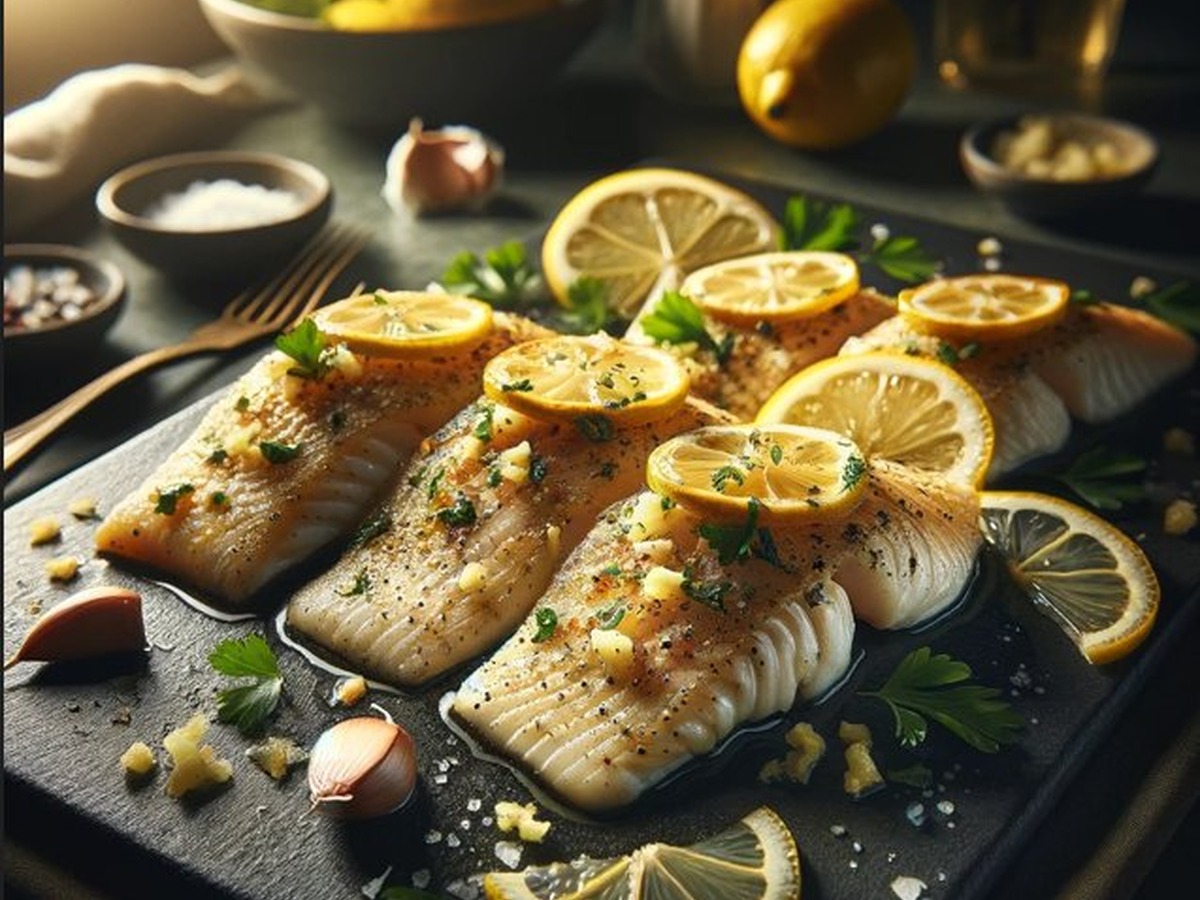
Baked Lemon Garlic Tilapia is the kind of weeknight fish dinner that earns its place through ease and brightness. Mild fillets bake in lemon-garlic butter until the edges are tender and the pan juices are ready to spoon over the top. Parsley and fresh lemon keep the finish lively instead of heavy.
Tilapia carries a longer food history than its modern supermarket reputation suggests. The fish is native to Africa, and early Egyptian imagery is often cited as evidence of pond culture, while American home cooks value it for its mild flavor and quick cooking. This recipe brings that accessible weeknight appeal to the oven with a simple citrus-and-herb treatment.
The short ingredient list is deliberate: lemon adds acidity, butter gives the fish a silky coating, and garlic brings savory depth without hiding the fillets' delicate flavor. Dried parsley works well in the baking sauce, while fresh parsley makes a brighter garnish if you have it. Choose fillets that are similar in thickness so they finish at the same time.
Pat the tilapia dry before seasoning so the butter mixture clings to the surface instead of sliding off. Whisk the lemon juice, melted butter, garlic, and parsley in a small bowl, then spoon it over the fish and tuck the lemon slices around the fillets. Keeping the slices beside the fish lets their aroma perfume the pan while the tops brown gently.
Begin checking the fish at the early end of the baking window, especially if the fillets are thin. The thickest part should reach 145°F (63°C), look opaque, and separate easily with a fork; the thermometer is more reliable than the clock alone. Let the fillets rest for a minute or two so the pan juices settle before serving.
Serve the tilapia with roasted asparagus, green beans, rice pilaf, or a crisp salad that can catch the lemon-garlic butter. A spoonful of the warm pan juices is all the sauce this dinner needs, although red pepper flakes or fresh dill make easy finishing touches. It is a bright, low-fuss meal for a quiet evening or a relaxed weekend table.
Details
Mealtime: Dinner
Type: Entree
Cuisine: American
Dietary Preferences: Gluten-Free, Low-Carb
Cooking Time: Quick (20 minutes)
Difficulty Level: Easy
Seasonal Preference: Any, but ideal in Spring
Nutritional Information (per serving)
Per-serving nutrition for Baked Lemon Garlic Tilapia.
Calories: 180
Protein: 23g
Carbs: 2g
Fat: 8g
Kid-Friendly: Yes
Ingredients
- 4 tilapia fillets, about 6 oz each (680g total)
- 3 tablespoons fresh lemon juice (45mL)
- 2 tablespoons unsalted butter, melted (30g)
- 2 garlic cloves, minced (6g)
- 1 teaspoon dried parsley (1g)
- 1/2 teaspoon kosher salt (3g)
- 1/4 teaspoon black pepper (1g)
- 1 lemon, thinly sliced
Step by Step Instructions
- Heat the oven to 400°F (200°C) and lightly grease a baking dish.
- Pat the tilapia fillets dry, arrange them in a single layer, and season both sides with the kosher salt and black pepper.
- Whisk the lemon juice, melted butter, garlic, and dried parsley in a small bowl until combined.
- Spoon the lemon-garlic butter over the fillets and arrange the lemon slices around the fish rather than directly on the thickest parts.
- Bake for 10 to 14 minutes, beginning to check early, until the thickest part reaches 145°F (63°C), looks opaque, and flakes easily.
- Rest the fillets for 1 to 2 minutes, spoon the pan juices over them, and serve warm with the baked lemon slices.
Utensils Needed
- Cutting board
- Chef's knife
- Measuring spoons
- Small mixing bowl
- Whisk
- Baking dish
- Instant-read thermometer
Storage & Reheating
Storage
Within two hours of cooking, refrigerate leftover Baked Lemon Garlic Tilapia in a shallow airtight container at 40°F (4°C) or below. Use it within 3 to 4 days, or freeze it sooner if you will not eat it in that window.
Reheating
Reheat the tilapia gently in a covered skillet over low to medium-low heat with a splash of water, broth, or the original lemon-butter sauce. Stop as soon as the center reaches 165°F (74°C) so the fish does not dry out.
Practical Cooking Notes
Paper towels, measuring tools, a small mixing bowl, a whisk, a baking dish, and an instant-read thermometer.
Check the thickest part with an instant-read thermometer; fish is ready at 145°F (63°C), when the flesh is opaque and separates easily. Let the fillets rest briefly before serving.
Timing guide: about 10 minutes of prep and 14 minutes of cooking, for 24 minutes total. Begin checking at the early end of the baking window and use the thermometer to judge doneness.
Recipe FAQs & Cooking Guidance
Can I use another white fish?
Yes. Use four 6-ounce cod, haddock, or flounder fillets, and begin checking thinner pieces earlier; the thickest part should still reach 145°F (63°C).
Can I replace the butter?
Replace the 2 tablespoons of melted butter with 2 tablespoons of olive oil. Keep the lemon juice, garlic, parsley, salt, and pepper the same, and expect a lighter pan sauce.
Can I prepare it ahead?
Whisk the lemon-garlic mixture up to one day ahead and refrigerate it separately from the raw fish. Assemble and bake shortly before serving for the best texture, then refrigerate cooked leftovers within two hours.
What should I serve with it?
Roasted asparagus, green beans, rice pilaf, or a crisp salad complement the lemon-garlic pan juices without overpowering the mild tilapia. Quinoa also works well for a simple gluten-free plate.