Lavender Citrus Chicken
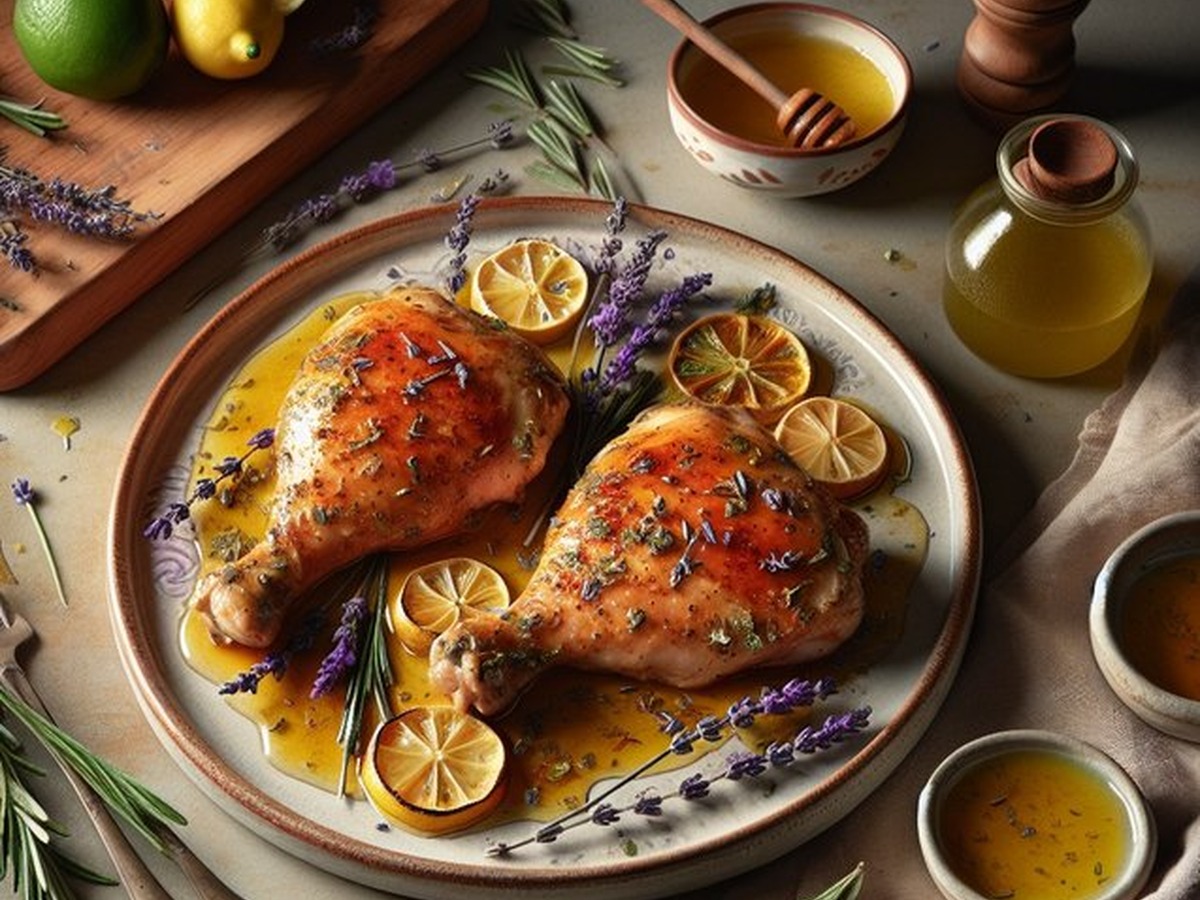
Honeyed Lavender Chicken with Lemon and Orange
Chicken thighs roast in a honeyed lemon-orange marinade scented with culinary lavender, then finish in a light pan sauce for a fragrant Mediterranean-inspired dinner.
About This Recipe
Lavender Citrus Chicken brings a floral note to a familiar skillet-and-oven dinner without letting the lavender take over. Boneless chicken thighs stay juicy as they roast in lemon, orange, honey, and a gently spicy marinade, while the pan drippings become a light sauce. The finished dish is fragrant, savory, and bright enough for a weeknight but distinctive enough for a relaxed dinner with guests.
Culinary lavender is used in parts of southern French cooking and in other Mediterranean-influenced kitchens where floral herbs are paired with citrus, honey, and poultry. This recipe is a modern interpretation of that flavor conversation rather than a claim to one traditional regional dish. Use only lavender labeled culinary grade, because ornamental flowers may be treated with products not intended for food and can taste harsh.
A short marinade is enough to perfume the chicken and season the surface. The citrus juices add brightness, but they also contain acid, so a 15-minute rest gives the flavors time to settle without leaving the outside of the chicken mealy. Sear the thighs after marinating and let the browned bits stay in the skillet; they form the savory base of the broth sauce.
The oven does the slower work after the chicken has color. Thighs are forgiving, but thickness varies, so use an instant-read thermometer and remove them when the center reaches 165°F (74°C). Letting the chicken rest before serving keeps the meat moist and gives you a moment to reduce the pan juices if they need a little more body.
Lavender is easiest to balance when the citrus remains clear. Lemon supplies sharpness, orange rounds it with sweetness, and honey smooths the edges without turning the sauce into a dessert. Serve the chicken with couscous, roasted potatoes, rice, or a bitter green salad, and spoon the pan sauce over the side so none of it is lost.
The marinade can be whisked and the chicken can be portioned earlier in the day, but keep raw poultry refrigerated and separate from ready-to-eat foods. Refrigerate cooked leftovers within two hours and use them within three to four days. Reheat gently in a covered skillet with a splash of broth, then taste the sauce again because citrus and lavender become more pronounced after chilling.
Ingredients
- 2 pounds boneless, skinless chicken thighs (900g)
- 1 tablespoon extra-virgin olive oil (15mL)
- 1 tablespoon fresh culinary lavender, finely chopped (2g)
- 2 tablespoons honey (42g)
- 1 tablespoon lemon zest (6g)
- 1 tablespoon orange zest (6g)
- 1/2 cup fresh lemon juice (120mL)
- 1/2 cup fresh orange juice (120mL)
- 1 teaspoon kosher salt (5g)
- 1/2 teaspoon black pepper (1g)
- 1/4 teaspoon red pepper flakes (0.5g)
- 1 cup low-sodium chicken broth (240mL)
This post contains Amazon affiliate links. We may earn a commission if you purchase through them, at no additional cost to you.
Step by Step Instructions
- Heat the oven Preheat the oven to 375°F (190°C).
- Mix the marinade Whisk the lavender, honey, lemon zest, orange zest, lemon juice, orange juice, kosher salt, black pepper, and red pepper flakes in a large mixing bowl.
- Marinate the chicken Add the chicken thighs and turn them until coated. Let them rest in the refrigerator for 15 minutes while the oven heats.
- Sear the thighs Heat the olive oil in a large oven-safe skillet over medium heat, then sear the chicken for 3 to 4 minutes per side until lightly browned.
- Add the broth Pour the chicken broth into the skillet and scrape up the browned bits so they dissolve into the sauce.
- Roast until tender Transfer the skillet to the oven and roast for 25 to 30 minutes, until the thickest thigh reaches 165°F (74°C).
- Rest the chicken Remove the skillet from the oven and let the chicken rest for 5 minutes so the juices settle.
- Reduce the pan sauce If the sauce is thin, place the skillet over medium heat for 2 to 3 minutes and simmer until it lightly coats a spoon.
- Taste and adjust Taste the sauce and add a small pinch of salt, honey, or lemon juice only if the balance needs correction.
- Serve with sauce Arrange the chicken on a serving platter and spoon the lavender-citrus pan sauce over the top.
Utensils
- Large mixing bowl
- Measuring spoons
- Measuring cups
- Oven-safe skillet
- Tongs or spatula
- Instant-read thermometer
- Cutting board
- Chef's knife
- Citrus zester
- Citrus juicer
- Basting brush
- Serving platter
This post contains Amazon affiliate links. We may earn a commission if you purchase through them, at no additional cost to you.
Nutrition Per Serving
| Nutrient | Amount | % Daily Value* |
|---|---|---|
| Calories | 375 kcal | 19% |
| Protein | 30 g | 60% |
| Fat | 20 g | 26% |
| Saturated Fat | 5 g | 25% |
| Carbohydrates | 18 g | 7% |
| Sugars | 14 g | — |
| Fiber | 1 g | 4% |
| Sodium | 800 mg | 35% |
Nutrition is an estimate based on the listed ingredients and four servings.
Variations & Serving Suggestions
- Use turkey cutlets or boneless chicken breasts, adjusting the oven time for thickness.
- Replace part of the orange juice with grapefruit or tangerine juice for a sharper citrus profile.
- Serve with couscous, quinoa, roasted vegetables, or a fresh arugula salad.
Storage & Reheating
Within two hours of cooking, cool leftover chicken and sauce and refrigerate them in shallow airtight containers at 40°F (4°C) or below. Use them within three to four days, keeping extra herbs separate when possible.
Reheat gently in a covered skillet over low heat with a splash of broth until the chicken reaches 165°F (74°C). Taste the sauce after warming and brighten it with a small squeeze of lemon if needed.
Practical Cooking Notes
Food-grade lavender is milder and safer for cooking than ornamental flowers.
A brief citrus marinade seasons the chicken without making its surface soft.
Remove the chicken at 165°F (74°C), then let it rest before serving.
Frequently Asked Questions
Is culinary lavender safe to cook with?
Yes, when it is specifically sold and labeled for culinary use. Avoid ornamental lavender from a garden center or florist, and use the measured amount sparingly so the floral flavor supports the citrus instead of becoming bitter or perfumed.
How long should I marinate Lavender Citrus Chicken?
A 15-minute rest is enough for this recipe and keeps the citrus from softening the chicken's surface too much. If you need to work ahead, refrigerate the chicken for up to 2 hours rather than leaving it at room temperature.
Can I swap the citrus or sweetener?
Yes. Replace some of the orange juice with grapefruit or tangerine juice, or use maple syrup in place of honey. Taste the sauce before cooking because different citrus fruits vary in acidity and bitterness.
What is the best way to store leftovers?
Cool the chicken and sauce within two hours, refrigerate them in shallow airtight containers, and use them within three to four days. Reheat gently in a covered skillet with a splash of broth until the chicken reaches 165°F (74°C).