Apricot Basil Chicken
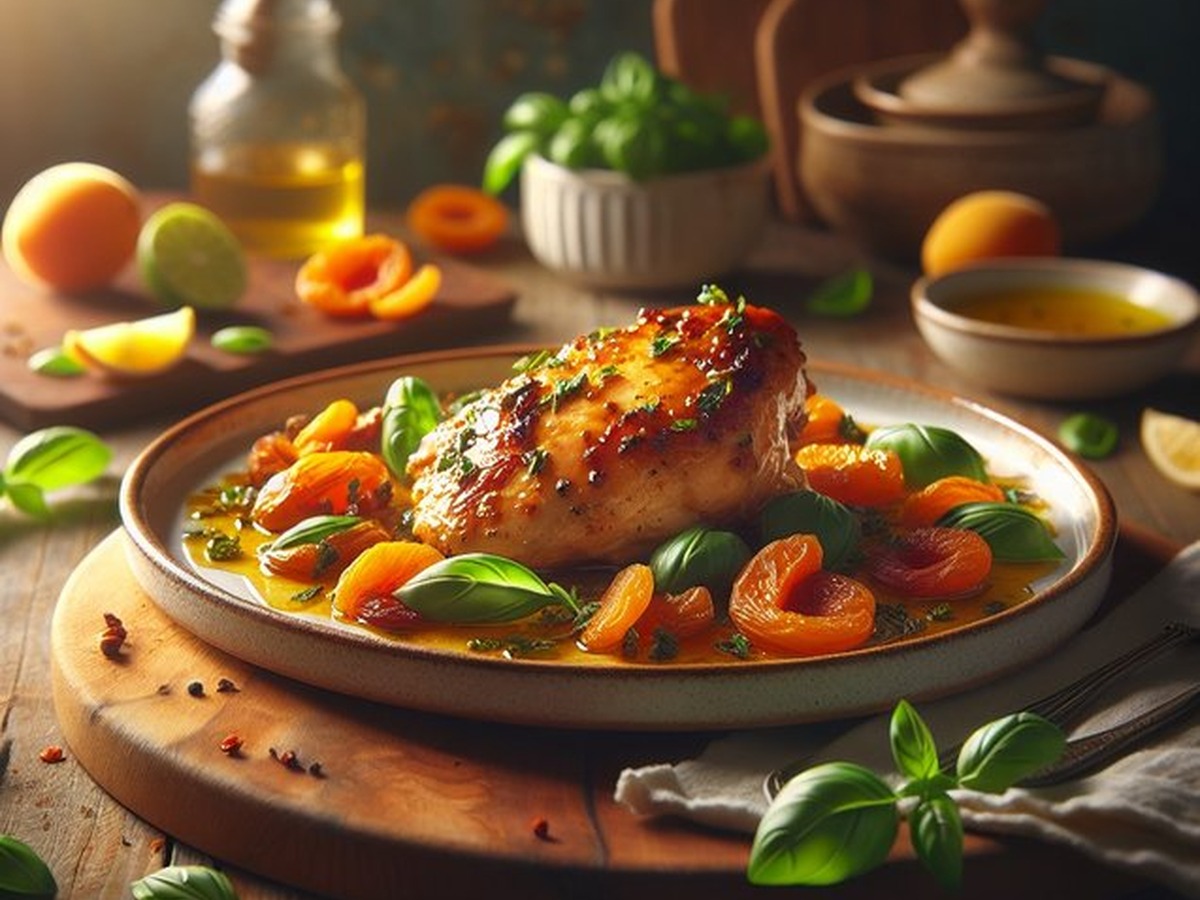
Golden Apricot Chicken with Lemon and Fresh Basil
Tender chicken breast simmers with dried apricots, lemon, honey, and basil in a glossy Mediterranean-inspired skillet sauce.
About This Recipe
Apricot Basil Chicken is a bright skillet dinner built around the meeting of savory chicken, soft dried fruit, and fresh herbs. The apricots plump in a lemony broth sweetened with a little honey, creating a glossy sauce that clings to each piece. Olive oil, black pepper, and a gentle pinch of red pepper keep the dish balanced rather than dessert-like.
Apricots have long traveled through Mediterranean and West Asian kitchens in both sweet and savory preparations, where dried fruit is often used to bring depth to a sauce or braise. This recipe takes inspiration from that sweet-savory tradition while keeping the method simple enough for a weeknight skillet. Basil and lemon give the finished dish a fresher, more summery direction than a long-cooked stew.
Chicken breast cooks quickly, so cutting it into even bite-size pieces is the first useful bit of technique. Season the meat before it reaches the pan and let the skillet get properly hot; a brief sear creates browned edges that give the later fruit sauce something savory to lean on. Once the chicken reaches 165°F (74°C), move it to a plate so it does not overcook while the sauce reduces.
The sauce comes together in the same skillet, which is where the recipe gets much of its character. Chicken broth loosens the browned bits, honey rounds out the tart lemon, and dried apricots become tender as the liquid simmers down. Keep the heat at a steady medium simmer and stop when the sauce coats a spoon; it will continue to thicken slightly when the chicken returns.
Fresh basil belongs at the very end. Folding it in off the heat keeps its color and fragrance intact, while a final taste of lemon can sharpen the sweetness if the apricots are especially rich. Serve the chicken over couscous, rice, or warm flatbread, with a cucumber salad or simply dressed greens to add a cool, crisp contrast.
The active cooking is quick, but the recipe benefits from a little organization: chop the apricots, measure the sauce ingredients, and cut the chicken before heating the skillet. Refrigerate leftovers within two hours in a shallow airtight container and use them within three to four days. Reheat gently with a splash of broth or water, then add fresh basil after the pan comes off the heat.
Ingredients
- 1 lb boneless skinless chicken breast, cut into bite-size pieces (450g)
- 2 tablespoons olive oil (30mL)
- 3/4 teaspoon kosher salt (4g)
- 1/2 teaspoon black pepper (1g)
- 1/2 teaspoon garlic powder (1g)
- 1/2 cup dried apricots, chopped (75g)
- 1/2 cup low-sodium chicken broth (120mL)
- 1 tablespoon honey (21g)
- 1 tablespoon lemon juice (15mL)
- 1/4 teaspoon red pepper flakes (0.5g)
- 1/4 cup fresh basil, chopped (10g)
This post contains Amazon affiliate links. We may earn a commission if you purchase through them, at no additional cost to you.
Step by Step Instructions
- Season the chicken Season the chicken with the kosher salt, black pepper, and garlic powder.
- Heat the skillet Heat the olive oil in a large skillet over medium-high heat.
- Brown the chicken Cook the chicken for 5 to 7 minutes, until browned and the thickest piece reaches 165°F (74°C), then transfer it to a plate.
- Build the apricot sauce Add the dried apricots, chicken broth, honey, lemon juice, and red pepper flakes to the skillet.
- Reduce the sauce Simmer for 4 to 6 minutes, until the apricots plump and the sauce lightly coats a spoon.
- Finish the chicken Return the chicken and its juices to the skillet and toss for 1 minute to coat.
- Add the basil and serve Remove from the heat, fold in the fresh basil, and serve the Apricot Basil Chicken.
Utensils
- Large skillet
- Cutting board
- Chef's knife
- Measuring spoons
- Measuring cup
- Spatula or wooden spoon
- Serving spoon
- Small bowl for mixing sauce ingredients
This post contains Amazon affiliate links. We may earn a commission if you purchase through them, at no additional cost to you.
Nutrition Per Serving
| Nutrient | Amount | % Daily Value* |
|---|---|---|
| Calories | 370 kcal | 18% |
| Protein | 31 g | 62% |
| Fat | 16 g | 21% |
| Carbohydrates | 29 g | 11% |
| Fiber | 3 g | 11% |
| Sodium | 520 mg | 23% |
Nutrition is an estimate based on the listed ingredients and four servings.
Variations & Serving Suggestions
- Use chicken thighs instead of breast, adjusting the skillet time until the center reaches 165°F (74°C).
- Use fresh apricots in season and reduce the broth so the sauce does not become watery.
- Serve with couscous, rice, quinoa, warm flatbread, cucumber salad, or simply dressed greens.
Storage & Reheating
Cool leftover chicken and sauce within two hours, transfer them to a shallow airtight container, and refrigerate at 40°F (4°C) or below for three to four days. Store fresh basil separately when possible so it stays bright.
Reheat gently in a covered skillet over low to medium-low heat with a splash of broth or water. Stop when the center reaches 165°F (74°C), then fold in fresh basil and a squeeze of lemon just before serving.
Practical Cooking Notes
Let the chicken develop a little color before it leaves the skillet. Those browned bits become part of the apricot sauce.
The sauce ingredients go in together, so chop the apricots and measure the broth, honey, lemon, and pepper flakes before cooking.
Remove the pan from the heat before adding basil so the herb stays fragrant and green.
Frequently Asked Questions
Can I use chicken thighs instead of chicken breast?
Yes. Use an equal weight of boneless skinless chicken thighs cut into bite-size pieces and cook until the thickest piece reaches 165°F (74°C). Thighs may need a few extra minutes in the skillet.
Can I use fresh apricots instead of dried apricots?
Yes. Replace the dried apricots with about 1 cup pitted fresh apricot wedges and reduce the chicken broth to 1/4 cup because fresh fruit releases more liquid. Simmer just until the wedges are tender.
When should I add the basil?
Fold in the chopped basil after removing the skillet from the heat. The residual warmth will release its aroma without turning the leaves dull or bitter.
What should I serve with Apricot Basil Chicken?
Couscous, rice, quinoa, or warm flatbread will catch the sauce. A cucumber salad, simply dressed greens, or roasted vegetables adds freshness without competing with the apricot and basil.