Slow-Simmered Lentil And Tomato Lasagna
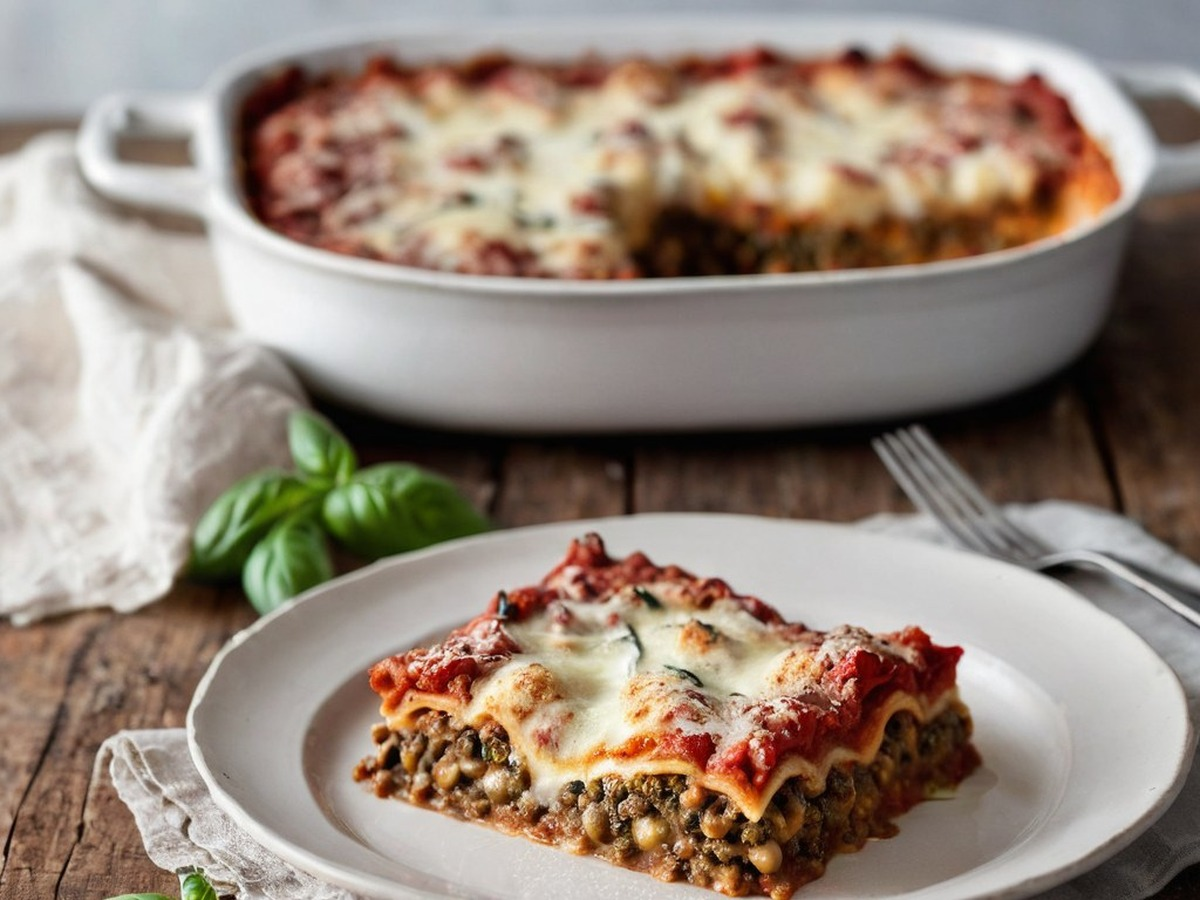
Lentil Tomato Lasagna with Béchamel and Three Cheeses
Tender lentils simmered in a bright tomato sauce, layered with creamy béchamel, noodles, mozzarella, and Parmesan for a deeply comforting vegetarian lasagna.
About This Recipe
Slow-Simmered Lentil And Tomato Lasagna has the kind of layered comfort that makes a kitchen feel welcoming. The lentils give the tomato sauce a hearty, savory center, while béchamel softens the edges and mozzarella brings the familiar stretch of a baked pasta dish. A little red wine vinegar keeps the sauce lively so the finished lasagna tastes warm and full rather than heavy.
Lasagna has traveled through many Italian kitchens, with regional versions shaped by local pasta, sauces, and cheeses. Northern preparations often pair sheets of pasta with béchamel, while southern tables may lean toward ricotta, tomato, and a more rustic filling. This lentil version draws on that layered tradition and the long Italian habit of turning humble pantry ingredients into food meant to be shared.
The lentils and tomato sauce are worth cooking separately before the dish is assembled. Simmer the lentils until they are tender but intact, then let the tomato mixture reduce until it spreads easily instead of running across the noodles. Browning the onion and garlic first gives the sauce a deeper base, and the vinegar added near the end brightens the tomatoes without making them taste sharp.
The béchamel should be smooth and loose enough to move between the layers. Whisk the flour into melted butter for a short roux, add the milk gradually, and keep the heat moderate so the sauce thickens without scorching. Cook the noodles only to al dente, because they will continue softening as the covered lasagna bakes in its own steam.
Even layers make the finished slices easier to serve. Start with a little sauce to protect the bottom, spread the lentils from edge to edge, and finish with béchamel, mozzarella, and Parmesan so the top can bubble and brown. The foil-covered bake cooks the center gently, while the uncovered finish gives the cheese color; a fifteen-minute rest is what lets the layers settle instead of sliding apart.
Serve the lasagna with a crisp salad or roasted greens for a balanced table, and bring it to the table while the center is still soft and saucy. Cool leftovers within two hours and refrigerate them for up to three days, or freeze well-wrapped portions for longer storage. Reheat covered until the middle reaches 165°F (74°C), then uncover briefly so the top can regain some of its baked texture.
Ingredients
- 1 cup green or brown lentils, rinsed and picked over
- 3 cups low-sodium vegetable broth
- 1 tablespoon olive oil
- 1 medium yellow onion, finely chopped
- 2 cloves garlic, minced
- 1 teaspoon dried oregano
- 1 teaspoon dried basil
- 1 (28-ounce) can crushed tomatoes
- 1 teaspoon tomato paste
- 1 teaspoon red wine vinegar
- 1 teaspoon kosher salt
- 1/2 teaspoon freshly ground black pepper
- 12 lasagna noodles
- 3 cups whole milk
- 1/4 cup all-purpose flour
- 2 tablespoons unsalted butter
- 1/2 teaspoon ground nutmeg
- 1/2 teaspoon kosher salt and 1/4 teaspoon black pepper for the béchamel
- 2 cups shredded mozzarella cheese
- 1/2 cup grated Parmesan cheese
- Fresh basil or parsley for serving, optional
Step-by-Step Instructions
- Cook the lentils Combine the lentils and vegetable broth in a saucepan. Bring to a gentle boil, lower the heat, and simmer until the lentils are tender but still hold their shape, about 20 to 25 minutes. Drain any excess broth.
- Build the tomato sauce Heat the olive oil in a large skillet over medium heat. Cook the onion until soft, then add the garlic, oregano, and basil. Stir in the crushed tomatoes, tomato paste, red wine vinegar, salt, and pepper, and simmer uncovered until thick enough to spread.
- Make the béchamel Melt the butter in a saucepan over medium heat. Whisk in the flour and nutmeg and cook for 1 minute. Add the milk gradually while whisking, then cook until the sauce coats the back of a spoon. Season with salt and pepper.
- Prepare the noodles Cook the lasagna noodles in salted water until just al dente according to the package directions. Drain and lay them flat on clean towels so they do not stick together.
- Set up the dish Heat the oven to 375°F (190°C) and lightly grease a 9-by-13-inch baking dish. Keep the lentil sauce, béchamel, noodles, mozzarella, and Parmesan close by for assembly.
- Layer the lasagna Spread a thin layer of lentil sauce in the dish. Add noodles, lentil sauce, béchamel, and mozzarella in even layers, repeating until the ingredients are used. Finish with béchamel, mozzarella, and Parmesan.
- Bake covered Cover the dish tightly with foil, keeping the foil from touching the cheese if possible. Bake for 40 minutes, until the edges are bubbling and the noodles are tender.
- Brown the top Remove the foil and bake for another 15 to 20 minutes, until the cheese is melted and golden in spots. If needed, broil briefly while watching closely.
- Rest before slicing Let the lasagna rest for 15 minutes so the béchamel settles and the layers hold together. Check that the center is hot, then garnish with basil or parsley.
- Serve Slice the lasagna and serve with a crisp green salad or roasted vegetables. Refrigerate leftovers within two hours for safe storage.
Nutrition Per Serving
| Nutrient | Amount | % Daily Value* |
|---|---|---|
| Calories | 485 kcal | 24% |
| Protein | 22 g | 44% |
| Total Fat | 18 g | 23% |
| Saturated Fat | 8 g | 40% |
| Carbohydrates | 58 g | 21% |
| Fiber | 8 g | 29% |
| Sugars | 10 g | 11% |
| Sodium | 720 mg | 31% |
Nutrition is an estimate based on the listed ingredients and four servings.
Variations & Serving Suggestions
- Use red lentils for a softer, more blended filling, reducing their simmering time so they do not become watery.
- Swap the whole milk for unsweetened oat or almond milk and adjust the flour only if the sauce remains thin.
- Use no-boil noodles when convenient, adding enough sauce to cover every sheet so they can soften in the oven.
Serve with a crisp green salad, roasted broccoli, or sautéed greens.
Storage & Reheating
Cool leftover lasagna within two hours, cover it, and refrigerate it at 40°F (4°C) or below for up to three days. Store portions in shallow airtight containers so the layers cool evenly.
Reheat covered in a 350°F (175°C) oven until the center reaches 165°F (74°C), then uncover briefly to refresh the cheese. Freeze fully cooled portions well wrapped for up to three months and thaw them in the refrigerator before reheating.
Practical Cooking Notes
Spread the sauces to the edges and avoid piling all of the lentils in the center, where the slices can become difficult to hold.
Lay cooked noodles flat on towels and cover them lightly so they do not dry out while the sauces finish.
The middle should be bubbling and reach 165°F (74°C) before the lasagna is served or cooled for storage.
Troubleshooting
The lasagna is watery.
Likely cause: the sauce was too loose or the dish was cut too soon.
Fix: reduce the sauce fully, drain lentils well, and rest the lasagna before slicing.
The top browns too quickly.
Likely cause: the cheese was uncovered before the center was hot.
Fix: cover the dish for the first 40 minutes and uncover only for the final finish.
The béchamel is lumpy.
Likely cause: milk was added too quickly or the roux was not whisked.
Fix: add warm milk gradually while whisking and strain if needed.
Frequently Asked Questions
Can I make this lentil lasagna ahead of time?
Yes. Assemble the lasagna, cover it tightly, and refrigerate it for up to 24 hours before baking. Add about 10 to 15 minutes to the covered baking time if the dish goes into the oven cold, then uncover it to brown the cheese.
What type of lentils work best for this recipe?
Green or brown lentils hold their shape and give the sauce a pleasant texture. Red lentils can also work, but they soften much faster and create a smoother, more blended filling, so shorten their simmering time and watch the sauce closely.
How do I keep the lasagna from drying out?
Keep the sauce thick but spreadable, cover the dish tightly for the first part of baking, and do not overcook the noodles before assembly. If reheating leftovers, cover them and add a spoonful of tomato sauce or water before warming them gently.
Can I freeze this lasagna?
Yes. Cool the baked lasagna completely, wrap it tightly, and freeze it in portions for up to three months. Thaw it in the refrigerator, reheat it covered until the center reaches 165°F (74°C), and uncover it for the final few minutes.
Keep Exploring
Equipment
- Medium saucepan for the lentils
- Large skillet or Dutch oven for the tomato sauce
- Medium saucepan for the béchamel
- 9-by-13-inch baking dish
- Chef's knife
- Cutting board
- Wooden spoon
- Whisk
- Large pot for the noodles
- Colander
- Instant-read thermometer for reheating