Tantalizing Tamarind Glazed Duck
Crisp Duck Breast with Tamarind, Ginger, and Green Onion
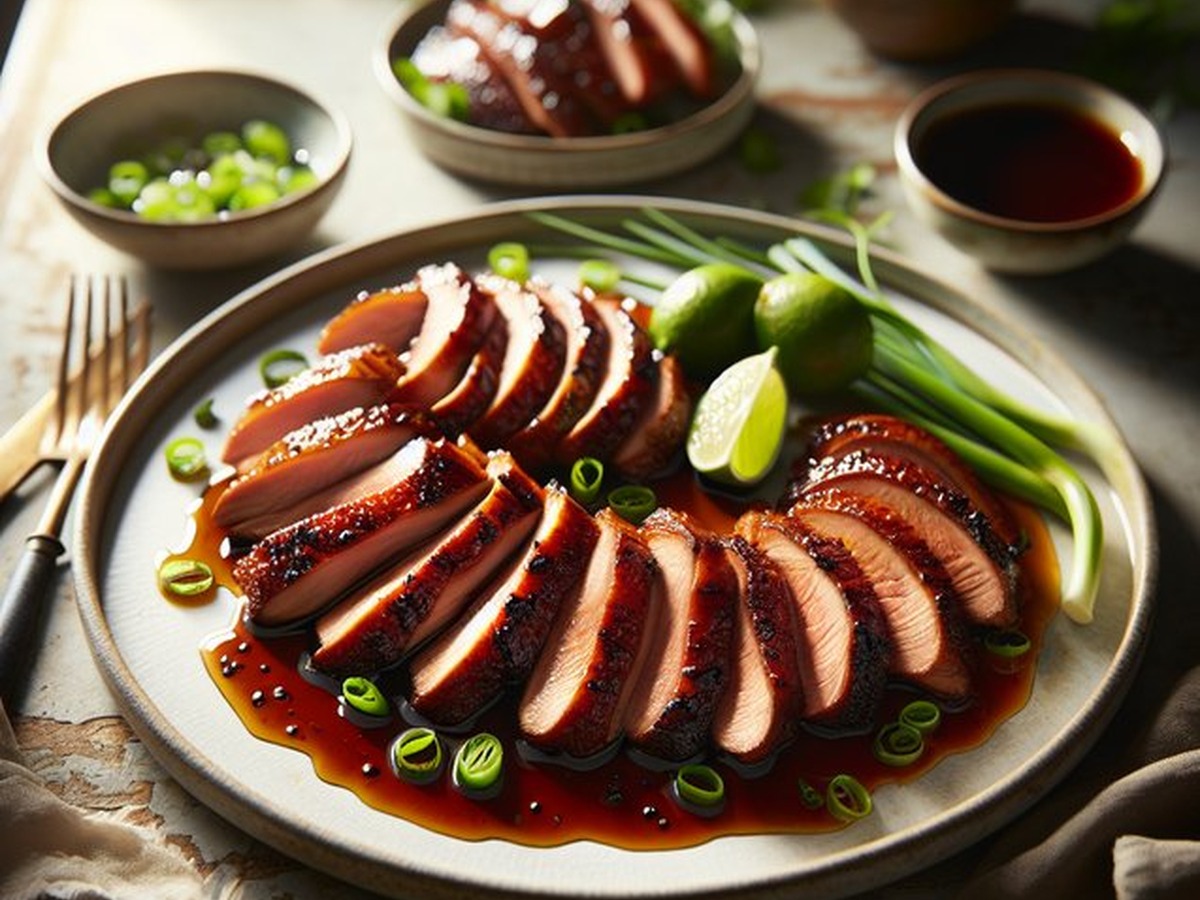
Crisp-skinned duck breasts are finished with a glossy tamarind glaze balanced with brown sugar, ginger, soy, and rice vinegar.
About This Recipe
Tantalizing Tamarind Glazed Duck pairs crisp-skinned duck breasts with a dark, glossy sauce that is sweet, sour, and gently warm. Tamarind gives the glaze its distinctive tang, while brown sugar and honey round the edges with a caramel-like finish. Fresh ginger, garlic, and green onion keep the rich duck tasting bright enough for the whole plate.
Tamarind has a long history in South Asian cooking, where its tart pulp brings depth to chutneys, dals, seafood, and meat sauces. It also appears across Southeast Asian cuisines, often balanced with sweetness, salt, and aromatic herbs. This duck preparation borrows that familiar sweet-sour balance and uses a skillet and oven so the method works in an ordinary home kitchen.
Duck breasts reward a little patience at the start. Pat the skin dry, score it without cutting into the meat, and let the breasts render slowly enough for the fat to melt and the surface to turn crisp. Pour off extra fat if the skillet becomes crowded, saving just enough to carry the flavor into the glaze.
The tamarind mixture comes together before the skillet heats, which keeps the cooking calm once the duck is seared. Soy sauce and salt bring savoriness, rice vinegar sharpens the fruit, and honey helps the glaze cling to the sliced meat. Cayenne adds a quiet pulse of heat, but you can reduce it when serving guests with a gentler preference.
The oven finishes the breasts more evenly than the stovetop alone, while the glaze reduces around them and picks up the browned bits from the skillet. Use an instant-read thermometer in the thickest part and rest the duck before slicing so the juices stay in the meat. Spoon the sauce over the top at the last moment so the skin keeps its best texture.
Serve the duck with steamed rice, coconut rice, cucumber salad, or crisp greens that can take on the tamarind sauce. Cool leftovers promptly, refrigerate them in a shallow airtight container, and use them within three to four days. Reheat slices gently in a covered skillet with a spoonful of water, then add fresh green onion just before serving.
Ingredients
- 4 boneless duck breasts, skin on and scored (about 1.8kg)
- 1/4 cup tamarind concentrate or tamarind paste (60g)
- 1/4 cup packed brown sugar (50g)
- 2 tablespoons low-sodium soy sauce (30mL)
- 3 tablespoons rice vinegar (45mL)
- 2 tablespoons honey (30mL)
- 1 tablespoon fresh ginger, grated (15g)
- 1 tablespoon fresh garlic, minced (9g)
- 1 teaspoon ground black pepper (2g)
- 1/2 teaspoon cayenne pepper (1g)
- 1/4 teaspoon kosher salt (1.5g)
- 1 tablespoon sesame oil (15mL)
- 2 green onions, thinly sliced, for garnish (30g)
Step-by-Step Instructions
- Heat the oven Preheat the oven to 375°F (190°C) so it is ready for the skillet after the duck skin has browned.
- Mix the tamarind glaze Whisk the tamarind paste, brown sugar, soy sauce, rice vinegar, honey, ginger, garlic, black pepper, cayenne, and salt in a medium bowl until smooth.
- Score the duck skin Pat the duck breasts dry and score the skin in a shallow crosshatch pattern, taking care not to cut into the meat.
- Warm the skillet Heat the sesame oil in a large oven-safe skillet over medium-high heat until it shimmers.
- Sear the skin Place the duck breasts skin-side down and sear for 6 to 8 minutes, pouring off excess fat if needed, until the skin is deeply golden and crisp.
- Add the glaze Turn the duck breasts over and pour the tamarind glaze around and over them, scraping any browned bits into the sauce.
- Finish in the oven Transfer the skillet to the oven and roast for 15 to 20 minutes, checking the thickest breast with an instant-read thermometer and cooking to 165°F (74°C).
- Rest the duck Move the duck to a cutting board and let it rest for 5 minutes so the juices settle while the glaze thickens slightly in the skillet.
- Slice and coat Slice the duck across the grain and spoon the remaining tamarind glaze over the pieces, keeping the crisp skin facing up.
- Garnish and serve Transfer the duck to a serving platter and finish with the sliced green onions. Serve with rice, cucumber salad, or lightly dressed greens.
Nutrition Per Serving
| Nutrient | Amount | % Daily Value* |
|---|---|---|
| Calories | 800 kcal | 26% |
| Protein | 51 g | 102% |
| Total Fat | 54 g | 69% |
| Saturated Fat | 16 g | 80% |
| Carbohydrates | 36 g | 13% |
| Fiber | 2 g | 7% |
| Sugars | 29 g | 32% |
| Sodium | 1180 mg | 51% |
Nutrition is an estimate based on the listed ingredients and four servings.
Storage & Reheating
Cool the duck within two hours, refrigerate it in a shallow airtight container, and use it within three to four days. Store the duck and extra glaze together or separately according to how much crisp skin you want to preserve.
Reheat sliced duck gently in a covered skillet over low heat with a spoonful of water, stopping as soon as the center is hot. Warm extra glaze separately and spoon it over the duck after reheating, then add fresh green onion.
Practical Cooking Notes
Dry skin renders more cleanly, and shallow scoring gives the fat a path out without cutting into the meat.
Tamarind and sugar can catch quickly, so keep the skillet under control and loosen the sauce with a spoonful of water if it tightens too fast.
A five-minute rest keeps the juices in the duck and gives the glossy sauce time to cling to each slice.
Troubleshooting
The duck skin is not crisp.
Likely cause: the skin was damp or the skillet was not hot enough when the breasts went in.
Fix: pat the skin dry, start skin-side down, and give it 6 to 8 minutes to render before turning the duck.
The glaze is too thick.
Likely cause: tamarind and sugar reduced too far while the skillet was hot.
Fix: loosen the glaze with a spoonful of water or rice vinegar over low heat, then spoon it over the rested duck.
The glaze tastes too sharp.
Likely cause: the tamarind concentrate is especially tart or the brand has a stronger acidity.
Fix: stir in a little extra honey or brown sugar, tasting between additions, and balance the plate with rice or cucumber salad.
Frequently Asked Questions
Can I prepare the tamarind glaze ahead of time?
Yes. Whisk the glaze up to three days ahead and refrigerate it in a covered container. Bring it close to room temperature before adding it to the skillet so the duck cooks without a sudden temperature change.
How do I know when the duck breasts are done?
Use an instant-read thermometer in the thickest part and cook the duck to 165°F (74°C) for a food-safe finish. Let the breasts rest for 5 minutes before slicing so the juices settle and the glaze thickens around the meat.
What can I use instead of tamarind paste?
Use an equal amount of unsweetened pomegranate molasses for a similar sweet-sour character, or combine lemon juice with a little extra brown sugar for a brighter substitute. Taste the glaze before cooking and adjust the sweetness because brands vary.
What sides pair well with tamarind glazed duck?
Steamed basmati or coconut rice, cucumber salad, lightly dressed greens, or roasted vegetables all work well. Choose a fresh or simply seasoned side so it balances the rich duck without competing with the tamarind glaze.
Cook Next & Build the Technique
Equipment
- Medium mixing bowl
- Large oven-safe skillet
- Whisk or spoon
- Instant-read meat thermometer
- Cutting board
- Sharp knife
- Tongs
- Spoon for drizzling glaze
- Serving platter
- Oven mitts
- Measuring cups
- Measuring spoons
- Small brush for coating, optional