Tropical Sunshine Pineapple Curry
Pineapple, Coconut, and Chickpea Curry with Fresh Lime
Sweet pineapple, creamy coconut milk, chickpeas, and warm curry spices come together in a bright vegetarian skillet curry finished with lime and cilantro.
About This Recipe
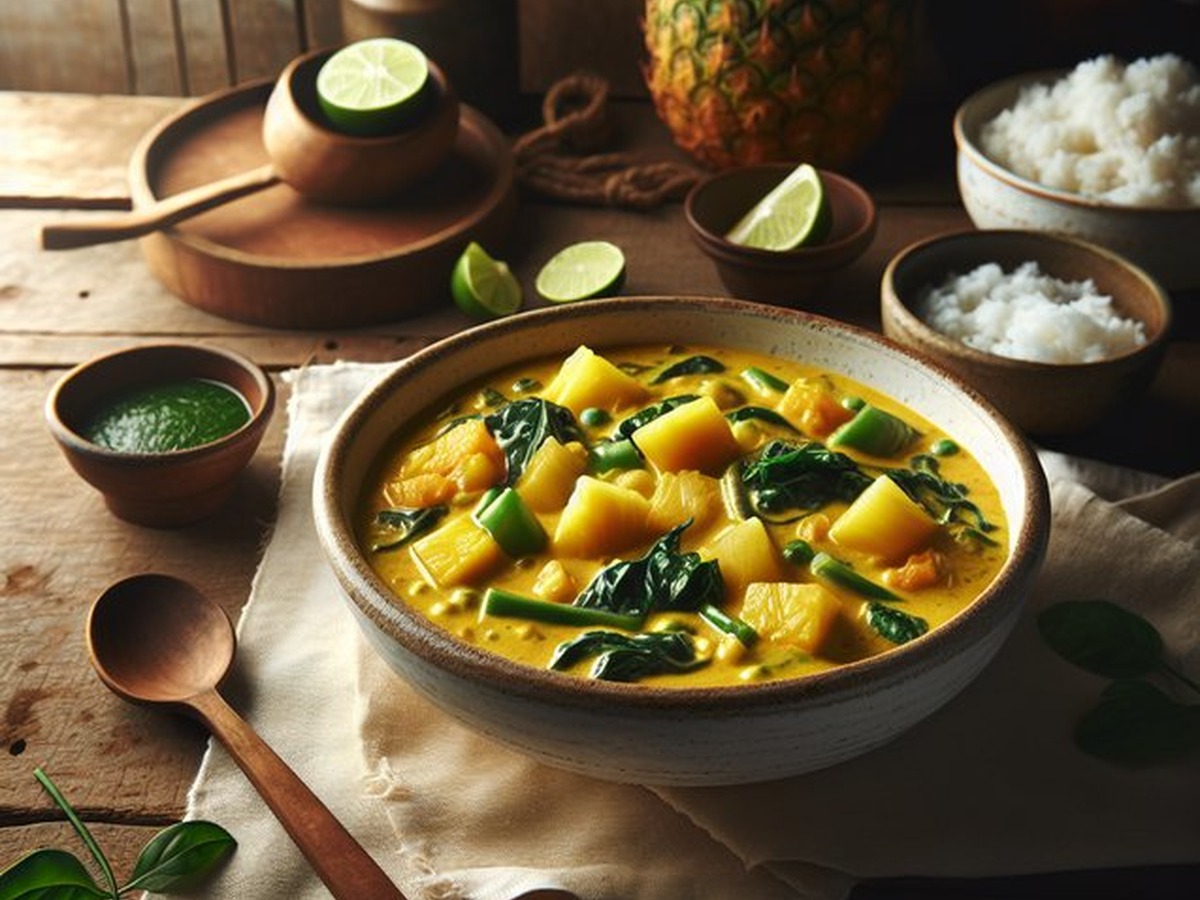
Tropical Sunshine Pineapple Curry brings together juicy pineapple, creamy coconut milk, chickpeas, and a warm curry-spice base in one colorful skillet. The fruit adds a bright sweet-tart note, while spinach and bell pepper keep the sauce lively rather than heavy. Served over rice, it is a generous vegetarian dinner that feels sunny without requiring a long list of complicated techniques.
Sweet fruit in a savory curry has a long life in home cooking across South and Southeast Asia, and pineapple also appears in Caribbean and other tropical kitchens where acidity and sweetness are used to balance spice. The exact combination changes from cook to cook, so this recipe is best understood as a contemporary Indian-inspired curry rather than a claim about one regional classic. Its appeal is the contrast between tender fruit, creamy sauce, and gently spiced chickpeas.
The first few minutes build the flavor that carries the whole dish. Let the onion soften before adding garlic and ginger, then give the curry powder and turmeric a brief turn in the oil so their aroma opens without letting the spices burn. A moderate heat is important here: scorched turmeric can taste harsh, while patiently softened aromatics make the finished coconut sauce taste rounded.
Once the coconut milk goes in, pineapple and bell pepper simmer together until the sauce begins to cling to the vegetables. Chickpeas add substance and a pleasant bite, and the brown sugar smooths the sharper edges of the fruit and soy sauce. Keep the simmer gentle rather than boiling hard, especially if you want the coconut milk to stay silky and the pineapple to keep some shape.
Spinach goes in near the end because it needs only a few minutes to wilt. Lime juice is stirred in after the heat is off, when its acidity can lift the coconut milk instead of disappearing into the simmer. Fresh cilantro adds a clean, citrusy finish, and a spoonful of curry over hot rice lets the sauce collect in every grain.
This curry is easy to make ahead for lunches or a relaxed weeknight dinner. Cool the curry and rice promptly, store them separately in shallow airtight containers, and use them within three to four days. Reheat the curry gently with a splash of water or broth, warm the rice separately, and add a little fresh lime or cilantro at the table to restore its brightness.
Ingredients
- 1 tablespoon vegetable oil (15mL)
- 1 onion, chopped (150g)
- 2 cloves garlic, minced (6g)
- 1 tablespoon fresh ginger, grated (15g)
- 1 tablespoon curry powder (8g)
- 1 teaspoon ground turmeric (3g)
- 1 can (14 oz) unsweetened coconut milk (400mL)
- 2 cups fresh pineapple, diced (300g)
- 1 bell pepper, chopped (150g)
- 1 can (15 oz) chickpeas, drained and rinsed (425g)
- 2 tablespoons low-sodium soy sauce (30mL)
- 1 tablespoon brown sugar (12g)
- 1 teaspoon kosher salt (5g)
- 1/2 teaspoon black pepper (1g)
- 1 cup fresh spinach, chopped (30g)
- 2 tablespoons fresh cilantro, chopped (8g)
- 1 lime, juiced (30mL)
- 4 cups cooked rice, for serving (optional) (600g)
Step-by-Step Instructions
- Warm the oil Heat the vegetable oil in a large skillet over medium heat until it shimmers.
- Soften the onion Add the chopped onion and sauté for about 5 minutes, stirring occasionally, until translucent.
- Bloom the aromatics Stir in the garlic and fresh ginger and cook for 1 minute, just until fragrant.
- Toast the spices Sprinkle in the curry powder and turmeric, stir to coat the onion, and cook for 1 minute so the spices bloom without scorching.
- Build the curry Pour in the coconut milk, then add the diced pineapple and chopped bell pepper and stir to combine.
- Season the chickpeas Add the chickpeas, soy sauce, brown sugar, kosher salt, and black pepper and stir until evenly distributed.
- Simmer gently Bring the curry to a gentle simmer, cover, and cook for about 10 minutes so the pineapple softens and the sauce comes together.
- Wilt the spinach Stir in the chopped spinach and cook uncovered for 2 to 3 minutes, until the leaves are wilted and the sauce lightly coats a spoon.
- Finish with lime Remove the skillet from the heat and stir in the lime juice, tasting before adding any extra salt.
- Add the cilantro Scatter the chopped cilantro over the curry and let it stand for 1 minute so its fresh aroma remains bright.
- Serve Spoon the curry over cooked rice, if using, and serve warm with lime wedges or a crisp vegetable side.
Nutrition Per Serving
| Nutrient | Amount | % Daily Value* |
|---|---|---|
| Calories | 350 kcal | 26% |
| Protein | 9 g | 18% |
| Total Fat | 18 g | 23% |
| Saturated Fat | 13 g | 65% |
| Carbohydrates | 36 g | 13% |
| Fiber | 7 g | 25% |
| Sugars | 18 g | 20% |
| Sodium | 800 mg | 35% |
Nutrition is an estimate based on the listed ingredients and four servings.
Storage & Reheating
Cool the curry and rice promptly, refrigerate them separately in shallow airtight containers, and use them within three to four days. Keeping the rice apart prevents it from absorbing all of the coconut sauce.
Reheat the curry gently in a covered skillet over low heat with a splash of water or broth, and warm the rice separately until hot. Finish with fresh lime and cilantro after reheating.
Practical Cooking Notes
Give the curry powder and turmeric a minute in the softened onion and oil, then add the coconut milk before the spices darken or turn bitter.
Moderate heat helps the coconut milk stay smooth and lets the pineapple and chickpeas take on the aromatics without becoming mushy.
Lime and cilantro taste clearest when they are added after the skillet comes off the heat, just before serving.
Troubleshooting
The sauce is too thin.
Likely cause: the skillet was covered for too long or the curry never reached a gentle simmer.
Fix: simmer uncovered over low heat for a few extra minutes after the vegetables are tender, stirring gently until the sauce lightly coats a spoon.
The pineapple tastes flat.
Likely cause: the fruit is very mild or the finished curry needs more contrast.
Fix: add lime juice and salt a little at a time, tasting after each addition so the fruit remains bright rather than overly sweet.
The coconut sauce looks grainy.
Likely cause: the heat was too high after the coconut milk was added.
Fix: lower the heat and keep the curry at a quiet simmer; stir occasionally and avoid a hard boil.
Frequently Asked Questions
Can I use canned pineapple instead of fresh?
Yes. Drain canned pineapple well and use it in the same two-cup amount. Add it with the coconut milk, but keep the simmer gentle so the pieces stay intact; taste at the end because canned fruit can be sweeter than fresh.
How can I balance the curry if the pineapple is very tart or sweet?
If the curry is too tart, add a small extra pinch of brown sugar. If it is very sweet, brighten it with another squeeze of lime and a little salt, adding each gradually so the coconut sauce stays balanced.
Can I make this pineapple curry ahead of time?
Yes. Cool the curry promptly, refrigerate it in a shallow airtight container, and use it within three to four days. Reheat it gently with a splash of water or broth, then warm the rice separately and add fresh cilantro after reheating.
What should I serve with pineapple curry?
Serve it over jasmine or basmati rice, or pair it with warm naan, roti, or quinoa. A crisp cucumber salad or lightly dressed greens adds freshness and keeps the meal from feeling too rich.
Cook Next & Build the Technique
Equipment
- Large skillet with lid
- Cutting board
- Chef's knife
- Measuring spoons
- Can opener
- Wooden spoon or heatproof spatula
- Fine grater or microplane
- Mixing bowl
- Ladle or serving spoon
- Serving bowls