Coriander Kissed Dal Makhani
Creamy Black Lentils and Kidney Beans with Fresh Coriander
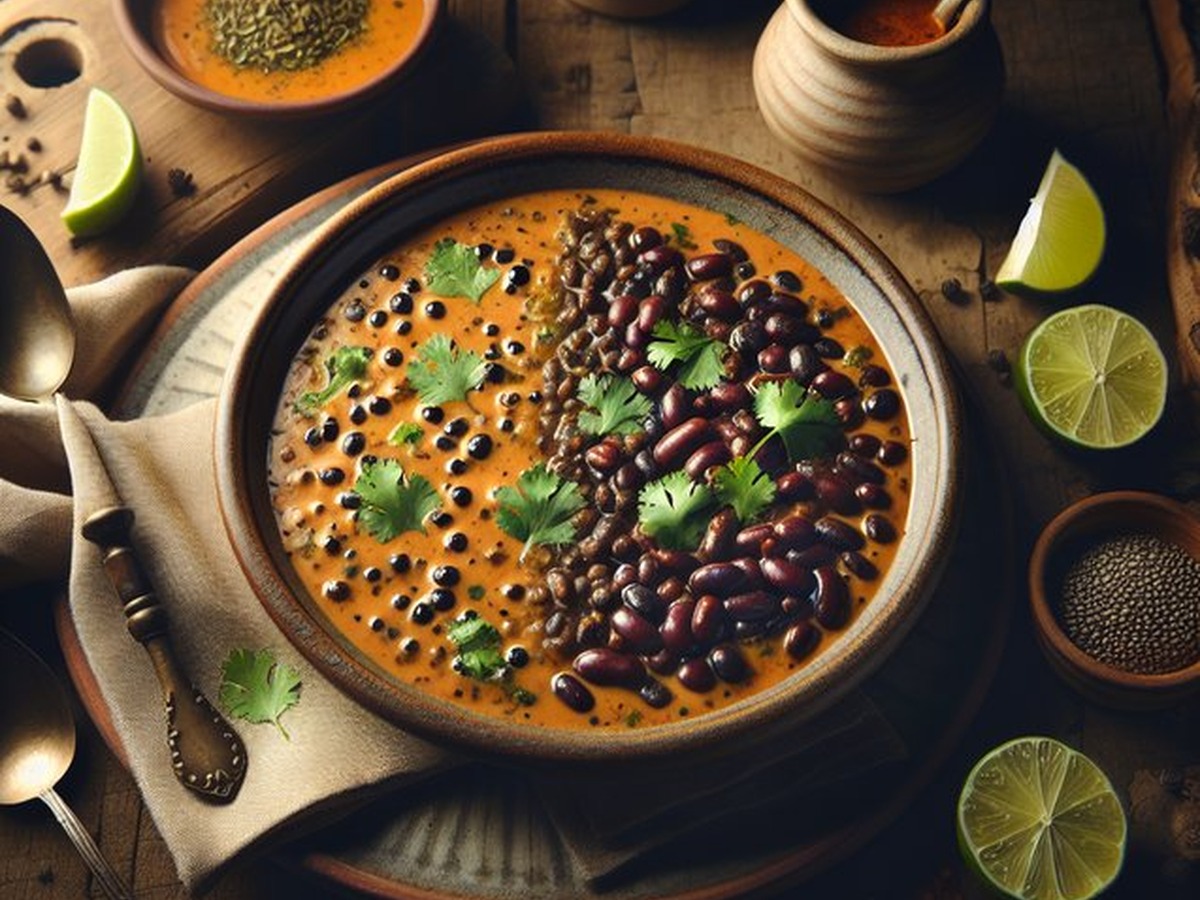
Black lentils and kidney beans simmer with tomato, cream, fenugreek, and fresh coriander for a deeply comforting dal makhani.
About This Recipe
Coriander Kissed Dal Makhani is the kind of dish that rewards a slow afternoon. Black lentils and kidney beans become tender in the pot, then meet a fragrant base of ghee, onion, garlic, ginger, tomato, and warm spices. Cream and dried fenugreek bring the familiar silky finish, while fresh coriander keeps the bowl from feeling too rich.
Dal makhani is widely associated with Punjabi cooking and with the restaurant kitchens of Delhi, where slow-cooked black lentils became a beloved celebratory staple. The name points to the buttery, rich character of the dish, but home versions vary in how much ghee, cream, tomato, or smoke they use. This recipe stays close to the comforting combination of whole black lentils and kidney beans while letting coriander provide a fresher final note.
The overnight soak is the quiet step that makes the long simmer more predictable. Rinse the lentils and beans well, then start them in fresh water and cook until they are genuinely tender before building the masala. The beans should yield easily when pressed, because the finished dal becomes creamy through both cooking and gentle stirring.
While the lentils cook, the separate skillet gives the aromatics room to develop. Let the onion turn lightly golden, then add garlic, ginger, green chili, cumin, and the ground spices so their fragrance opens in the ghee. When the tomatoes reduce until thick, the base is ready to carry the lentils without leaving the finished bowl tasting watery or raw.
Add enough of the lentil cooking liquid to choose the texture you want. Heavy cream rounds the spices, and crushed dried fenugreek contributes a savory, almost minty aroma that is easy to lose if it is boiled hard. Keep the dal at a gentle simmer, stir the bottom regularly, and finish with a short uncovered reduction if the pot needs more body.
Serve the dal with basmati rice, naan, roti, or a crisp salad that can cut through the richness. It is especially good the next day, when the beans and spices have had more time to settle; refrigerate it within two hours and use it within three to four days. Reheat slowly with a splash of water, add fresh coriander at the end, and adjust the salt after the cream and reheating have changed the balance.
Ingredients
- 1 cup black lentils (250g)
- 1/2 cup kidney beans, soaked overnight (125g)
- 4 cups water (960mL)
- 1 tablespoon ghee (15g)
- 1 medium onion, finely chopped (150g)
- 2 tablespoons garlic, minced (30g)
- 1 tablespoon ginger, minced (15g)
- 2 green chilies, slit (10g)
- 1 teaspoon cumin seeds (2g)
- 1 teaspoon coriander powder (2g)
- 1 teaspoon garam masala (2g)
- 1/2 teaspoon turmeric powder (1g)
- 1 can crushed tomatoes (15 oz / 425g)
- 1 cup heavy cream (240mL)
- 1 tablespoon dried fenugreek leaves (5g)
- 1/2 teaspoon kosher salt, plus more to taste (3g)
- 2 tablespoons fresh cilantro, chopped (30g)
Step-by-Step Instructions
- Rinse the lentils and beans Rinse the black lentils and soaked kidney beans under cold water until the water runs clear.
- Start the pot Combine the rinsed lentils, kidney beans, and water in a large heavy-bottomed pot. Bring the mixture to a boil over high heat.
- Cook until tender Reduce the heat to low, cover the pot, and simmer for 30 to 40 minutes, or until the lentils and beans are tender.
- Warm the ghee In a separate skillet, heat the ghee over medium heat.
- Soften the onion Add the chopped onion and sauté until it becomes translucent and lightly golden.
- Cook the aromatics Stir in the garlic, ginger, and slit green chilies. Cook for 2 to 3 minutes, until fragrant.
- Bloom the spices Add the cumin seeds and let them sizzle for a few seconds. Stir in the coriander powder, garam masala, and turmeric, and toast for 1 minute.
- Reduce the tomatoes Pour in the crushed tomatoes and simmer for about 10 minutes, until the mixture thickens and the raw tomato aroma fades.
- Combine with the dal Add the tender lentils and beans to the tomato mixture along with enough of their cooking liquid to reach a spoonable consistency.
- Add the cream and fenugreek Stir in the heavy cream and dried fenugreek leaves until thoroughly combined.
- Finish the simmer Season with salt to taste and simmer the dal for another 10 minutes, stirring occasionally, until creamy and cohesive.
- Check the consistency If the dal is thicker than you like, loosen it with a splash of hot water. If it is thin, simmer uncovered for a few extra minutes.
- Garnish and serve Garnish with the chopped cilantro and serve hot with rice, naan, or roti.
Nutrition Per Serving
| Nutrient | Amount | % Daily Value* |
|---|---|---|
| Calories | 466 kcal | 23% |
| Protein | 15 g | 30% |
| Total Fat | 30 g | 38% |
| Saturated Fat | 18 g | 90% |
| Carbohydrates | 35 g | 13% |
| Fiber | 13 g | 46% |
| Sugars | 7 g | 14% |
| Sodium | 300 mg | 13% |
Nutrition is an estimate based on the listed ingredients and four servings.
Storage & Reheating
Refrigerate cooked dal within two hours at 40°F (4°C) or below and use it within 3 to 4 days. Store it in a shallow airtight container, with fresh coriander added after reheating.
Reheat gently over low heat with a splash of water, stirring the bottom often. Warm until hot throughout, then adjust the salt and finish with fresh coriander or a squeeze of lemon.
Practical Cooking Notes
Soak the kidney beans overnight and rinse both legumes before they go into the pot. The soak makes tenderness more predictable and shortens the active simmer.
Dal thickens as it cooks, especially after the cream is added. Stir every few minutes over low heat and loosen it with hot water if it starts to catch.
Crush the dried fenugreek between your palms before adding it, then use fresh coriander and lemon at the table to balance the rich sauce.
Troubleshooting
The beans are still firm.
Likely cause: The kidney beans were not soaked long enough or the simmer was too short.
Fix: Continue cooking over low heat with enough water to keep the pot loose. The beans should yield easily before the tomato masala is added.
The dal is sticking.
Likely cause: The pot is too hot or the mixture has thickened without enough liquid.
Fix: Lower the heat, scrape the bottom with a wooden spoon, and add hot water a little at a time while stirring regularly.
The dal tastes too rich.
Likely cause: Cream and ghee were not balanced with fresh acidity or herbs.
Fix: Finish with fresh coriander and lemon, then serve with plain rice or a crisp cucumber salad to add contrast.
Frequently Asked Questions
How can I speed up the cooking process without losing creaminess?
Soak the kidney beans overnight and use a pressure cooker or electric pressure cooker to cook the lentils and beans until tender. Finish the dal uncovered on the stove with the tomato masala, cream, and fenugreek so it still develops a thick, creamy texture.
Can I make this dal makhani ahead of time?
Yes. Dal makhani keeps well for 3 to 4 days in the refrigerator and often tastes better after resting overnight. Reheat it gently with a splash of water, then add fresh cilantro and adjust the salt before serving.
How can I balance the richness with fresh flavors?
Finish with fresh cilantro and a squeeze of lemon or lime if the bowl tastes heavy. Serve the dal with a crisp cucumber salad, plain rice, or lightly dressed greens rather than adding more cream.
How do I keep the dal from sticking while simmering?
Use a heavy-bottomed pot, keep the heat low, and stir along the bottom every few minutes, especially after adding the cream. If the dal thickens too quickly, loosen it with hot water instead of raising the heat.
Cook Next & Build the Technique
Equipment
- Large heavy-bottomed pot or Dutch oven
- Colander
- Medium bowl for soaking beans
- Wooden spoon or spatula
- Small skillet
- Measuring cups and spoons
- Ladle