Pomegranate Rosemary Duck
Crisp Duck Breast with Pomegranate Rosemary Pan Sauce
Crisp-skinned duck breasts meet a glossy pomegranate-rosemary pan sauce in this French-inspired dinner.
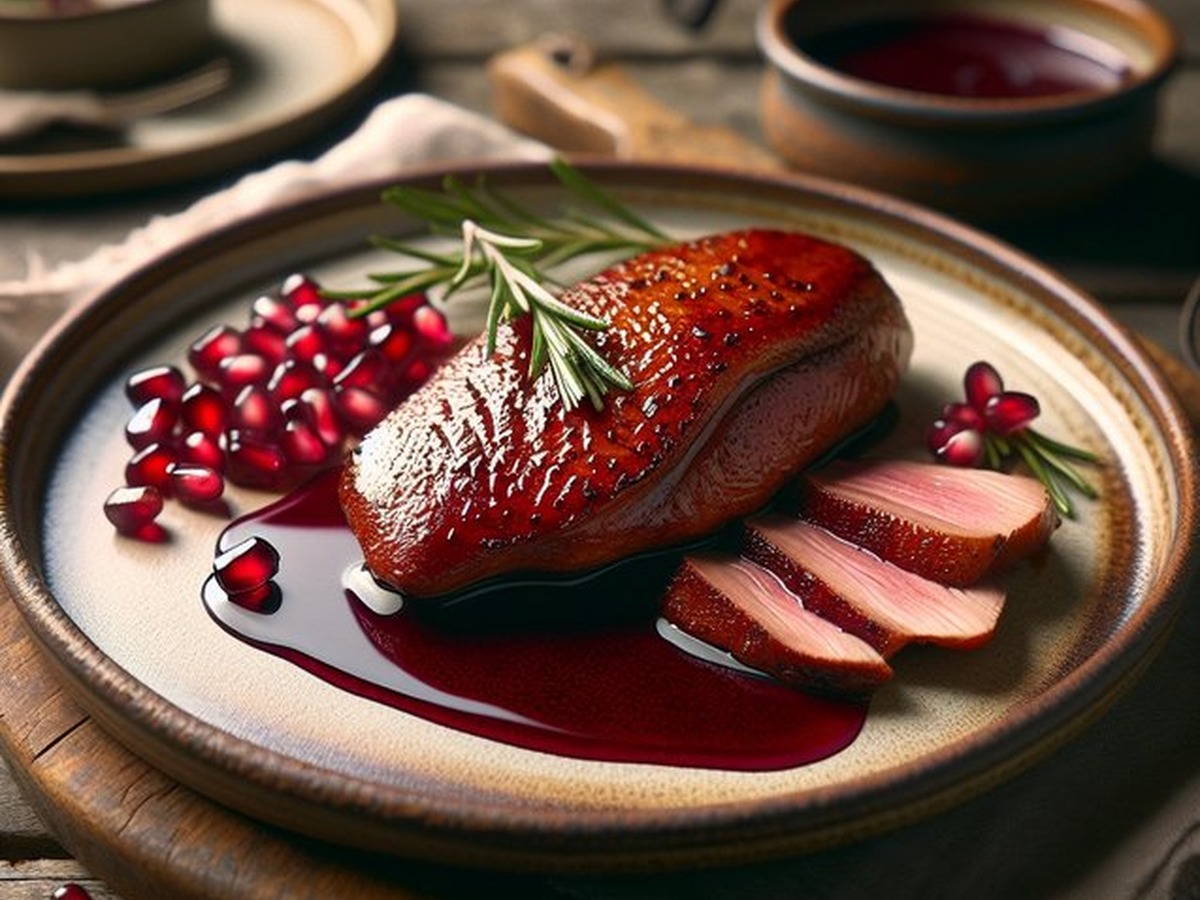
About This Recipe
Pomegranate Rosemary Duck brings crisp, slowly rendered skin together with a glossy pan sauce that is bright, wine-scented, and just sweet enough. The fruit cuts through the richness of duck without hiding its savor, while rosemary and garlic keep the finished plate firmly savory. It is an elegant dinner with the rhythm of a weeknight skillet: render the duck, build the sauce in the same pan, and serve it while the contrast between crackling skin and tender meat is at its best.
Pomegranate has long been valued across the Middle East, the Mediterranean, and the Caucasus, where its tart juice and jewel-like seeds appear in sauces, stews, salads, and festive dishes. This recipe is not presented as a traditional regional classic; it borrows that familiar sweet-tart flavor and pairs it with a French-style pan sauce. The result is a contemporary bridge between pomegranate's old culinary history and the practical technique of finishing a dinner in the skillet used to cook the meat.
Starting the duck in a cold skillet is the key to the skin. As the pan warms, fat renders gradually instead of leaving the skin scorched while the layer underneath remains soft. Score only the skin, keep the heat at medium-low, and spoon off excess fat so the duck fries in a shallow film rather than steaming in its own drippings.
Once the duck has rested, the same skillet becomes the sauce base. Shallot, garlic, and rosemary pick up the browned bits, red wine loosens them, and pomegranate juice, molasses, and stock reduce into a sauce with enough body to cling to each slice. Whisking in butter off the heat gives the glaze a rounded finish without making the fruit taste heavy or overly sugary.
Duck breast is best judged with a thermometer rather than by color alone. Remove it at 160°F (71°C), then let it rest for five to ten minutes; carryover cooking should bring the center to 165°F (74°C) while the juices settle. This short rest also gives you time to finish the sauce and keeps the slices moist when they reach the platter.
Serve the duck with creamy polenta, lentils, roasted root vegetables, or bitter greens that can stand up to the ruby sauce. The sauce can be reduced a day ahead and rewarmed gently with a splash of stock, with the butter whisked in at the end. Refrigerate cooked duck and sauce within two hours, use them within three to four days, and warm the meat gently so the skin has a chance to crisp again before the pomegranate seeds and rosemary go on top.
Ingredients
- 1 1/2 pounds skin-on duck breasts (680g)
- 1 1/2 teaspoons fine sea salt (8g)
- 1/2 teaspoon freshly ground black pepper (1g)
- 3 garlic cloves, minced (9g)
- 2 tablespoons fresh rosemary, chopped and divided (8g)
- 3/4 cup pomegranate juice (180mL)
- 2 tablespoons pomegranate molasses (30mL)
- 1/2 cup red wine (120mL)
- 1/2 cup chicken stock (120mL)
- 1 large shallot, minced (40g)
- 2 teaspoons granulated sugar (8g)
- 1/2 cup pomegranate seeds (75g)
- 1 tablespoon unsalted butter (14g)
Step-by-Step Instructions
- Season the duck Pat the duck breasts dry, score the skin in a shallow crosshatch without cutting into the meat, and season both sides with the salt and pepper.
- Render the skin Place the duck skin-side down in a cold heavy skillet. Set it over medium-low heat and cook for 8 to 12 minutes, spooning off excess rendered fat as the skin becomes crisp and golden.
- Cook and rest the duck Turn the breasts and cook the flesh side for 3 to 5 minutes. Remove them when an instant-read thermometer registers 160°F (71°C) in the thickest part, then rest for 5 to 10 minutes so carryover heat brings them to 165°F (74°C).
- Soften the aromatics Pour off all but 1 tablespoon of the rendered duck fat. Add the shallot, garlic, and 1 tablespoon of the rosemary, then cook over medium heat for 1 to 2 minutes until fragrant.
- Reduce the wine Pour in the red wine and scrape up the browned bits from the skillet. Simmer until the wine is reduced by about half.
- Build the pomegranate sauce Add the pomegranate juice, pomegranate molasses, chicken stock, and sugar. Simmer for 8 to 12 minutes, stirring occasionally, until the sauce lightly coats a spoon.
- Finish the sauce Remove the skillet from the heat and whisk in the butter until the sauce looks glossy. Taste and adjust the seasoning if needed.
- Slice and plate Slice the rested duck across the grain and arrange it on a serving platter. Spoon the warm pomegranate sauce over and around the slices.
- Garnish and serve Scatter the pomegranate seeds and remaining rosemary over the duck, then serve immediately while the skin is crisp.
Nutrition Per Serving
| Nutrient | Amount | % Daily Value* |
|---|---|---|
| Calories | 750 kcal | 38% |
| Protein | 34 g | 68% |
| Total Fat | 57 g | 73% |
| Saturated Fat | 20 g | 100% |
| Carbohydrates | 26 g | 9% |
| Fiber | 1 g | 4% |
| Sugars | 20 g | 40% |
| Sodium | 925 mg | 40% |
Nutrition is an estimate based on the listed ingredients and four servings.
Storage & Reheating
Refrigerate cooked duck and sauce separately within two hours at 40°F (4°C) or below. Use them within 3 to 4 days, keeping the pomegranate seeds and rosemary separate until serving.
Warm the duck gently until it reaches 165°F (74°C), then crisp the skin briefly in a skillet or low oven. Reheat the sauce in a small pan with a splash of stock and whisk in a little butter if needed.
Practical Cooking Notes
Gradual heat renders the duck skin more evenly and leaves enough fat in the pan to sauté the aromatics. Keep the heat at medium-low while the skin crisps.
Let the wine and pomegranate mixture reduce until it lightly coats a spoon. Remove the pan from the heat before whisking in butter so the sauce stays glossy.
Duck breast is ready to come off the heat at 160°F (71°C). Rest it for 5 to 10 minutes and confirm 165°F (74°C) before slicing.
Troubleshooting
The skin is not crisp.
Likely cause: The duck started in a hot pan or the skin was not scored and rendered slowly.
Fix: Begin in a cold heavy skillet, keep the heat at medium-low, and spoon off excess fat as it renders.
The sauce is too sharp.
Likely cause: The pomegranate juice or wine reduced before the sauce had enough stock and butter for balance.
Fix: Add a splash of chicken stock, simmer briefly, and whisk in butter off the heat. Taste before adding more sugar.
The duck is overcooked.
Likely cause: The breast stayed in the pan past the thermometer target or was sliced immediately.
Fix: Remove it at 160°F (71°C), rest for 5 to 10 minutes, and use the carryover target of 165°F (74°C) as your doneness check.
Frequently Asked Questions
What can replace pomegranate molasses?
Replace the 2 tablespoons of pomegranate molasses with 1/4 cup additional pomegranate juice and 1 teaspoon brown sugar. Let the sauce reduce a little longer, and reduce the granulated sugar in the ingredient list to 1 teaspoon so the balance stays tart and savory.
How do I know when the duck breast is cooked?
Use an instant-read thermometer in the thickest part of the breast. Remove the duck at 160°F (71°C), rest it for 5 to 10 minutes, and confirm that carryover cooking brings the center to 165°F (74°C) before slicing.
Can I prepare the pomegranate sauce ahead?
Yes. Reduce the wine, pomegranate juice, molasses, stock, and sugar up to 1 day ahead, then refrigerate the sauce in a covered container. Rewarm it gently with a splash of stock and whisk in the butter off the heat just before serving.
How should I store and reheat leftovers?
Refrigerate the sliced duck and sauce separately within 2 hours and use them within 3 to 4 days. Warm the duck gently until it reaches 165°F (74°C), reheat the sauce in a small pan, and add the pomegranate seeds and rosemary after reheating so the garnish stays fresh.
Cook Next & Build the Technique
Equipment
- Chef's knife
- Cutting board
- Mixing bowl
- Whisk
- Heavy skillet
- Tongs
- Spatula
- Plate
- Measuring spoons
- Measuring cups
- Instant-read thermometer
- Serving platter