Zesty Hibiscus Mango Shrimp Medley
Zesty Hibiscus Mango Shrimp Medley with Hibiscus-Lime Mango Relish
About This Recipe
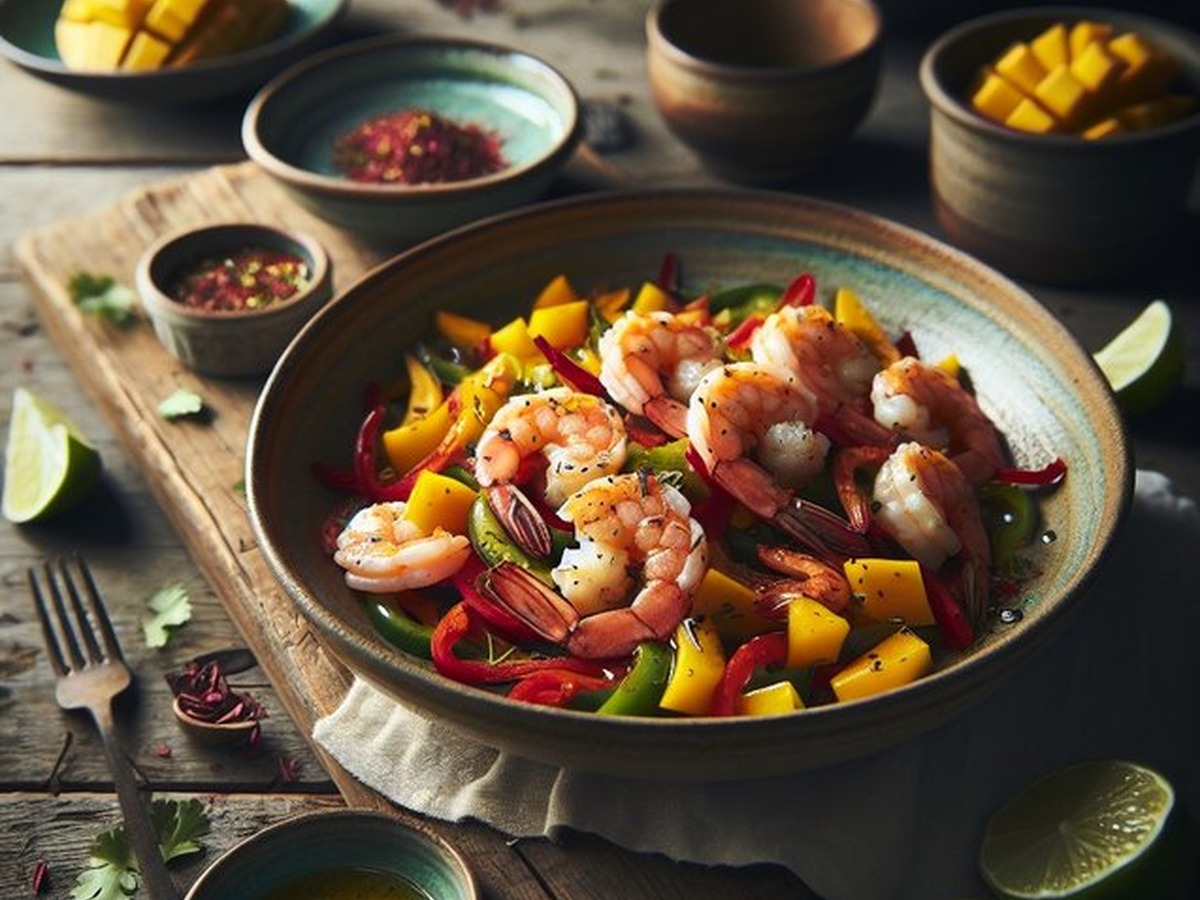
Zesty Hibiscus Mango Shrimp Medley pairs tender shrimp with ripe mango, tart hibiscus, lime, and a little cayenne over warm rice. The fruit keeps the skillet bright while red onion, garlic, and red pepper give the plate a savory backbone. Creamy avocado and fresh cilantro finish the dish with the cool contrast that makes each bite feel balanced.
Food-grade hibiscus calyces, often sold as flor de Jamaica, are prized in many tropical kitchens for their deep ruby color and cranberry-like tang. They appear most often in drinks and preserves, but a small amount can bring the same lively acidity to a savory seafood dish. This recipe is a contemporary Caribbean-inspired medley shaped by that versatile ingredient, not a claim that one island has a single traditional version.
Start by steeping the dried calyces in warm water so they soften and release their color before meeting the skillet. Drain them well and keep the shrimp dry while you dice the mango, pepper, and onion, because excess moisture can make seafood steam instead of sear. Having the rice cooked and the avocado sliced before the pan heats keeps the final few minutes calm and quick.
Build the base with olive oil and garlic, then soften the onion and pepper until they are tender but still bright. The shrimp need only a short turn in the hot pan, and the hibiscus, mango, lime, and spices should be added after the seafood has begun to turn opaque. That timing lets the mango keep some shape and prevents the tart hibiscus from overwhelming the sauce.
The best doneness cue for shrimp is visual: the flesh should be opaque, the edges should blush pink, and the shape should be a loose C rather than a tight O. An instant-read thermometer should register 145°F (63°C) at the thickest piece, after which the pan can come off the heat. Fold in cilantro at the end so its green, herbal lift stays fresh against the ruby-tinted fruit juices.
Spoon the medley over fluffy rice and add avocado just before serving so it stays creamy and green. Refrigerate cooled leftovers within two hours, use them within 3 to 4 days, and reheat gently to 165°F (74°C) without letting the shrimp simmer for long. The finished plate is festive enough for a shared meal but straightforward enough for a bright weeknight dinner.
Nutritional Information (per serving)
| Nutrient | Amount |
|---|---|
| Calories | 485 kcal |
| Protein | 28 g |
| Total Fat | 19 g |
| Saturated Fat | 4 g |
| Carbohydrates | 58 g |
| Fiber | 6 g |
| Sugars | 6 g |
| Sodium | 564 mg |
Nutrition is an estimate based on the listed ingredients and four servings.
Ingredients
- 1 lb shrimp, peeled and deveined (450g)
- 1 cup ripe mango, diced (150g)
- 1/4 cup food-grade dried hibiscus calyces (10g)
- 1/2 cup red bell pepper, diced (75g)
- 1/4 cup red onion, diced (40g)
- 2 tablespoons olive oil (30mL)
- 1 tablespoon lime juice (15mL)
- 1 teaspoon garlic, minced (5g)
- 1/2 teaspoon salt (3g)
- 1/4 teaspoon black pepper (1g)
- 1/4 teaspoon cayenne pepper (1g)
- 1/4 cup fresh cilantro, chopped (15g)
- 1 avocado, sliced (200g)
- 2 cups cooked rice (300g)
Step by Step Instructions
- Steep the hibiscus Place the food-grade dried hibiscus calyces in a bowl, cover with warm water, and steep for about 10 minutes until softened and ruby colored.
- Drain the calyces Drain the hibiscus well, squeeze out excess water, and set the softened calyces aside while you prepare the vegetables and shrimp.
- Prepare the produce Dice the mango, red bell pepper, and red onion. Mince the garlic, chop the cilantro, slice the avocado, and keep the cooked rice warm.
- Dry the shrimp Pat the peeled and deveined shrimp dry and season them lightly with half of the salt and black pepper.
- Sauté the aromatics Heat the olive oil in a large skillet over medium heat. Add the garlic, red onion, and red bell pepper and cook for 3 to 4 minutes until just tender.
- Cook the shrimp Add the shrimp to the skillet and cook for about 2 minutes per side, turning once, until they begin to turn opaque.
- Add the fruit and hibiscus Stir in the softened hibiscus, diced mango, lime juice, remaining salt, black pepper, and cayenne pepper.
- Finish the medley Cook for 2 to 3 minutes more, stirring gently, until the shrimp are opaque and the thickest piece reaches 145°F (63°C).
- Fold in the herbs Remove the skillet from the heat and fold in the chopped cilantro. Taste and add another squeeze of lime if the fruit needs more brightness.
- Plate and serve Spoon the shrimp medley over the warm rice and top with sliced avocado. Serve immediately while the avocado is fresh and the shrimp are tender.
Utensils
- Kettle or small saucepan for warming water
- Heatproof bowl for steeping hibiscus
- Fine-mesh strainer
- Paper towels
- Chef's knife
- Cutting board
- Citrus juicer
- Measuring cups and spoons
- Large skillet
- Tongs
- Wooden spoon or heat-safe spatula
- Instant-read thermometer
- Serving spoon
- Serving bowls or plates
Storage & Reheating
Refrigerate leftover Zesty Hibiscus Mango Shrimp Medley within 2 hours in a shallow airtight container at 40°F (4°C) or below. Use it within 3 to 4 days, keeping extra avocado separate when possible so it stays green and fresh.
Reheat the shrimp, vegetables, and rice gently in a covered skillet or microwave-safe dish with a splash of water until the leftovers reach 165°F (74°C). Stop as soon as they are hot so the shrimp do not overcook, then add fresh avocado, cilantro, and lime before serving.
Practical Cooking Notes
Use a large skillet, heatproof bowl, strainer, knife and board, measuring tools, a spoon, tongs, and a thermometer so the hibiscus can drain while the shrimp cook quickly.
Shrimp are ready when they are opaque, form a loose C, and reach 145°F (63°C) at the thickest point. Remove the skillet from the heat promptly to protect their texture.
Plan for about 15 minutes of steeping, chopping, measuring, and shrimp preparation, followed by about 15 minutes of skillet cooking, for 30 minutes total.
Troubleshooting
The shrimp are rubbery.
Likely cause: They stayed in the skillet after reaching the opaque, loose-C stage.
Fix: Begin checking early, remove the pan at 145°F (63°C), and let residual heat finish the final moments while the shrimp rest in the medley.
The hibiscus flavor is too sharp.
Likely cause: Too much concentrated hibiscus or lime was added for the amount of mango.
Fix: Add a little more mango or rice, and balance the sauce with a pinch of salt or a small spoonful of honey rather than adding more water.
The vegetables are watery.
Likely cause: The hibiscus was not drained well or the pan was crowded.
Fix: Squeeze the softened calyces dry, pat the shrimp dry, and use a broad skillet so moisture can evaporate while the vegetables soften.
Frequently Asked Questions
What kind of hibiscus should I use for this shrimp recipe?
Use food-grade dried hibiscus calyces, often labeled flor de Jamaica, from a culinary or tea supplier. Do not use ornamental flowers treated with pesticides, and steep the dried calyces briefly before draining them so their color and tartness are concentrated without making the skillet watery.
Can I prepare the hibiscus mango shrimp ahead of time?
You can steep and drain the hibiscus, chop the vegetables, cook the rice, and prepare the mango ahead. For the best texture, cook the shrimp close to serving, then add the avocado and cilantro at the table rather than storing them in the hot medley.
What can I use instead of mango or hibiscus?
Use ripe peaches or pineapple in place of mango. If hibiscus is unavailable, a small splash of unsweetened cranberry or pomegranate juice can provide color and acidity; add it gradually and taste with the lime so the sauce does not become too sharp.
How do I keep the shrimp tender?
Pat the shrimp dry, cook them quickly over medium-high heat, and remove the skillet when they are opaque, form a loose C, and reach 145°F (63°C). Avoid letting the shrimp simmer for a long time after the hibiscus and mango are added.