Orange Sage Chicken
Skillet Chicken with Fresh Sage, Orange, and Honeyed Pan Sauce
About This Recipe
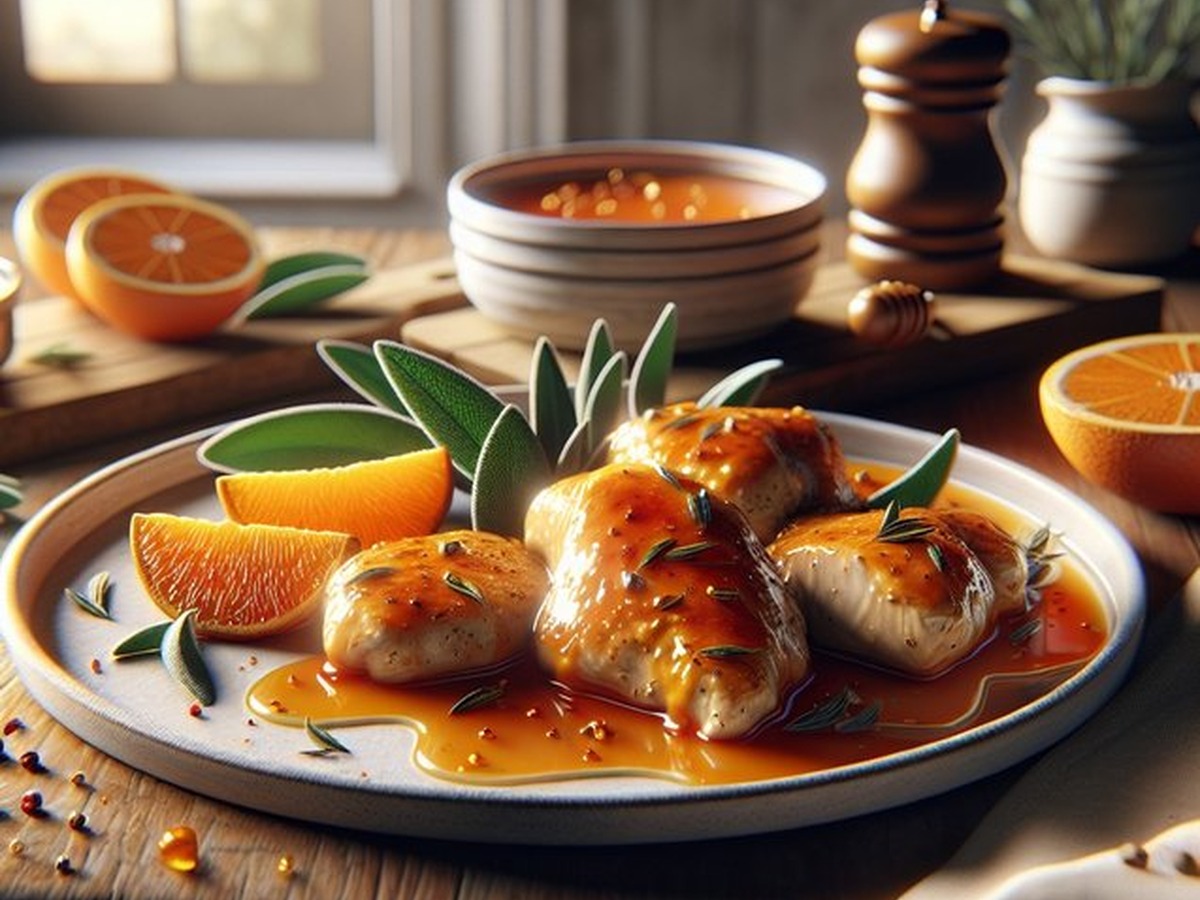
Orange Sage Chicken is a warm, fragrant skillet dinner with a sauce that tastes brighter than its short ingredient list suggests. Fresh sage brings a woodsy, peppery aroma, while orange juice and zest give the pan a sunny lift and honey softens the acidity. A little red pepper keeps the sweetness in check, and butter turns the reduced sauce silky enough to spoon over every piece of chicken.
Sage has been used in Mediterranean and European kitchens for centuries, valued for its resinous fragrance and its ability to stand up to rich foods. Citrus traveled from Asia into the Mediterranean and later into American orchards, carrying its own history of preservation, brightness, and hospitality. Bringing the two together makes culinary sense even though this recipe is a modern American skillet dish rather than a claim to one single regional tradition.
The method is designed for the kind of dinner people actually cook on a busy evening. Small pieces of chicken brown quickly, the orange sauce is whisked while the pan heats, and the same skillet carries the dish from searing to serving. Sage, garlic, and smoked paprika give the sauce a savory backbone so it tastes like dinner instead of dessert.
Season the chicken evenly and leave space between the pieces so they brown instead of steaming. Once the orange mixture goes into the pan, a gentle simmer reduces the juice and concentrates its flavor without scorching the honey. Add the butter only after the chicken is cooked, then use an instant-read thermometer to confirm that the thickest piece has reached 165°F (74°C).
Serve the chicken with roasted carrots, Brussels sprouts, a green salad, couscous, rice, or creamy polenta. Those sides either echo the earthy sage or give the sweet-tart sauce a neutral place to land. A final scatter of fresh sage or a few orange segments makes the plate feel generous without adding another complicated step.
Dried rubbed sage can replace the fresh herb when needed, although it is more concentrated and should be used sparingly. Chicken thighs work in place of breast meat and stay especially juicy, while a pinch of chili flakes can add more warmth if the table likes heat. Refrigerate leftovers promptly, reheat them gently with a spoonful of sauce, and finish with a little fresh orange zest to wake up the flavor.
Nutritional Information (per serving)
| Nutrient | Amount |
|---|---|
| Calories | 460 kcal |
| Protein | 39 g |
| Total Fat | 28 g |
| Carbohydrates | 20 g |
| Fiber | 0 g |
| Sugars | 14 g |
| Sodium | 1130 mg |
Nutrition is an estimate based on the listed ingredients and four servings.
Ingredients
- 1 lb boneless, skinless chicken breasts, cut into 1-inch pieces (500g)
- 2 tablespoons olive oil (30mL)
- 1 teaspoon fine salt (5g)
- 1/2 teaspoon black pepper (1g)
- 1 tablespoon fresh sage, finely chopped (3g)
- 1 tablespoon orange zest (6g)
- 1/2 cup fresh orange juice (120mL)
- 1 tablespoon honey (21g)
- 2 cloves garlic, minced (6g)
- 1/2 teaspoon red pepper flakes (1g)
- 2 tablespoons unsalted butter (28g)
Step by Step Instructions
- Prepare the chicken Pat the chicken pieces dry and season them with the salt, black pepper, and chopped sage. Let them stand while you mix the sauce.
- Mix the orange sauce Whisk the orange zest, orange juice, honey, garlic, and red pepper flakes in a small bowl until the honey is evenly dispersed.
- Heat the skillet Warm the olive oil in a large skillet over medium heat. Add the chicken in a single layer, working in batches if the pan feels crowded.
- Brown the chicken Cook the chicken for 5 to 7 minutes, turning the pieces so several sides take on color. They do not need to be fully cooked before the sauce is added.
- Simmer with orange Pour the orange sauce into the skillet and bring it to a gentle simmer. Scrape up the browned bits and cook for 8 to 10 minutes, stirring occasionally, until the sauce has reduced and the chicken is nearly done.
- Check doneness Use an instant-read thermometer in the thickest piece. Continue simmering gently until the chicken reaches 165°F (74°C), without letting the sauce boil hard.
- Finish with butter Remove the skillet from the heat and stir in the butter until it melts into a glossy sauce. Rest the chicken for 2 to 3 minutes so the juices settle.
- Serve Spoon the orange-sage sauce over the chicken and serve warm with roasted vegetables, rice, couscous, polenta, or a crisp green salad.
Utensils
- Paper towels
- Large skillet
- Small bowl for the orange sauce
- Whisk
- Measuring cup and spoons
- Citrus juicer
- Zester or microplane
- Chef's knife
- Cutting board
- Tongs
- Wooden spoon or heat-safe spatula
- Instant-read thermometer
- Serving spoon
- Serving plates or platter
Storage & Reheating
Storage
Refrigerate leftover Orange Sage Chicken within 2 hours in a shallow airtight container at 40°F (4°C) or below. Use it within 3 to 4 days, or freeze it sooner if it will not be used in that window.
Reheating
Reheat the chicken gently in a covered skillet with a splash of sauce until the center reaches 165°F (74°C). Uncover near the end, then finish with fresh orange zest or sage.
Practical Cooking Notes
Use a large skillet, small mixing bowl, zester, measuring tools, tongs, and an instant-read thermometer so the sauce and doneness are easy to control.
Check the thickest piece and remove the chicken only when it reaches 165°F (74°C). Rest it for 2 to 3 minutes before serving.
Plan for 20 minutes of preparation and about 30 minutes of skillet cooking, including the sauce reduction, for 50 minutes total.
Troubleshooting
The chicken is browning too fast.
Likely cause: The skillet is too hot or the pieces are small and close together.
Fix: Lower the heat before adding the orange sauce, move the pieces apart, and let them finish at a gentle simmer until they reach 165°F (74°C).
The sauce tastes too sweet.
Likely cause: The orange juice or honey is especially sweet and needs more acidity.
Fix: Add a squeeze of lemon or lime, a pinch of salt, and a small amount of red pepper to restore balance.
The sauce is thin.
Likely cause: The orange juice has not had enough time to reduce or the pan is too cool.
Fix: Transfer the chicken to a clean plate if it is already done, then simmer the sauce uncovered until it lightly coats a spoon before stirring in the butter.
Frequently Asked Questions
Can I use dried sage instead of fresh?
Yes. Use about 1 teaspoon of dried rubbed sage in place of the tablespoon of fresh sage, then taste the sauce before adding more. Dried sage is concentrated, so start conservatively and let it bloom with the chicken and orange sauce.
Can I use chicken thighs instead of chicken breast?
Absolutely. Boneless, skinless thighs stay especially juicy in the skillet and may need a few extra minutes to reach 165°F (74°C). Cut the pieces evenly and check the thickest one rather than relying on the clock alone.
How do I keep the chicken juicy?
Pat the chicken dry, avoid crowding the skillet, and keep the sauce at a gentle simmer rather than a hard boil. Remove the chicken as soon as the thickest piece reaches 165°F (74°C), then let it rest briefly before serving.
How should I store and reheat leftovers?
Refrigerate the chicken within 2 hours in a shallow airtight container and use it within 3 to 4 days. Reheat it gently in a covered skillet with a splash of sauce until the center reaches 165°F (74°C), then add a little fresh orange zest or sage.