About This Recipe
Welcome to this delightful Honey Mustard Dill Salmon Steaks recipe that brings a burst of fresh flavors to your dinner table.
This American style dish combines the sweetness of honey with the tangy kick of Dijon mustard for a truly unique taste experience.
Fresh dill adds an aromatic touch that perfectly complements the rich and flaky texture of the salmon steaks you will prepare.
Start by preheating your oven to 400 degrees Fahrenheit to ensure your salmon cooks evenly and achieves a beautiful golden finish.
Whisk together the honey mustard marinade with olive oil and lemon juice to create a glossy coating that seals in all the moisture.
Bake the salmon steaks for about twelve to fifteen minutes until they flake easily with a fork for the perfect doneness every time.
Let the cooked salmon rest for a few minutes after removing it from the oven to allow the juices to redistribute throughout the fish.
Serve this delicious glazed salmon with your favorite side dishes to complete a wholesome and satisfying meal for the whole family.
Honey Mustard Dill Salmon Steaks
Oven-Baked Salmon Steaks with Honey-Mustard Dill Glaze
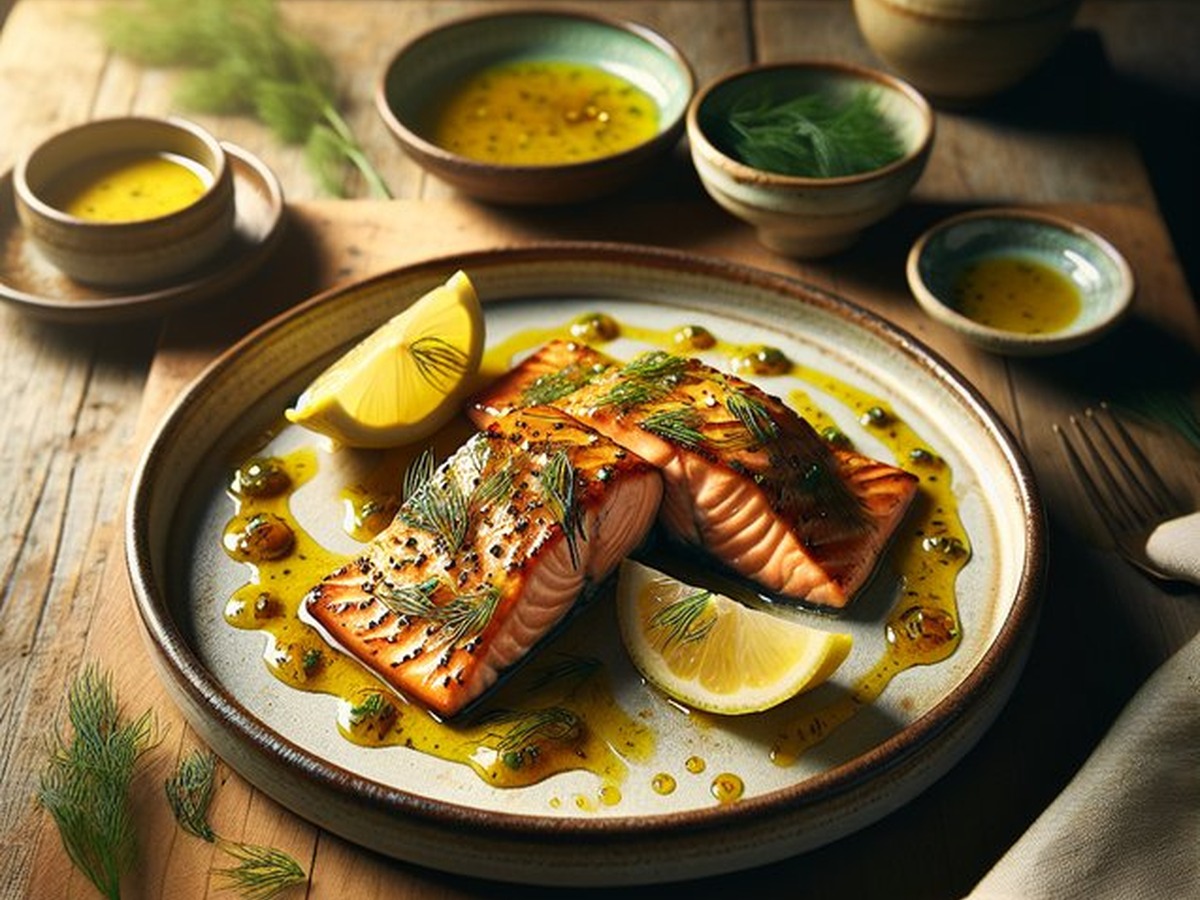
About This Recipe
Honey, mustard, and dill make a classic sweet-sharp combination, and salmon gives it a rich canvas without needing a heavy sauce. The glaze clings to the surface of the steaks as they bake, while lemon and garlic keep the flavor bright. It is a quick centerpiece that looks special on a platter but asks very little of the cook.
Mustard and dill have shared the table with salmon in European and North American kitchens for generations, especially wherever preserved mustard, fresh herbs, and cold-water fish were easy to find. Salmon steaks also have a distinctly home-cooking appeal: the cross-cut pieces are sturdy, flavorful, and generous enough for a family dinner. This version is an American-style oven bake shaped by those familiar pairings rather than a claim to one single regional origin.
Whisk the glaze until the honey is fully loosened by the mustard and lemon, then brush it over dry salmon steaks so it can brown instead of sliding off. A short rest while the oven heats gives the fish time to take on the dill and garlic. If you want to work ahead, mix the glaze separately and refrigerate it, but wait to coat the salmon until you are ready to cook.
Salmon steaks contain a central bone and can vary in thickness, so arrange them with a little space between each piece. The hot oven sets the glaze quickly, creating caramelized edges while the center stays moist. Start checking early because the difference between tender salmon and dry salmon can be only a few minutes.
Use an instant-read thermometer in the thickest part of a steak, avoiding the bone, and cook until the fish reaches 145°F (63°C). The flesh should look opaque and separate easily with a fork, but it should still glisten rather than look chalky. A brief rest on the baking sheet lets the juices settle and gives the honey-mustard coating time to firm up.
Serve the steaks with roasted asparagus, lemony quinoa, potatoes, or a crisp salad that can balance the glaze. Extra dill and lemon wedges make the plate feel fresh, while rice or warm bread is useful for catching every last bit of sauce. It is the kind of dinner that works for a busy weeknight and still feels welcome at a relaxed weekend table.
Ingredients
- 1 1/2 lb salmon steaks, about 1 inch thick (680g)
- 3 tablespoons honey (60g)
- 2 tablespoons Dijon mustard (30g)
- 2 tablespoons fresh dill, chopped (6g)
- 2 tablespoons extra-virgin olive oil (30mL)
- 1 tablespoon fresh lemon juice (15mL)
- 2 garlic cloves, minced (6g)
- 1/2 teaspoon kosher salt (3g)
- 1/4 teaspoon freshly ground black pepper (1g)
Step by Step Instructions
- Heat the oven Heat the oven to 400°F (200°C). Line a rimmed baking sheet with parchment paper or foil and lightly oil it so the glaze does not stick.
- Mix the glaze Whisk the honey, Dijon mustard, olive oil, lemon juice, garlic, salt, and black pepper in a bowl until smooth. Stir in half of the chopped dill and reserve the rest for serving.
- Prepare the salmon Pat the salmon steaks dry and arrange them on the prepared baking sheet with space between the pieces. If the steaks have a visible pin bone, remove it with clean tweezers before glazing.
- Coat the steaks Brush the honey-mustard mixture over the top and sides of each steak. Let the coated fish stand for 5 minutes while the oven finishes heating, or refrigerate it if you need more time before baking.
- Bake the salmon Bake for 12 to 15 minutes, depending on thickness, until the glaze is lightly browned and the center is nearly opaque. Begin checking at 12 minutes so the salmon does not overcook.
- Check for doneness Insert an instant-read thermometer into the thickest part of a steak, avoiding the central bone. Continue baking until the fish reaches 145°F (63°C) and flakes easily with a fork.
- Rest the fish Remove the baking sheet from the oven and let the salmon rest for 3 minutes. This gives the juices time to settle and lets the warm glaze cling to the surface.
- Garnish and serve Scatter the remaining dill over the salmon and serve with lemon wedges, roasted asparagus, quinoa, potatoes, rice, or a crisp seasonal salad.
Nutritional Information (per serving)
| Nutrient | Amount |
|---|---|
| Calories | 320 kcal |
| Protein | 32 g |
| Total Fat | 18 g |
| Carbohydrates | 16 g |
| Fiber | 0 g |
| Sodium | 550 mg |
Nutrition is an estimate based on the listed ingredients and four servings.
Utensils
- Rimmed baking sheet
- Parchment paper or aluminum foil
- Medium mixing bowl
- Whisk
- Measuring cups and spoons
- Basting brush
- Fish spatula or tongs
- Instant-read thermometer
- Clean tweezers for pin bones
- Serving platter
Storage & Reheating
Storage
Refrigerate leftover Honey Mustard Dill Salmon Steaks within 2 hours in a shallow airtight container at 40°F (4°C) or below. Use them within 3 to 4 days, or freeze them sooner if they will not be used in that window.
Reheating
Reheat the salmon gently in a covered skillet or baking dish with a splash of water or broth. Warm the center to 165°F (74°C), checking carefully so the fish does not dry out.
Practical Cooking Notes
Rimmed baking sheet, parchment or foil, mixing bowl, whisk, measuring tools, basting brush, fish spatula, and an instant-read thermometer.
Check beside the central bone and remove the salmon at 145°F (63°C). Rest the steaks for 3 minutes before serving.
Plan for 10 minutes of preparation and 15 minutes of baking for 25 minutes total.
Troubleshooting
The glaze is browning too quickly.
Likely cause: Honey darkens quickly when the oven or pan is hotter than expected.
Fix: Move the sheet to a lower rack and loosely cover the salmon with foil while it finishes to 145°F (63°C).
The salmon seems dry.
Likely cause: The steaks are thin or stayed in the oven past their target temperature.
Fix: Start checking at 12 minutes, use a thermometer beside the bone, and rest the fish for 3 minutes before serving.
The fish is difficult to lift.
Likely cause: The glaze stuck to an unlined baking sheet or the fish was moved before the surface set.
Fix: Line and lightly oil the sheet, then use a fish spatula to lift the steaks after the glaze has set.
Frequently Asked Questions
Can I make the honey-mustard dill glaze ahead of time?
Yes. Mix the glaze up to 24 hours ahead and refrigerate it in a covered container, then whisk it again before using. Keep the raw salmon separate and brush it only when you are ready to bake.
What internal temperature should salmon steaks reach?
Bake the thickest part of the fish to 145°F (63°C), checking beside the central bone with an instant-read thermometer. The salmon should look opaque and flake easily, but it should still be moist in the center.
Can I use salmon fillets instead of salmon steaks?
Yes. Use fillets of a similar thickness and begin checking them at 10 to 12 minutes because boneless fillets may cook a little faster. Keep the same 145°F (63°C) final temperature and give the fish a short rest before serving.
What sides pair well with these salmon steaks?
Roasted asparagus, lemony quinoa, rice, potatoes, or a crisp green salad all work well. Choose one fresh or lightly dressed side to balance the sweet mustard glaze and let the salmon remain the focus.