Citrus Marigold Salmon
Honey-Citrus Baked Salmon with Marigold Petals
About This Recipe
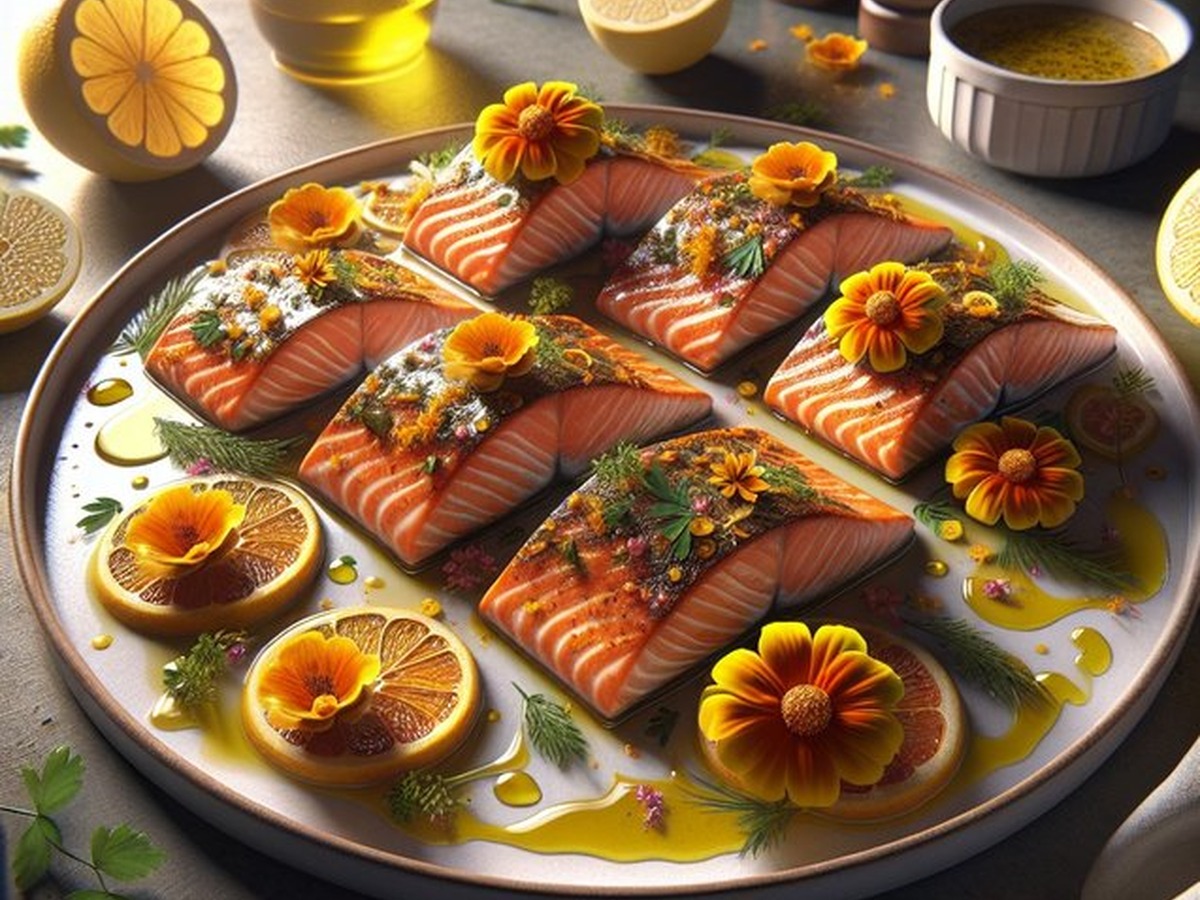
Citrus Marigold Salmon is a bright oven-baked dinner built around a few ingredients that do a lot of work. Honey and Dijon give the glaze a gentle sweet-savory edge, while orange and lemon keep the rich salmon tasting fresh. Parsley and a scattering of edible marigold petals finish the fillets with color and a soft garden note.
The recipe fits comfortably within modern American home cooking, where a sheet pan, a quick glaze, and a handful of fresh produce can turn into a company-worthy meal. Edible flowers have long appeared in garden cooking and celebratory dishes, usually as a colorful accent rather than the main source of flavor. Marigold petals play that same supporting role here, making the salmon feel special without complicating the method.
Citrus and salmon are a natural pairing because the fruit cuts through the fish's richness without hiding it. Honey rounds the acidity, mustard adds savory depth, and garlic keeps the glaze grounded. The petals are delicate enough to leave the fish's flavor in the foreground while giving each serving a cheerful finish.
Pat the salmon dry before seasoning so the olive-oil glaze clings to the surface instead of sliding away. Let the brushed fillets stand for about 10 minutes while the oven finishes heating, then add the zest, garlic, parsley, and marigold petals just before baking. Use only flowers sold as edible and grown without pesticides, and omit the petals if you cannot verify their source.
A hot oven keeps the process simple, but the thermometer is more dependable than the clock because fillets vary in thickness. Bake until the thickest part reaches 145°F (63°C) and the flesh separates into moist flakes, then let the salmon rest for three minutes. The honey will lightly gloss the surface as it cooks, so a separate stovetop reduction is not necessary.
Serve the salmon with quinoa, couscous, roasted carrots, asparagus, or a crisp salad with citrus vinaigrette. The plate works for a relaxed weeknight meal and still has enough color for a spring lunch or small gathering. A chilled sparkling water with citrus or a crisp white wine keeps the bright flavors in focus.
Nutritional Information (per serving)
| Per Serving | |
|---|---|
| Calories | 330 kcal |
| Protein | 25 g |
| Total Fat | 22 g |
| Saturated Fat | 4 g |
| Fiber | 1 g |
| Sodium | 620 mg |
Ingredients
- 1 lb salmon fillets (450g)
- 2 tablespoons olive oil (30mL)
- 1 teaspoon salt (5g)
- 1/2 teaspoon black pepper (1g)
- 1 tablespoon honey (21g)
- 1 tablespoon Dijon mustard (15g)
- 1 tablespoon fresh lemon juice (15mL)
- 1 tablespoon fresh orange juice (15mL)
- 1 tablespoon edible marigold petals (1g)
- 1 teaspoon lemon zest (2g)
- 1 teaspoon orange zest (2g)
- 2 tablespoons fresh parsley, chopped (8g)
- 1 teaspoon garlic, minced (3g)
Step by Step Instructions
- Preheat the oven to 400°F (200°C).
- Line a rimmed baking sheet with parchment paper so the glaze does not stick and the salmon lifts cleanly after baking.
- Pat the salmon fillets dry with paper towels and place them skin-side down on the prepared baking sheet.
- Whisk the olive oil, salt, black pepper, honey, Dijon mustard, lemon juice, and orange juice in a small bowl.
- Brush the citrus-honey glaze over the top of each fillet, covering the surface without letting the fish sit in a pool of liquid.
- Let the glazed salmon stand for about 10 minutes while the oven finishes heating so the seasoning can settle into the surface.
- Sprinkle the lemon zest, orange zest, minced garlic, chopped parsley, and edible marigold petals evenly over the fillets.
- Bake for 15 to 20 minutes, depending on thickness, until the thickest part reaches 145°F (63°C) and flakes easily with a fork.
- Remove the baking sheet from the oven and let the salmon rest for 3 minutes. The parchment and baking sheet will remain hot, so handle them with oven mitts.
- Transfer the salmon to a serving platter and spoon any set glaze from the parchment over the top.
- Serve the Citrus Marigold Salmon with quinoa, couscous, roasted vegetables, or a crisp salad.
Variations & Serving Suggestions
Keep the citrus glaze as the base and change the garnish or side to suit the season.
- Use edible calendula or nasturtium petals in place of marigold, or omit the flowers when their source is uncertain.
- Add a pinch of smoked paprika or grated ginger to the glaze for a warmer, more savory edge.
- Serve the salmon with quinoa, couscous, roasted carrots, asparagus, or a crisp salad.
- For a dairy-free and gluten-free plate, pair it with rice or potatoes and a simple citrusy green vegetable.
Utensils
- Rimmed baking sheet
- Parchment paper
- Paper towels
- Small mixing bowl
- Whisk
- Citrus juicer
- Measuring spoons
- Zester
- Chef's knife
- Cutting board
- Pastry brush
- Instant-read thermometer
- Fork for checking doneness
- Fish spatula
- Oven mitts
- Serving platter
Storage & Reheating
Storage
Within two hours of cooking, transfer leftover Citrus Marigold Salmon to a shallow airtight container and refrigerate it at 40°F (4°C) or below. Use refrigerated leftovers within 3 to 4 days, or freeze them sooner if they will not be used in that window.
Reheating
Reheat the salmon gently in a covered skillet with a splash of water or broth, or use a low oven until warmed through. Avoid prolonged high heat, and verify that the center reaches 165°F (74°C) before serving.
Practical Cooking Notes
Rimmed baking sheet, parchment paper, small bowl, whisk or fork, pastry brush, measuring spoons, zester, knife, cutting board, thermometer, serving platter, and oven mitts.
Check the thickest part of the salmon with an instant-read thermometer. Remove it at 145°F (63°C), then rest for 3 minutes before serving.
Timing guide: about 20 minutes of prep, including the short glaze rest, and 25 minutes of cooking, for 45 minutes total. Thicker fillets may need a few extra minutes.
Frequently Asked Questions
Are marigold petals safe to eat?
Use only marigold petals sold as edible and grown without pesticides or other treatments. Calendula or nasturtium petals labeled for culinary use can stand in, and it is fine to leave the flowers off when their source is uncertain.
What temperature should the salmon reach?
Bake until the thickest part reaches 145°F (63°C) and the flesh separates into moist flakes. Start checking early because thin fillets can finish before the 15-minute mark, while thicker pieces may need closer to 20 minutes.
Can I use frozen salmon for this recipe?
Yes. Thaw the fillets completely in the refrigerator, pat them very dry, and then apply the glaze. Use the thermometer rather than the listed time because thawed fillets vary in thickness.
How should I store and reheat leftovers?
Refrigerate leftover salmon in an airtight container within 2 hours and use it within 3 to 4 days. Reheat it gently in a covered skillet with a splash of water or in a low oven, and verify that the center reaches 165°F (74°C) before serving.