Gingerberry Lime Grilled Trout
Grilled Trout with Ginger-Berry Lime Glaze
About This Recipe
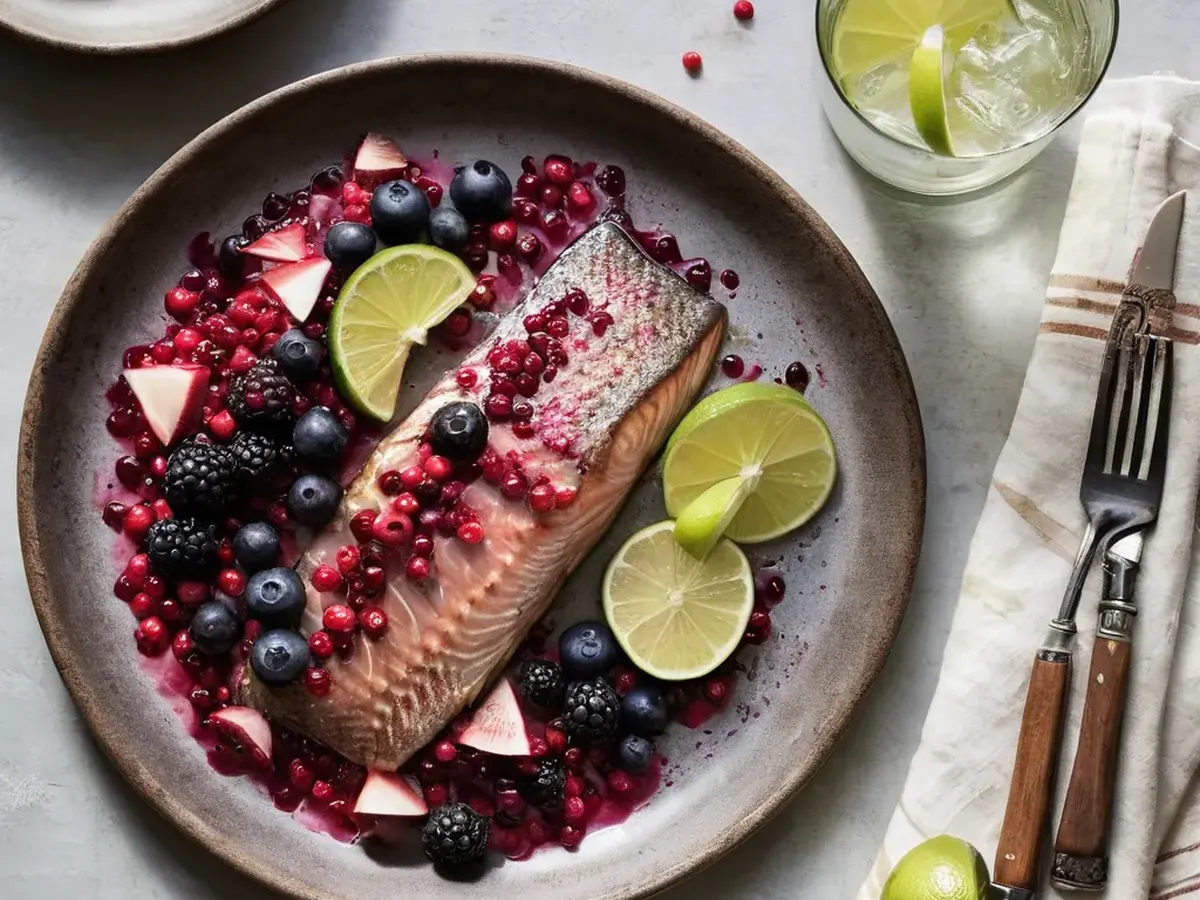
Trout is a natural centerpiece for an American summer table: it cooks quickly, takes well to a clean grill, and has enough richness to welcome a lively sauce. Here, mixed berries bring a sweet-tart color to the plate while lime keeps the glaze bright and grated ginger adds a warm, peppery edge. The result feels festive without asking the fish to carry a heavy coating.
Berry sauces have a long place in home cooking, especially alongside grilled and roasted foods where fruit can balance smoke and salt. This combination is a contemporary pairing rather than a claim to one historic regional trout recipe, but it fits the American habit of bringing seasonal produce into a simple outdoor meal. Soy sauce gives the berries a savory backbone, while honey helps the glaze turn glossy.
Build the glaze first so it has time to cool slightly before it reaches the delicate fish. A short simmer breaks down the berries and concentrates their juice, and the lime and ginger stay distinct instead of disappearing into a long-cooked sauce. Keeping the glaze on the stovetop also makes it easy to adjust the sweetness or acidity before grilling.
Trout fillets are tender, so a clean, well-oiled grate is as important as the heat itself. Start skin-side down and let the fish release naturally before turning it, rather than trying to move it while the skin is still attached to the grate. Brush on the berry glaze near the end, when there is enough heat to set the surface but not enough time for the honey to burn.
Use an instant-read thermometer in the thickest part of the fillet and cook until the fish reaches 145°F (63°C). The flesh should look opaque and flake gently, then rest for three minutes while the juices settle. Lime wedges at the table sharpen the sweet berry glaze and make each bite taste lighter.
Serve the trout with roasted potatoes, wild rice, grilled asparagus, or a crisp cucumber salad. Fresh herbs can add another layer of color, but the berries and lime already give the dish a complete, balanced finish. It is an easy dinner for a warm evening and a useful way to make a small amount of fruit feel like part of the main course.
Ingredients
- 2 whole trout fillets, about 6 ounces each, skin on and pin bones removed (340g total)
- 1 tablespoon extra-virgin olive oil (15mL)
- 1/2 cup fresh mixed berries, such as raspberries or blackberries (75g)
- 2 tablespoons fresh lime juice (30mL)
- 1 tablespoon fresh ginger, grated (6g)
- 1 teaspoon honey (7g)
- 1/2 teaspoon certified gluten-free soy sauce or tamari (2.5mL)
- 1/4 teaspoon fine salt (1.5g)
- 1/4 teaspoon freshly ground black pepper (0.5g)
- 1 lime, cut into wedges for serving
Ingredient flexibility
mixed berries: fresh blueberries
Expected result: Blueberries offer a slightly sweeter, less tart flavor profile and hold their shape better during simmering.
Adjustment: No adjustment needed; use the same quantity of 1/2 cup.
soy sauce: tamari
Expected result: Tamari provides a similar savory umami depth but is naturally gluten-free and has a slightly richer flavor.
Adjustment: Use the same quantity of 1/2 teaspoon; ensure the label specifies gluten-free if that is a dietary requirement.
trout fillets: salmon fillets
Expected result: Salmon is richer and oilier, which requires a slightly longer cooking time to reach the same doneness.
Adjustment: Increase cooking time by 1 to 2 minutes per side and ensure the internal temperature reaches 145°F.
Step-by-Step Instructions
- Prepare the glazeIn a small saucepan over medium heat, combine the mixed berries, lime juice, grated ginger, honey, soy sauce, salt, and pepper. Simmer for 5 to 7 minutes, stirring occasionally, until the berries break down and the liquid reduces into a spoon-coating glaze. Remove the pan from the heat and let the glaze cool slightly.
- Preheat the grillHeat a gas or charcoal grill to medium-high, about 400°F to 450°F (204°C to 232°C). Clean the grates thoroughly and oil them just before cooking so the trout skin can release cleanly.
- Season the troutPat the trout fillets dry with paper towels. Brush both sides lightly with the olive oil and add a small pinch of salt and pepper if needed, keeping the seasoning restrained because the glaze and soy sauce are already seasoned.
- Grill the fishPlace the trout skin-side down on the hot grates and close the lid. Cook for 4 to 6 minutes without moving it until the skin releases, then turn carefully and cook for another 2 to 3 minutes, until the thickest part reaches 145°F (63°C) and the flesh is opaque and flaky.
- Glaze and serveBrush the warm berry glaze over the trout during the final minute of grilling, or spoon it over the fish after it leaves the heat so the honey does not scorch. Transfer the fillets to a clean platter, rest them for 3 minutes, and serve with lime wedges.
Utensils
- Small saucepan
- Grill or grill pan
- Pastry brush
- Tongs or fish spatula
- Instant-read thermometer
- Paper towels
- Measuring spoons
- Grater or microplane for the ginger
- Clean platter
- Spoon for the berry glaze
Nutritional Information (per serving)
| Nutrient | Amount |
|---|---|
| Calories | 385 kcal |
| Protein | 32 g |
| Total Fat | 18 g |
| Carbohydrates | 14 g |
| Fiber | 3 g |
| Sodium | 420 mg |
Nutrition is an estimate based on the listed ingredients and two servings.
Storage & Reheating
Storage
Refrigerate leftover Gingerberry Lime Grilled Trout within 2 hours in a shallow airtight container at 40°F (4°C) or below. Use it within 3 to 4 days, or freeze it sooner if it will not be used in that window.
Reheating
Reheat the trout gently in a covered skillet over medium-low heat or in a low oven with a splash of water. Warm it until the center reaches 165°F (74°C), taking care not to dry the delicate flesh.
Practical Cooking Notes
Check the thickest part of the trout with an instant-read thermometer; it is ready at 145°F (63°C). Rest the fish for 3 minutes before serving.
Start skin-side down on clean, oiled grates and let the fish release naturally before turning. Apply the berry glaze during the last minute or after cooking so the honey does not scorch.
Refrigerate leftovers within 2 hours and reheat them to 165°F (74°C). Do not leave cooked fish at room temperature while preparing the platter.
Fresh or frozen berries both work. If using blueberries, expect a sweeter, less tart glaze; if using salmon, allow a little extra cooking time and verify the same fish-safety temperature.
Timing guide: about 15 minutes of prep, 15 minutes of grilling, and 3 minutes of resting, for 33 minutes total.
Troubleshooting
The fish sticks to the grill grate.
Likely cause: The grates were not fully preheated or oiled.
Fix: The grates were not fully preheated or oiled. Scrub them clean, oil them just before cooking, and leave the skin-side-down fillet in place until it releases naturally.
The glaze burns before the fish is cooked.
Likely cause: The honey and berries were exposed to high heat too early.
Fix: The honey and berries were exposed to high heat too early. Brush the glaze on during the last minute or spoon it over the fish after it leaves the grill.
The trout is dry after cooking.
Likely cause: The fish went past its target temperature.
Fix: The fish went past its target temperature. Start checking at 145°F (63°C), remove it promptly, and rest it for 3 minutes before serving.
Frequently Asked Questions
Can I use frozen berries for the glaze?
Yes. Add the frozen berries directly to the saucepan and simmer until they soften and the glaze reduces; you may need 1 to 2 extra minutes. Taste at the end because frozen fruit can vary in sweetness and acidity.
What can I use if I do not have an outdoor grill?
Cook the trout skin-side down in a lightly oiled cast-iron skillet over medium-high heat, or use a broiler-safe pan under a hot broiler. Keep the berry glaze off the strongest heat and use the same 145°F (63°C) internal-temperature target.
How do I keep the berry glaze from burning?
Brush the glaze on during the final minute or spoon it over the trout after cooking. The berries and honey contain sugar, so applying the glaze too early over high heat can make it darken before the fish is done.
How do I know when grilled trout is done?
Insert an instant-read thermometer into the thickest part of the fillet and cook until it reaches 145°F (63°C). The flesh should be opaque and flake gently, and the fish should rest for about 3 minutes before serving.