Hibiscus Mango Chicken
Radiant Hibiscus-Mango Chicken with Lime
About This Recipe
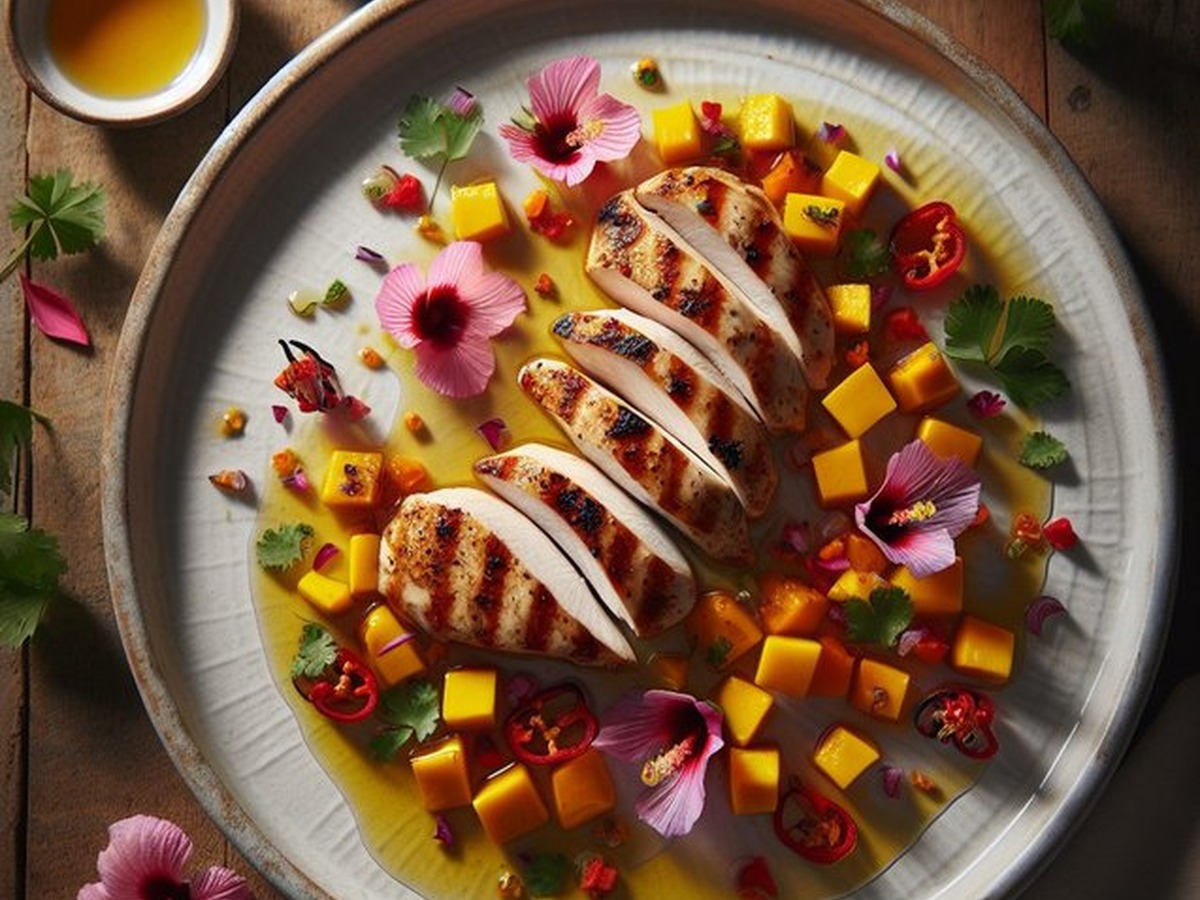
Hibiscus Mango Chicken brings seared chicken, ripe mango, and the tart floral edge of hibiscus together in a skillet that feels bright from the first bite. Honey softens the hibiscus, lime keeps the fruit lively, and red pepper gives the sauce a savory backbone. Cilantro at the finish makes the warm dish feel colorful and fresh rather than heavy.
Hibiscus sabdariffa is often called sorrel in Caribbean kitchens, where its deep color and tart flavor are especially familiar in festive drinks and seasonal preparations. Mango, lime, and pepper add their own histories to that pantry, shaped by Indigenous ingredients and the movement of African, European, South Asian, and Chinese-Caribbean food traditions. This chicken is a contemporary home-cooking interpretation that draws on those flavors without presenting one fixed island origin.
The preparation is easiest when the fruit and aromatics are ready before the skillet heats. Cut the chicken into even pieces, chop the onion and red pepper, dice the mango, and wash the hibiscus petals so each ingredient can join the pan at the right moment. A short mise en place also keeps the honey and lime from waiting too long over high heat.
Start by browning the chicken in olive oil with cumin, chili powder, salt, and pepper. Once the pieces have color, the onion and red pepper soften in the same skillet and pick up the savory fond left behind. Mango and hibiscus go in later so the fruit keeps some shape while the petals release their tang and jewel-like color.
Honey rounds the hibiscus and lime gives the pan a clean finish, but neither should overwhelm the chicken. Let the mixture simmer only long enough for the flavors to meet, then remove the skillet from the heat when the thickest piece reaches 165°F (74°C). Chopped cilantro adds a cool herbal note that ties the floral, fruity, and savory elements together.
Serve the chicken over coconut rice, quinoa, or a crisp salad that can catch the bright pan juices. Dried hibiscus can stand in for fresh petals when it is soaked and drained first, and pineapple makes a good mango alternative when you want a sharper fruit note. Refrigerate leftovers within two hours, use them within 3 to 4 days, and reheat gently to 165°F (74°C) so the chicken stays moist.
Nutritional Information (per serving)
| Nutrient | Amount |
|---|---|
| Calories | 365 kcal |
| Protein | 33 g |
| Total Fat | 11 g |
| Saturated Fat | 3 g |
| Carbohydrates | 31 g |
| Fiber | 3 g |
| Sugars | 20 g |
| Sodium | 295 mg |
Nutrition is an estimate based on the listed ingredients and four servings.
Ingredients
- 1 lb boneless skinless chicken breasts, cut into bite-size pieces (450g)
- 1 tablespoon olive oil (15mL)
- 1/2 cup fresh hibiscus petals, washed (30g)
- 1 cup ripe mango, diced (150g)
- 1/2 cup red bell pepper, chopped (75g)
- 1/4 cup red onion, finely chopped (40g)
- 1 tablespoon honey (21g)
- 1 lime, juiced (30mL)
- 1 teaspoon ground cumin (2g)
- 1/2 teaspoon chili powder (1g)
- 1/4 teaspoon kosher salt (1.5g)
- 1/4 teaspoon black pepper (0.5g)
- 2 tablespoons fresh cilantro, chopped (8g)
Step by Step Instructions
- Prep the ingredients Cut the chicken into even bite-size pieces. Chop the red onion and bell pepper, dice the mango, wash the hibiscus petals, juice the lime, and chop the cilantro.
- Season the chicken Toss the chicken with the kosher salt, black pepper, ground cumin, and chili powder. Let it stand while the skillet heats so the seasoning clings to the surface.
- Heat the skillet Warm the olive oil in a large skillet over medium heat until it shimmers. Leave enough room for the chicken to brown in a single layer.
- Brown the chicken Add the seasoned chicken and cook for about 6 to 7 minutes, stirring occasionally, until it is golden brown and the thickest piece is nearly cooked through.
- Soften the vegetables Add the chopped red onion and red bell pepper to the skillet. Sauté for 3 to 4 minutes, until the vegetables soften and pick up the browned flavors from the pan.
- Add the fruit and hibiscus Stir in the diced mango and washed hibiscus petals. Cook gently for about 2 minutes so the mango warms and the petals tint the pan without losing all of their texture.
- Balance the skillet Drizzle the honey over the mixture and squeeze in the lime juice. Stir carefully so the sweet-tart liquid coats the chicken and vegetables.
- Cook to doneness Simmer for 2 to 3 minutes, stirring occasionally, until the chicken reaches 165°F (74°C) and the pan juices look glossy.
- Finish with cilantro Remove the skillet from the heat and fold in the chopped cilantro. Taste and add a small squeeze of lime if the dish needs more brightness.
- Serve Spoon the Hibiscus Mango Chicken over coconut rice, quinoa, or a crisp salad. Serve warm with extra lime wedges if desired.
Utensils
- Mixing bowl for seasoning the chicken
- Measuring cup and spoons
- Fine-mesh strainer for the hibiscus petals
- Citrus juicer
- Large skillet
- Chef's knife
- Cutting board
- Tongs
- Heat-safe spatula or stirring spoon
- Instant-read thermometer
- Serving platter
- Serving spoon
Storage & Reheating
Storage
Refrigerate leftover Hibiscus Mango Chicken within 2 hours in a shallow airtight container at 40°F (4°C) or below. Use it within 3 to 4 days, or freeze it sooner if it will not be used in that window.
Reheating
Reheat the chicken, fruit, and pan juices gently in a covered skillet or microwave-safe dish with a small splash of water or broth until the chicken reaches 165°F (74°C). Stop as soon as it is hot to keep the breast meat moist, then finish with fresh cilantro and lime if desired.
Practical Cooking Notes
Use a large skillet, knife, cutting board, measuring tools, mixing bowl, spatula, tongs, and a serving platter so the chicken and fruit can be handled in sequence.
Check the thickest piece with an instant-read thermometer; chicken is ready at 165°F (74°C). Remove the skillet from the heat promptly so the breast meat stays juicy.
Plan for about 25 minutes of chopping, measuring, and seasoning, followed by 30 minutes of skillet cooking, for 55 minutes total.
Troubleshooting
The chicken is dry.
Likely cause: The pieces were too small, the pan stayed hot too long, or the chicken cooked beyond its target temperature.
Fix: Cut the pieces evenly, keep the simmer gentle, and remove the skillet as soon as the thickest piece reaches 165°F (74°C).
The pan is watery.
Likely cause: The mango released extra juice or the skillet did not simmer long enough after the fruit was added.
Fix: Keep the pan uncovered and simmer for another minute or two, stirring gently, until the juices look glossy and cling to the chicken.
The hibiscus is too tart.
Likely cause: The petals were especially strong or the pan needed more sweetness to balance their acidity.
Fix: Stir in a small drizzle of honey and taste again, adding lime only if the dish needs more brightness after the tartness is balanced.
Frequently Asked Questions
Can I use dried hibiscus instead of fresh petals?
Yes. Soak about 2 tablespoons dried hibiscus in hot water for 5 to 10 minutes, drain it very well, and add it with the mango. The flavor will be a little more concentrated, so start with less and adjust at the end.
What can I use instead of mango?
Use the same amount of ripe but firm diced pineapple for a sharper, tangier fruit note. Add it near the end as written so it warms without becoming completely soft.
Can I use chicken thighs instead of chicken breast?
Yes. Use the same weight of boneless, skinless thighs and cook until every piece reaches 165°F (74°C). Thighs may need a few extra minutes, especially if the pieces are large.
How should I store and reheat this chicken?
Refrigerate leftovers within 2 hours in a shallow airtight container and use them within 3 to 4 days. Reheat gently with a splash of water or broth until the chicken reaches 165°F (74°C), then finish with fresh cilantro or lime.