Coconut Lemon Shrimp
Creamy Coconut Lemon Shrimp with Ginger and Lime
About This Recipe
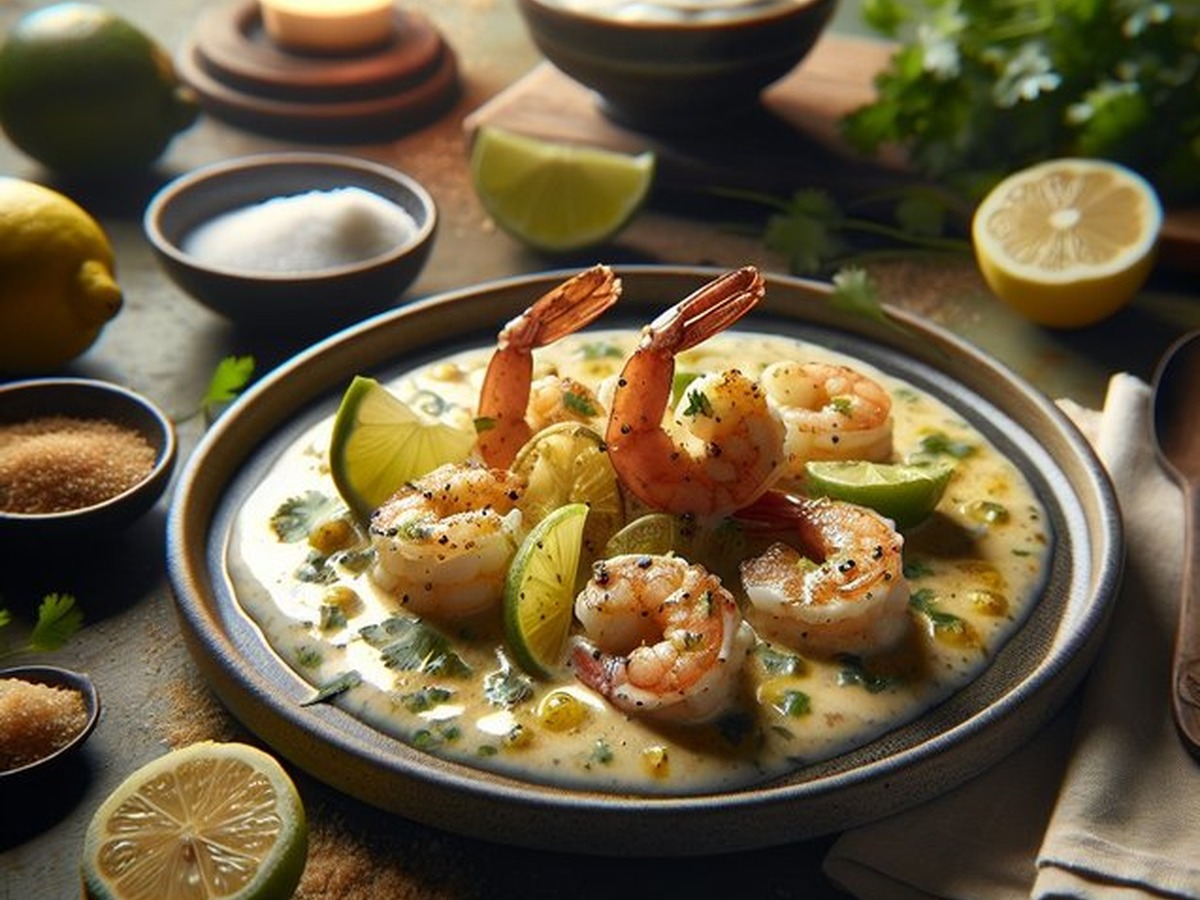
Coconut Lemon Shrimp is a quick skillet dinner built around the clean sweetness of seafood and the bright lift of citrus. Lemon juice and zest sharpen the creamy coconut sauce, while ginger, garlic, fish sauce, and brown sugar give it a savory, rounded center. The shrimp cook in minutes, making this a lively main course for a weeknight or a relaxed summer table.
Coconut, citrus, shrimp, and rice all have long lives in Caribbean and coastal cooking, where ingredients arrived, changed hands, and found new expressions in different communities. Those foodways reflect Indigenous ingredients alongside African, European, South Asian, and Chinese-Caribbean influences, with each island and household developing its own balance of acid, sweetness, spice, and richness. This recipe draws from that broad culinary conversation as a contemporary home-cooking interpretation rather than claiming one island as its sole origin.
The sauce is deliberately layered instead of heavy. Coconut milk softens the lemon and lime, fish sauce brings a deep briny note, and a small amount of brown sugar smooths the edges without making the dish taste like dessert. A cornstarch slurry gives the sauce enough body to cling to the shrimp and a spoonful of rice or vegetables if you choose to serve either alongside.
A short preparation makes the cooking feel calm even though the pan moves quickly. Pat the shrimp dry, measure the sauce ingredients, and stir the cornstarch with water before the skillet is hot so there is no scrambling at the finish. Sear the shrimp just until opaque, remove them while the aromatics and sauce develop, and return them only for the last minute.
Ginger adds a fresh warmth, garlic fills out the middle, and lemon zest carries the citrus aroma beyond the juice. Lime wedges at the table let each person adjust the brightness, while cilantro contributes a cool herbal finish to the creamy sauce. The most important texture cue is the shrimp themselves: they should be opaque and tender, not tightly curled from overcooking.
Serve the shrimp with jasmine rice, coconut rice, crusty bread, or a crisp cucumber salad that can catch the sauce. Low-sodium soy sauce with extra lime can replace the fish sauce when needed, and light coconut milk works if you simmer the sauce a little longer before adding the slurry. Refrigerate leftovers promptly for 3 to 4 days, reheat them gently to 165°F (74°C), and add fresh cilantro and lime after warming.
Nutritional Information (per serving)
| Nutrient | Amount |
|---|---|
| Calories | 420 kcal |
| Protein | 35 g |
| Total Fat | 24 g |
| Saturated Fat | 18 g |
| Carbohydrates | 23 g |
| Fiber | 1 g |
| Sugars | 12 g |
| Sodium | 810 mg |
Nutrition is an estimate based on the listed ingredients and four servings.
Ingredients
- 1 lb large shrimp, peeled and deveined (450g)
- 1/2 teaspoon kosher salt (3g)
- 1/4 teaspoon black pepper (0.5g)
- 1 tablespoon neutral oil (15mL)
- 1 tablespoon fresh ginger, grated (15g)
- 2 garlic cloves, minced (6g)
- 3/4 cup unsweetened coconut milk (180mL)
- 2 tablespoons fresh lemon juice (30mL)
- 1 teaspoon finely grated lemon zest (2g)
- 1 tablespoon fresh lime juice (15mL)
- 1 tablespoon fish sauce (15mL)
- 2 teaspoons light brown sugar (8g)
- 1 teaspoon cornstarch (3g)
- 1 tablespoon water (15mL)
- 2 tablespoons fresh cilantro, chopped (8g)
- 1 lime, cut into wedges
Step by Step Instructions
- Prepare the shrimp Pat the shrimp dry with paper towels and season them with the kosher salt and black pepper. Grate the ginger, mince the garlic, and chop the cilantro before heating the skillet.
- Make the cornstarch slurry Stir the cornstarch and water together in a small bowl until smooth. Keep the slurry nearby so it can be added without clumps when the sauce is ready.
- Sear the shrimp Heat the neutral oil in a large skillet over medium-high heat. Sear the shrimp for 1 to 2 minutes per side, until opaque and 145°F (63°C), then transfer them to a clean plate.
- Bloom the aromatics Reduce the heat to medium. Add the grated ginger and minced garlic to the skillet and cook for about 30 seconds, stirring constantly until fragrant but not browned.
- Build the coconut-lemon sauce Stir in the coconut milk, lemon juice, lemon zest, lime juice, fish sauce, and brown sugar. Scrape up any browned bits so they become part of the sauce.
- Thicken the sauce Bring the coconut mixture to a gentle simmer and whisk in the cornstarch slurry. Cook for about 1 minute, stirring, until the sauce lightly coats the back of a spoon.
- Return the shrimp Add the shrimp and any collected juices back to the skillet. Turn them through the sauce for no more than 1 minute, just until warmed and coated.
- Finish with cilantro Remove the skillet from the heat and fold in the chopped cilantro, reserving a little for the plates. Taste and add a small squeeze of lime if the sauce needs more brightness.
- Garnish the plates Arrange the shrimp and sauce on a serving platter or individual plates. Set the lime wedges alongside and offer jasmine rice, coconut rice, bread, or a crisp salad if desired.
- Serve immediately Spoon any remaining sauce over the shrimp and scatter the reserved cilantro on top. Serve while the shrimp are tender and the coconut sauce is warm and glossy.
Utensils
- Paper towels
- Small bowl for the slurry
- Measuring cups and spoons
- Citrus juicer
- Fine grater or microplane
- Chef's knife
- Cutting board
- Large skillet
- Tongs
- Small whisk
- Wooden spoon or heat-safe spatula
- Instant-read thermometer
- Clean plate for the shrimp
- Serving platter or plates
- Serving spoon
Storage & Reheating
Storage
Refrigerate leftover Coconut Lemon Shrimp within 2 hours in a shallow airtight container at 40°F (4°C) or below. Use it within 3 to 4 days, or freeze it sooner if it will not be used in that window.
Reheating
Reheat the shrimp and sauce gently in a covered skillet or microwave-safe dish with a small splash of water or broth until they reach 165°F (74°C). Stop as soon as they are hot to avoid toughening the shrimp, then finish with fresh cilantro and lime.
Practical Cooking Notes
Use paper towels, a large skillet, a small bowl for the slurry, a fine grater, measuring tools, and an instant-read thermometer so the sauce and shrimp can be handled quickly.
Shrimp should be opaque and curled into a loose C rather than a tight O; confirm 145°F (63°C) at the thickest piece and avoid extended cooking.
Plan for about 15 minutes of drying, grating, chopping, and measuring, followed by 15 minutes of skillet cooking, for 30 minutes total.
Troubleshooting
The shrimp are rubbery.
Likely cause: They cooked past the opaque, just-done stage or simmered in the sauce for too long.
Fix: Sear briefly, remove the shrimp while building the sauce, and return them only for the final minute after the sauce thickens.
The sauce is too thin.
Likely cause: The coconut mixture did not simmer long enough, or the slurry was not dispersed before it entered the hot pan.
Fix: Whisk the cornstarch and water until smooth, simmer the sauce gently for about a minute after adding it, and wait for it to coat a spoon before returning the shrimp.
The sauce tastes too sharp.
Likely cause: The lemon and lime are especially acidic, or the coconut milk was not given enough time to round the flavors.
Fix: Add a small spoonful of coconut milk or water, then balance the sauce with a little brown sugar and taste again before serving.
Frequently Asked Questions
How do I prevent rubbery shrimp?
Pat the shrimp dry, sear them briefly over medium-high heat, and remove them as soon as they are opaque and reach 145°F (63°C). Reduce the coconut-lemon sauce separately, then return the shrimp for only the final minute so they do not simmer for too long.
Can I prepare the sauce ahead?
Whisk the coconut milk, lemon juice and zest, lime juice, fish sauce, and brown sugar up to one day ahead and refrigerate the mixture in a covered container. Stir the cornstarch slurry just before using it, and cook the shrimp right before serving for the best texture.
What can replace fish sauce?
Replace the 1 tablespoon of fish sauce with 2 teaspoons low-sodium soy sauce plus 1 teaspoon lime juice. The sauce will be less briny but still balanced; taste it after reducing and adjust the citrus if needed.
Can I use light coconut milk?
Yes. Replace the unsweetened coconut milk with an equal amount of light coconut milk and simmer the sauce 1 to 2 minutes longer before adding the slurry. The finished sauce will be lighter, so serve it with rice or bread if you want extra richness at the table.