Honey Grapefruit Chicken
Skillet Chicken with Honey-Grapefruit Glaze
About This Recipe
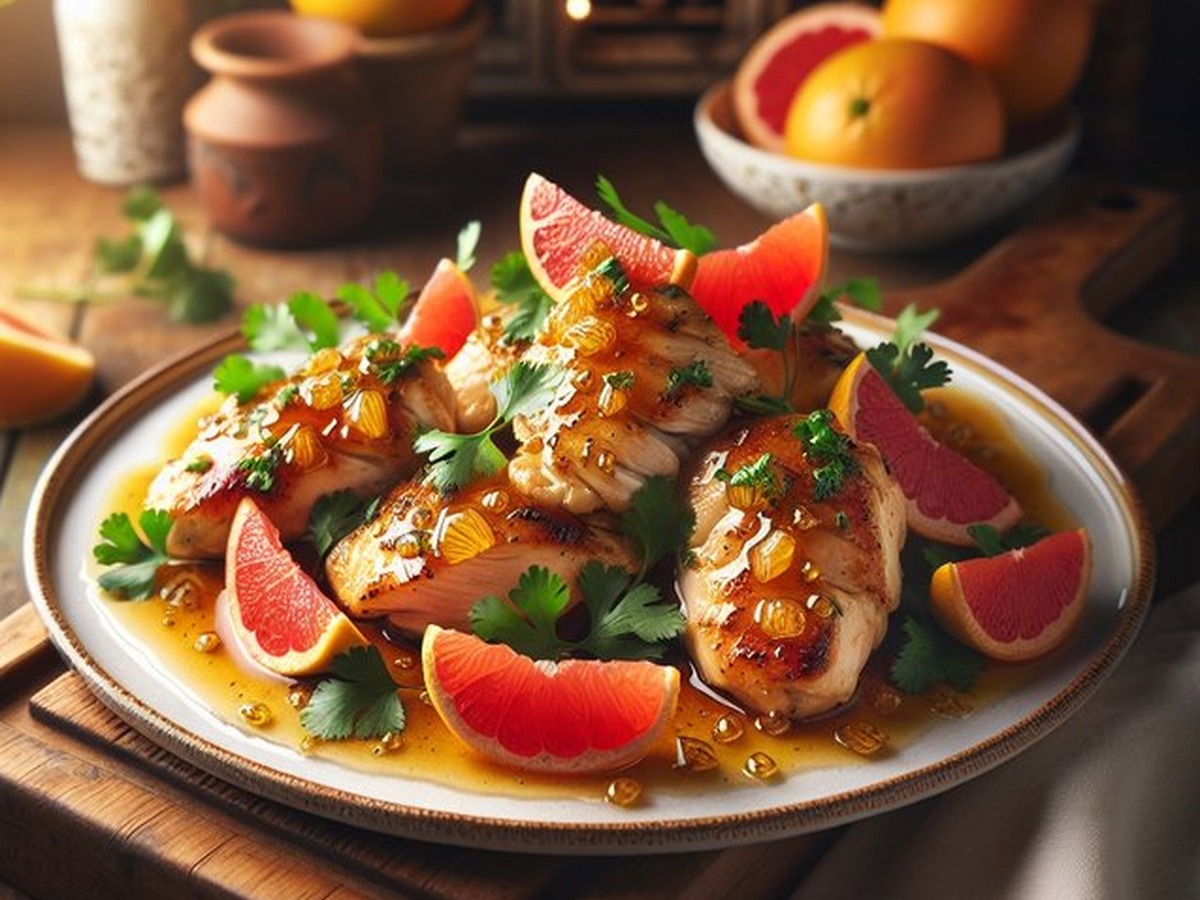
Grapefruit gives this skillet chicken a clean, bittersweet edge that is softened by honey and sharpened with ginger. Soy sauce and garlic keep the glaze savory, while fresh cilantro brings a green finish to the plate. The result is bright and aromatic without asking the cook to manage a complicated sauce.
Grapefruit became a familiar part of American breakfast and citrus-growing culture in the twentieth century, and home cooks soon carried its tart juice into glazes, salads, and marinades. Grapefruit-and-honey chicken fits that practical tradition of letting pantry citrus brighten a simple protein. Ginger, soy, and cilantro add layers from a wider global pantry without making the dish feel complicated.
Use fresh, unsweetened grapefruit juice when you can, and reserve half of it for the clean pan sauce before the chicken goes into the marinade. Ruby or pink grapefruit brings a softer color and sweetness, while white grapefruit makes the finished dish more assertively tart. Zest is optional here, so there is no need to chase bitterness from the white pith.
Marinating the chicken for about 30 minutes gives the grapefruit, honey, ginger, and soy time to season the surface without making the small pieces mushy. Pat the chicken dry after draining it so the skillet can brown the edges instead of steaming them. The used marinade is discarded, and the reserved juice becomes the safe, glossy sauce that gathers up the browned bits.
Keep the heat moderate once the sauce is in the pan because honey can scorch and grapefruit can turn harsh if reduced too aggressively. Taste before serving and use a little more honey to round a very bitter grapefruit, or a squeeze of lemon only when the sauce needs lift. Check the thickest chicken piece with an instant-read thermometer and cook it to 165°F (74°C).
Serve the chicken over jasmine rice, quinoa, couscous, or roasted potatoes so the tangy glaze has somewhere to go. Steamed broccoli, cucumber salad, or lightly dressed greens add a cool, crisp contrast to the warm sauce. It is a relaxed weeknight meal with enough color and fragrance to feel at home on a weekend table too.
Nutritional Information (per serving)
| Nutrient | Amount |
|---|---|
| Calories | 319 kcal |
| Protein | 34 g |
| Total Fat | 6 g |
| Carbohydrates | 20 g |
| Fiber | 1 g |
| Sodium | 601 mg |
Nutrition is an estimate based on the listed ingredients and four servings.
Ingredients
- 1 lb boneless, skinless chicken breasts, cut into 1-inch pieces (500g)
- 1 cup fresh unsweetened grapefruit juice, divided (240mL)
- 2 tablespoons honey, divided (42g)
- 2 tablespoons low-sodium soy sauce, divided (30mL)
- 1 tablespoon extra-virgin olive oil (15mL)
- 1 teaspoon fresh ginger, finely grated (5g)
- 1/2 teaspoon garlic powder (2g)
- 1/2 teaspoon freshly ground black pepper (1g)
- 1/4 teaspoon red pepper flakes (0.5g)
- 1 tablespoon fresh cilantro, chopped (15g)
- 1/2 grapefruit, thinly sliced for garnish (about 150g)
Step by Step Instructions
- Divide the grapefruit juice Measure 1/2 cup grapefruit juice for the marinade and reserve the remaining 1/2 cup for the clean skillet sauce.
- Make the marinade Whisk the marinade juice with 1 tablespoon honey, 1 tablespoon soy sauce, ginger, garlic powder, black pepper, and red pepper flakes.
- Marinate the chicken Add the chicken and toss to coat. Cover and refrigerate for 30 minutes; do not leave the chicken in the acidic marinade overnight.
- Heat the skillet Warm the olive oil in a wide skillet over medium-high heat until it shimmers. Leave enough room for the chicken to brown in a single layer.
- Drain the chicken Lift the chicken from the marinade and pat it dry. Discard the used marinade so the reserved grapefruit juice can become the sauce.
- Sear the chicken Add the chicken to the hot skillet and cook for 3 to 4 minutes per side, turning as needed, until browned but not yet fully cooked. Transfer it to a clean plate.
- Build the grapefruit glaze Lower the heat to medium. Pour in the reserved grapefruit juice, remaining honey, and remaining soy sauce, then scrape up the browned bits with a wooden spoon.
- Finish cooking Simmer the sauce for 3 to 4 minutes, then return the chicken and its collected juices to the skillet. Cook gently for 4 to 6 minutes, until the thickest piece reaches 165°F (74°C).
- Balance and rest Taste the glaze and add a small amount of honey if the grapefruit is especially bitter. Remove the skillet from the heat and let the chicken rest in the sauce for 3 minutes.
- Garnish and serve Scatter the cilantro and grapefruit slices over the chicken. Serve the warm chicken and glaze over jasmine rice, quinoa, couscous, roasted potatoes, or crisp greens.
Variations & Serving Suggestions
Try these ideas to highlight different facets of the dish:
- Use boneless chicken thighs for a juicier, more forgiving skillet dinner.
- Serve the glaze over jasmine rice, quinoa, couscous, mashed potatoes, or warm flatbread.
- Add sliced bell peppers, onions, or baby carrots for a colorful one-pan variation.
- Finish with toasted sesame seeds or extra parsley when you want more texture and color.
Enjoy the balance of textures and brightness that keeps this dinner feeling whimsical and memorable.
Utensils
- Wide skillet
- Mixing bowl for the marinade
- Lid or food wrap for marinating
- Measuring cup and spoons
- Citrus juicer
- Whisk
- Chef's knife
- Cutting board
- Paper towels
- Tongs
- Wooden spoon or heat-safe spatula
- Instant-read thermometer
- Clean plate for the chicken
Storage & Reheating
Storage
Refrigerate leftover Honey Grapefruit Chicken within 2 hours in a shallow airtight container at 40°F (4°C) or below. Use it within 3 to 4 days, or freeze it sooner if it will not be used in that window.
Reheating
Reheat the chicken gently in a covered skillet over medium-low heat with a splash of water or broth. Warm it until the center reaches 165°F (74°C), taking care not to reduce the grapefruit glaze too far.
Practical Cooking Notes
Wide skillet, chef's knife, cutting board, fine grater, measuring tools, small bowl, wooden spoon or spatula, tongs, and instant-read thermometer.
Check the thickest chicken piece with an instant-read thermometer; remove the skillet at 165°F (74°C) and rest for 3 minutes.
Timing guide: 15 minutes of preparation, 30 minutes of marinating, 20 minutes of cooking, and 65 minutes total including the marinade.
Troubleshooting
The chicken is pale.
Likely cause: The skillet was crowded or the chicken went in wet.
Fix: Pat the pieces dry and sear them in a single layer, working in batches when needed.
The sauce is too sharp.
Likely cause: The orange was tart or the lemon and ginger are especially lively.
Fix: Add a small amount of honey, taste again, and use another pinch of red pepper only if the sauce needs warmth rather than sweetness.
The sauce is bitter.
Likely cause: Some white pith was zested or the honey reduced too aggressively.
Fix: Strain out any loose pith, loosen the skillet with a splash of water, and balance the sauce with a little honey and lemon only as needed.
Frequently Asked Questions
Can I marinate the grapefruit chicken overnight?
A 30-minute marinade is enough for the small chicken pieces, and you can extend it to about 2 hours if needed. Avoid marinating overnight because grapefruit juice is acidic and can make the surface of the chicken soft.
What type of grapefruit works best for this recipe?
Ruby or pink grapefruit usually gives a gentler bitterness and a beautiful color, while white grapefruit makes the sauce more assertively tart. Choose fruit that feels heavy for its size and use fresh, unsweetened juice when possible.
Can I use chicken thighs instead of chicken breasts?
Yes. Boneless, skinless thighs stay juicy and may need a few extra minutes in the skillet. Cut them into similar-sized pieces and check the thickest piece at 165°F (74°C) before serving.
How do I keep the grapefruit sauce from becoming too bitter?
Do not over-reduce the sauce, keep the heat moderate, and balance a particularly bitter grapefruit with a little more honey. The reserved juice should be free of seeds and pulp, and the used raw-chicken marinade should always be discarded.