Hibiscus Vanilla Chicken
Skillet Chicken with Hibiscus-Vanilla Glaze
About This Recipe
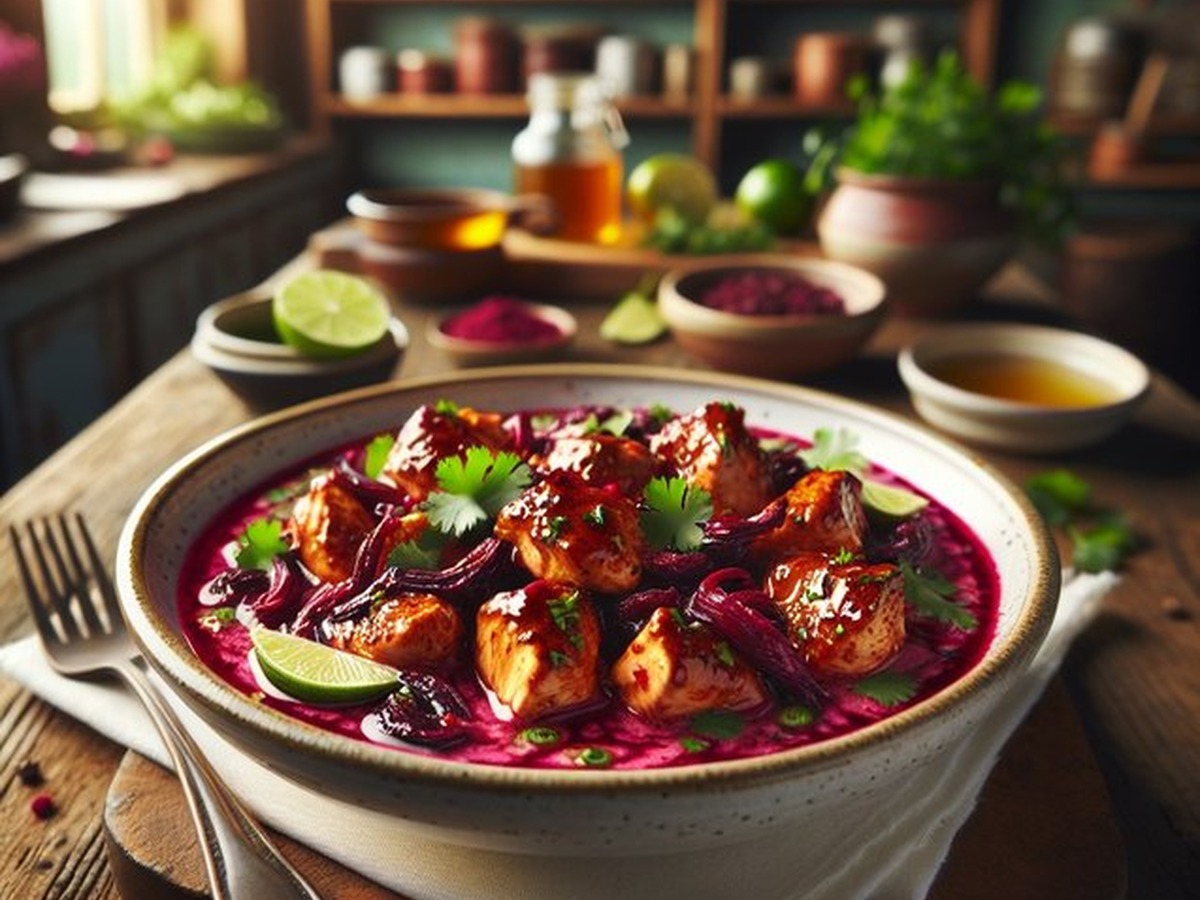
Hibiscus and vanilla may sound like an unusual match for chicken, but the contrast is exactly what makes this skillet dinner work. The hibiscus tea brings a cranberry-like tartness and a beautiful ruby color, while vanilla adds a soft floral warmth rather than a dessert-like sweetness. Honey, paprika, garlic, lime, and cilantro keep the finished dish savory, bright, and balanced.
Hibiscus has a long life in kitchens far beyond the dessert table. Tart red infusions appear as agua de jamaica in Mexico, bissap in West Africa, and karkade in Egypt and Sudan, where they are valued for their vivid color and refreshing acidity. This recipe borrows that familiar infusion for a contemporary American skillet meal, using it as both a gentle marinade and the base of a quick pan sauce.
Brew the tea unsweetened and let it cool before it touches the chicken, then reserve half for the sauce. Thirty minutes is enough time for the flavor to reach small pieces without leaving the meat soft from prolonged exposure to the acidic tea. Pure vanilla extract gives the marinade a subtle perfume, and a measured spoonful lets the hibiscus remain the leading note.
The chicken gets its best flavor from a hot, roomy skillet, where the pieces can brown instead of steaming. Sauté the onion and garlic first, then pat the marinated chicken dry before it hits the pan so it can take on color. Once the chicken is seared, the reserved tea, honey, and paprika loosen the browned bits and reduce into a glossy, tangy coating.
Because the marinade has touched raw chicken, discard it rather than pouring it straight into the skillet. The reserved tea creates the sauce, while the seared chicken finishes gently in that clean liquid until the thickest piece reaches 165°F (74°C). A squeeze of lime and a handful of cilantro added at the end sharpen the flavors and keep the floral notes fresh.
Serve the chicken with coconut rice, jasmine rice, quinoa, or warm flatbread so the rosy sauce has somewhere to go. A cucumber salad, grilled vegetables, or crisp slaw makes a cool counterpoint to the warm spices and honey. It is a colorful weeknight dish with a little culinary history in every spoonful, yet the method remains straightforward enough for a first try.
Ingredients
- 1 lb boneless, skinless chicken breasts, cut into 1-inch pieces (500g)
- 1 cup strong brewed unsweetened hibiscus tea, cooled and divided (240mL)
- 2 tablespoons honey, divided (42g)
- 1 teaspoon pure vanilla extract (5mL)
- 2 tablespoons extra-virgin olive oil (30mL)
- 1 teaspoon fine salt (5g)
- 1/2 teaspoon freshly ground black pepper (1g)
- 1 teaspoon paprika (2g)
- 1/2 cup yellow onion, finely chopped (75g)
- 2 cloves garlic, minced (6g)
- 1/4 cup fresh cilantro, chopped (15g)
- 1 lime, juiced (30mL)
Step by Step Instructions
- Brew and divide the tea Brew the hibiscus tea without sugar and let it cool completely. Measure 1/2 cup for the marinade and reserve the remaining 1/2 cup for the skillet sauce.
- Marinate the chicken Whisk the 1/2 cup marinade tea with 1 tablespoon honey, vanilla, salt, black pepper, and paprika. Add the chicken, toss to coat, cover, and refrigerate for 30 minutes.
- Prepare the skillet Warm the olive oil in a wide skillet over medium heat. Add the onion and cook for 3 to 4 minutes, until translucent, then stir in the garlic for 30 seconds.
- Drain the chicken Lift the chicken from the marinade and pat the pieces dry with paper towels. Discard the used marinade so the clean reserved tea can become the sauce.
- Sear the chicken Arrange the chicken in the hot skillet in a single layer, working in batches if necessary. Cook for 3 to 4 minutes per side, until browned but not yet fully cooked, then transfer to a clean plate.
- Build the hibiscus sauce Pour the reserved 1/2 cup tea into the skillet and scrape up the browned bits. Stir in the remaining 1 tablespoon honey and simmer for 3 to 4 minutes, until the liquid is slightly reduced.
- Return the chicken Slide the seared chicken and any collected juices back into the skillet. Turn the pieces through the sauce and reduce the heat to medium-low.
- Finish cooking Simmer gently for 4 to 6 minutes, turning once, until the thickest piece reaches 165°F (74°C). Do not rely on color alone to judge doneness.
- Brighten the dish Remove the skillet from the heat and squeeze the lime over the chicken. Taste the sauce and add a pinch of salt or another small squeeze of lime if it needs more lift.
- Add the herbs Fold in the chopped cilantro just before serving so it stays fresh and fragrant. Let the chicken rest in the sauce for 3 minutes while the juices settle.
- Serve Spoon the hibiscus vanilla chicken and its pan sauce over coconut rice, jasmine rice, quinoa, warm flatbread, or a crisp salad.
Utensils
- Wide skillet
- Mixing bowl for the marinade
- Plastic wrap or reusable bowl cover
- Measuring cup and spoons
- Whisk
- Tea infuser or strainer for loose hibiscus (optional)
- Chef's knife
- Cutting board
- Paper towels
- Tongs
- Wooden spoon or heat-safe spatula
- Citrus juicer
- Instant-read thermometer
- Clean plate for the chicken
Storage & Reheating
Storage: Refrigerate leftover Hibiscus Vanilla Chicken within 2 hours in a shallow airtight container at 40°F (4°C) or below. Use it within 3 to 4 days, or freeze it sooner if it will not be used in that window.
Reheating: Reheat the chicken gently in a covered skillet over medium-low heat with a splash of water or hibiscus tea. Warm it until the center reaches 165°F (74°C), taking care not to reduce the sauce too far.
Nutritional Information (per serving)
| Nutrient | Amount |
|---|---|
| Calories | 389 kcal |
| Protein | 32 g |
| Total Fat | 17 g |
| Carbohydrates | 16 g |
| Fiber | 1 g |
| Sodium | 730 mg |
Nutrition is an estimate based on the listed ingredients and four servings.
Practical Cooking Notes
Wide skillet, mixing bowl, measuring tools, chef's knife, cutting board, wooden spoon or spatula, tongs, and instant-read thermometer.
Check the thickest chicken piece with an instant-read thermometer; remove the skillet at 165°F (74°C) and rest for 3 minutes.
Timing guide: 15 minutes of preparation, 30 minutes of marinating, 20 minutes of cooking, and 65 minutes total including the marinade.
Troubleshooting
The chicken is pale.
Likely cause: The skillet was crowded or the chicken went in wet from the marinade.
Fix: Pat the pieces dry and sear them in a single layer, working in batches when needed.
The sauce tastes too sharp.
Likely cause: Hibiscus varies in acidity and the tea may have brewed especially strong.
Fix: Stir in a teaspoon of honey at a time, then taste again; a little extra lime is useful only when the sauce needs brightness rather than sweetness.
The chicken is dry.
Likely cause: The pieces were uneven or cooked beyond the safe target temperature.
Fix: Cut even pieces, start checking early, and remove the skillet at 165°F (74°C) before resting the chicken for 3 minutes.
Frequently Asked Questions
What kind of hibiscus tea should I use for hibiscus vanilla chicken?
Use unsweetened culinary hibiscus or roselle tea, brewed strong and cooled before it goes into the marinade. Avoid sweetened blends and flowers sold for decoration, which may contain additives that are not intended for cooking.
Can I marinate the chicken overnight?
A 30-minute marinade gives the small chicken pieces plenty of flavor, and you can extend it to about 2 hours if needed. Avoid marinating overnight because the acidic tea can make the surface of the chicken soft and change its texture.
Can I use chicken thighs instead of chicken breasts?
Yes. Boneless, skinless thighs work well and may take a few extra minutes to cook because they are thicker and more forgiving. Check the thickest piece and remove the skillet when it reaches 165°F (74°C).
How do I know when hibiscus vanilla chicken is done?
Use an instant-read thermometer in the thickest piece; the chicken is ready at 165°F (74°C). The outside may brown before the center is safe, so the thermometer is more reliable than the color or the cooking time alone.
Variations & Serving Suggestions
- Use boneless, skinless chicken thighs for a juicier variation; check the thickest piece at 165°F (74°C).
- Serve the chicken over coconut rice, jasmine rice, quinoa, or warm flatbread to catch the hibiscus sauce.
- Add cucumber salad, grilled vegetables, or crisp slaw for a cool contrast to the warm floral glaze.
- For a softer vanilla note, use 1/2 teaspoon extract; for more tang, finish with an extra squeeze of lime.