Charred Shiso Miso Eggplant Bowls
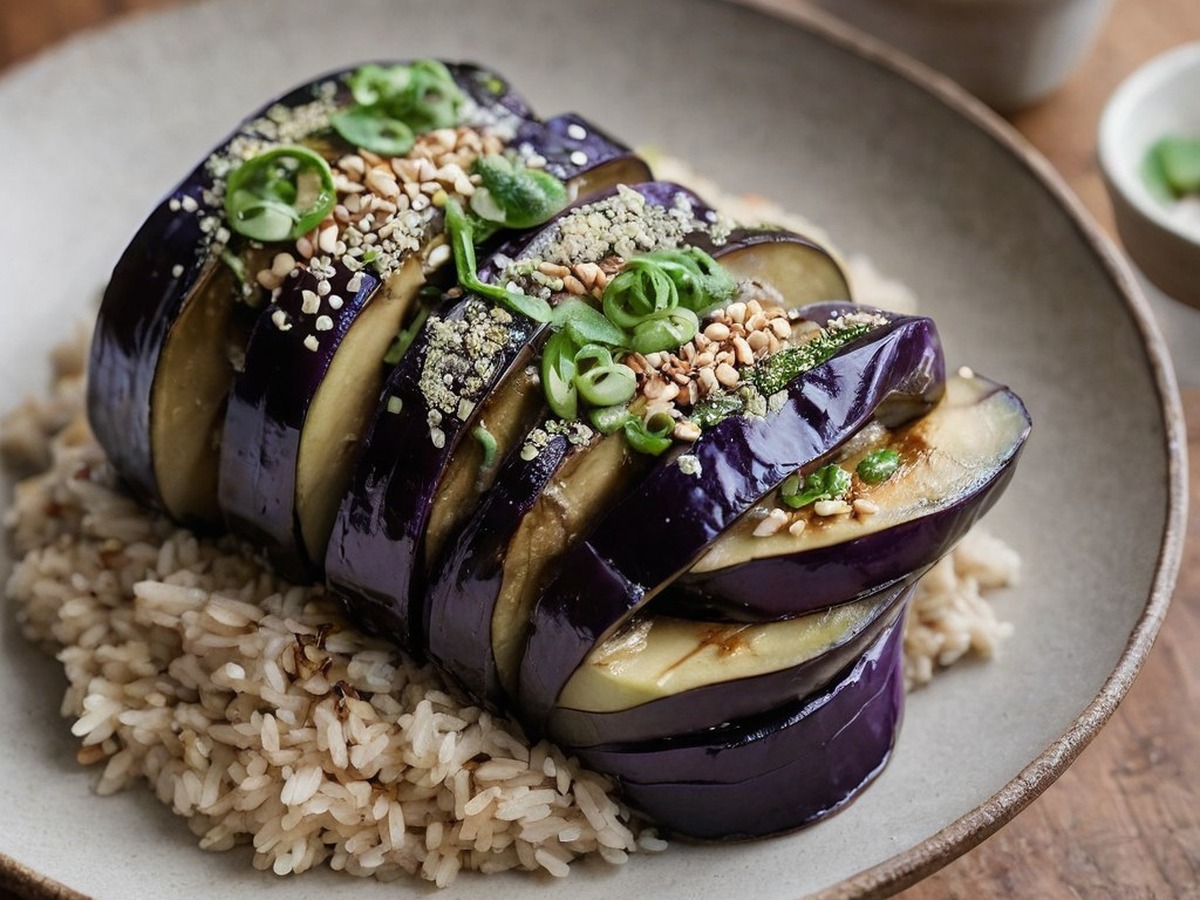
Miso-Glazed Eggplant with Shiso, Sesame, and Rice
Tender roasted eggplant, glossy miso glaze, fragrant shiso, and short-grain rice make a deeply savory Japanese-inspired bowl with a bright, smoky finish.
About This Recipe
Charred Shiso Miso Eggplant Bowls turn a handful of pantry staples into a dinner with real depth. The eggplant becomes silky in the oven, then takes on a glossy, salty-sweet miso glaze under the broiler. Short-grain rice catches the juices, while shiso, sesame, and green onion bring a fresh, aromatic finish to every bowl.
Miso-glazed eggplant draws on a familiar Japanese way of building flavor through fermentation, gentle sweetness, and careful charring. Eggplant is especially good at absorbing sauces, and its soft texture makes it a satisfying centerpiece even without meat. The bowl format is a contemporary home-kitchen presentation, pairing the glazed vegetable with rice so the meal feels complete and easy to serve.
Shiso adds a distinctive note that falls somewhere between mint, basil, and citrus, with a lightly peppery edge. It is often used as a garnish or wrapping herb, so slicing it at the last moment keeps its fragrance vivid. If fresh shiso is difficult to find, basil with a little lemon zest gives a different but still lively finish.
The most important step is giving the eggplant enough time to soften before the glaze goes on. A shallow crosshatch lets the heat move into the flesh and gives the miso mixture little channels to cling to. Roasting cut-side down first protects the surface from drying, while the short broil at the end creates the charred, almost lacquered top that makes the dish memorable.
Keep an eye on the broiler because miso and maple can darken quickly. The eggplant is ready when a knife slides through the thickest part without resistance and the glaze is bubbling at the edges. The rice should be fluffy rather than wet, giving the tender eggplant a calm, neutral base that lets the shiso and toasted sesame stand out.
Serve the bowls as a light main course with cucumber, quick-pickled vegetables, or a simple greens salad. Cool leftover rice and eggplant within two hours, refrigerate them in shallow containers, and use them within three days. Reheat gently until the center reaches 165°F (74°C), then add fresh shiso and green onion after warming so the herbs stay crisp and fragrant.
Ingredients
- 2 large Japanese eggplants, about 1 lb total, halved lengthwise (450g)
- 1 tablespoon neutral oil (15mL)
- 3 tablespoons white miso paste (54g)
- 2 tablespoons mirin (30mL)
- 1 tablespoon tamari (15mL)
- 1 teaspoon pure maple syrup (7g)
- 1 cup uncooked Japanese short-grain white rice, rinsed (200g)
- 1 1/4 cups water (300mL)
- 10 fresh shiso leaves, thinly sliced
- 1 teaspoon toasted sesame seeds (3g)
- 1 green onion, thinly sliced
This post contains Amazon affiliate links. We may earn a commission if you purchase through them, at no additional cost to you.
Step-by-Step Instructions
- Cook the rice Combine the rinsed rice and water in a small saucepan. Bring to a boil, cover, reduce the heat to low, and cook for 15 minutes.
- Rest the rice Remove the saucepan from the heat and let the rice stand, covered, for 10 minutes. Fluff it gently with a fork before serving.
- Prepare the eggplant Heat the oven to 425°F (220°C) and line a rimmed sheet pan. Score the cut sides of the eggplants in a shallow crosshatch and brush them with the neutral oil.
- Roast until tender Place the eggplants cut-side down and roast for 15 minutes, until the flesh is beginning to soften and the edges are lightly browned.
- Mix the miso glaze Whisk the white miso, mirin, tamari, and maple syrup in a small bowl until smooth and glossy.
- Glaze the eggplant Turn the eggplants cut-side up and brush the miso glaze over the flesh, working it into the shallow cuts without tearing the skin.
- Char the tops Switch the oven to broil and cook the eggplants 2 to 4 minutes, watching closely, until the glaze bubbles and the tops are browned. The flesh should be completely tender when pierced with a knife.
- Build the bowls Divide the rice between two bowls. Place the charred miso eggplant over the rice and finish with sliced shiso, toasted sesame seeds, and green onion.
Utensils
- Rimmed sheet pan
- Foil or parchment
- Small saucepan with lid
- Small mixing bowl
- Pastry brush or spoon
- Chef's knife and cutting board
- Fork for fluffing rice
- Oven mitts
- Serving bowls
This post contains Amazon affiliate links. We may earn a commission if you purchase through them, at no additional cost to you.
Nutrition Per Serving
| Nutrient | Amount | % Daily Value* |
|---|---|---|
| Calories | 480 kcal | 24% |
| Protein | 12 g | 24% |
| Total Fat | 16 g | 21% |
| Saturated Fat | 2 g | 10% |
| Carbohydrates | 72 g | 26% |
| Fiber | 9 g | 32% |
| Sugars | 15 g | 17% |
| Sodium | 650 mg | 28% |
Nutrition is an estimate based on the listed ingredients and two servings.
Variations & Serving Suggestions
- Swap shiso for basil and lemon zest when fresh shiso is unavailable.
- Use brown rice or quinoa if you prefer a different base, adjusting the cooking method separately.
- Add cucumber, quick-pickled daikon, or edamame for extra freshness and texture.
Storage & Reheating
Cool leftover rice and eggplant within two hours, transfer them to shallow airtight containers, and refrigerate them at 40°F (4°C) or below for up to three days. Store the rice and eggplant separately when possible so the textures hold up better.
Reheat gently until the center reaches 165°F (74°C), adding a splash of water to the rice if it has tightened. Finish with fresh shiso and green onion after warming so the herbs stay crisp and aromatic.
Practical Cooking Notes
A shallow crosshatch lets the glaze reach the eggplant without cutting through the skin or making the pieces collapse.
Miso and maple color quickly. Keep the pan close enough to char the glaze but watch continuously during the final minutes.
Add shiso and green onion after reheating so their color and aroma stay bright against the savory glaze.
Troubleshooting
The eggplant is still firm.
Likely cause: The pieces were thick or did not roast long enough before glazing.
Fix: Return them to the oven until a knife slides through the thickest part, then broil briefly to finish.
The glaze is too dark.
Likely cause: The pan stayed under the broiler too long or was too close to the element.
Fix: Move the pan lower and broil in short intervals while watching the bubbling surface.
The rice is wet.
Likely cause: The lid was lifted early or the rice did not rest after cooking.
Fix: Keep the saucepan covered for the full rest, then fluff gently with a fork before assembling.
Frequently Asked Questions
Can I use a different kind of eggplant?
Yes. Globe, Chinese, or Italian eggplant can work, although the cooking time may change with size and thickness. Choose firm eggplants, score the flesh, and cook until a knife slides easily into the thickest part.
What can I use instead of fresh shiso?
Try thinly sliced basil with a little lemon zest, or use shiso from a Japanese or Korean grocery if it is available. Add the herb after cooking so its fresh aroma is not lost under the broiler.
How do I keep the miso glaze from burning?
Apply the glaze only after the eggplant has softened, then broil for a short 2 to 4 minutes while watching closely. Miso and maple can darken quickly, so move the pan farther from the broiler if the tops color before the flesh is tender.
Can I prepare these bowls ahead of time?
Cook the rice and eggplant up to one day ahead and refrigerate them separately. Reheat both gently, then add the shiso, sesame, and green onion just before serving; use leftovers within three days and reheat the center to 165°F (74°C).